Price Table
| 1 | 2 | 3 | 4 | 5 | 6 | 7 | 8 | 9 | 10 | |
| USD 580 | USD 345 | USD 345 | USD 295 | USD 300 | USD 280 | USD 280 | USD 270 | USD 270 | USD 260 | |
| USD 760 | USD 525 | USD 525 | USD 480 | USD 480 | USD 460 | USD 460 | USD 445 | USD 450 | USD 440 |
Country
Nepal
Duration
6 Days
Maximum altitude
3,210 m
Activity
Trekking
Difficulty
Easy to moderate
Best Season
Oct–Nov and Mar–Apr
Accomodation
Tea house | Mountain Lodge
Meals
Excluded
Start/End Point
Nayapul | Phedi

The moment you step onto the trail from Nayapul and the Himalayan mist begins to clear, you understand immediately why the Ghorepani Poon Hill Trek has captured the hearts of thousands of trekkers every single year. The experience offers more than a mountain hike because it provides a lifelong memory of witnessing the sunrise over the entire Annapurna mountain range.
The Ghorepani Poon Hill Trek is your ideal choice if you want to find the best short trekking route in Nepal, offering stunning mountain views, authentic cultural experiences, and accessible walking paths that require less than a week's commitment. The 6-day Pokhara to Annapurna sunrise trek is the best introduction to trekking in Nepal, offering first-time trekkers and experienced hikers a deeply satisfying experience.
Why the Ghorepani Poon Hill Trek Is Worth Choosing
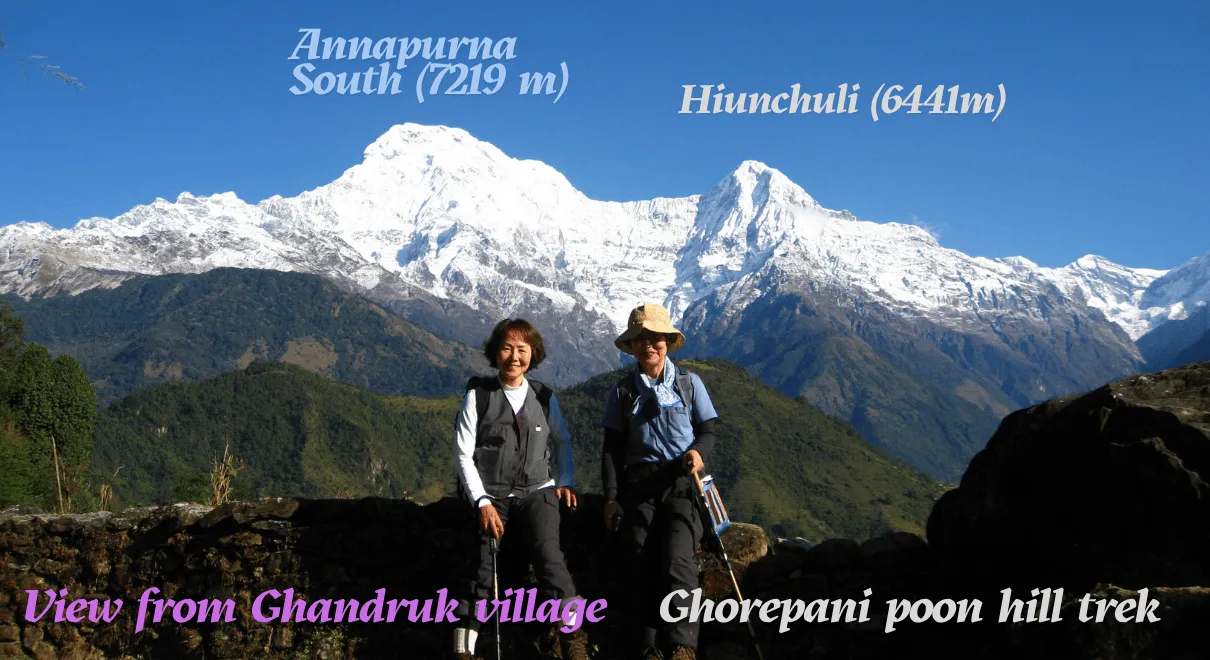
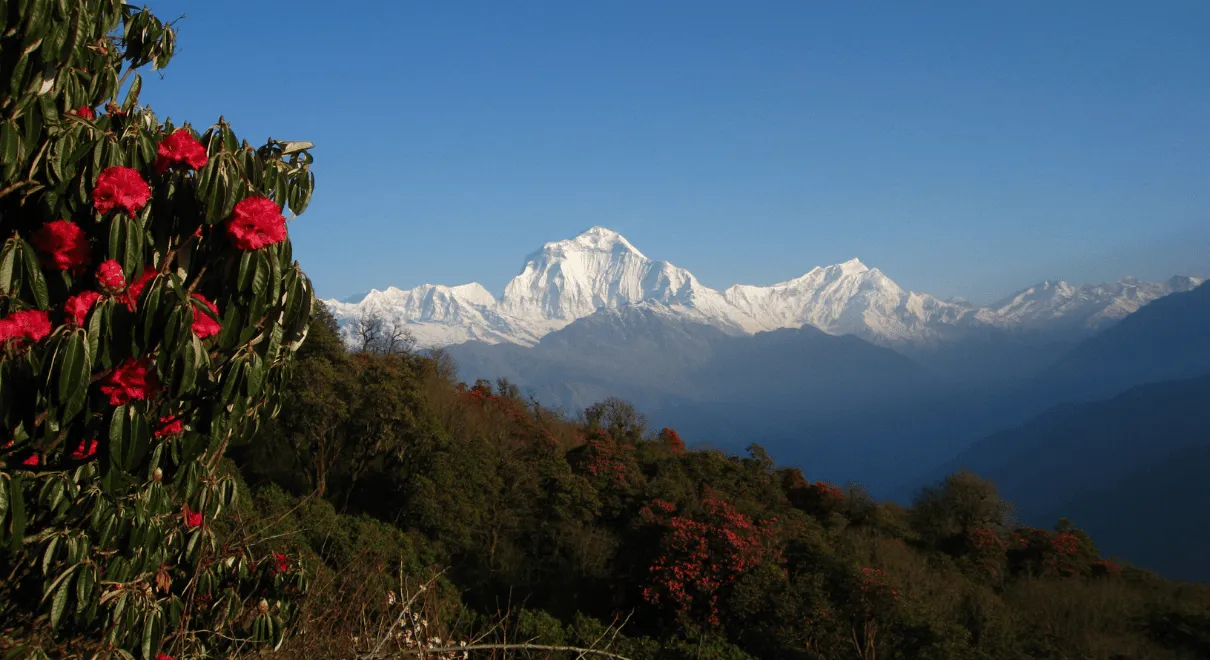
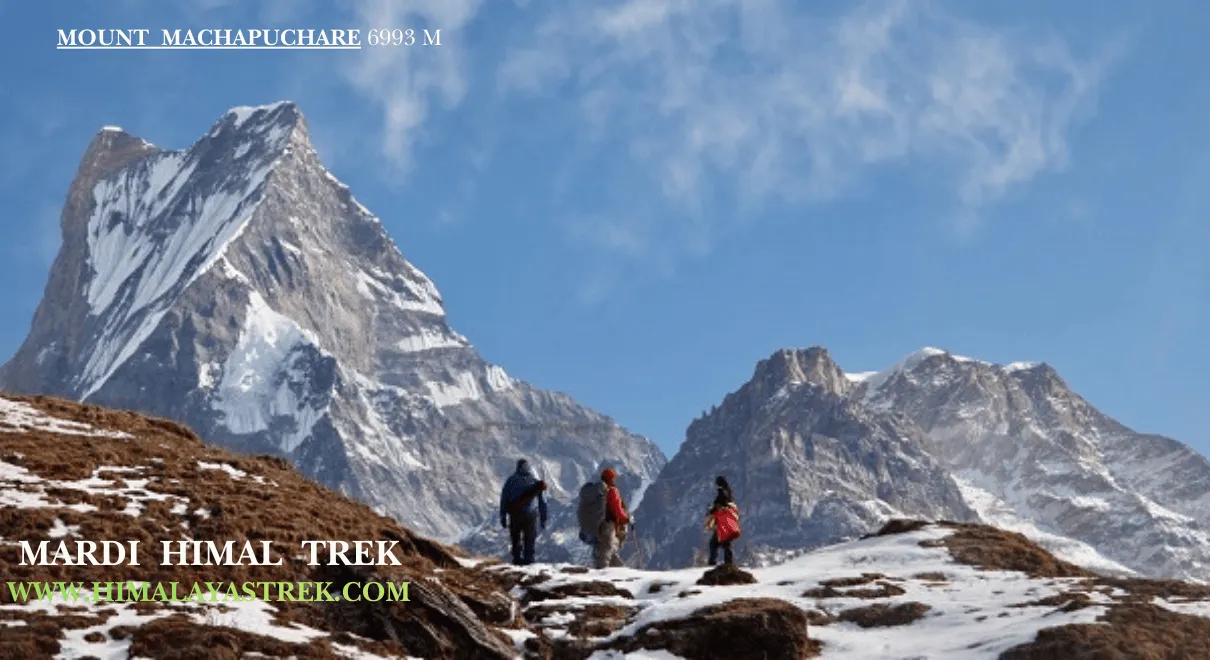
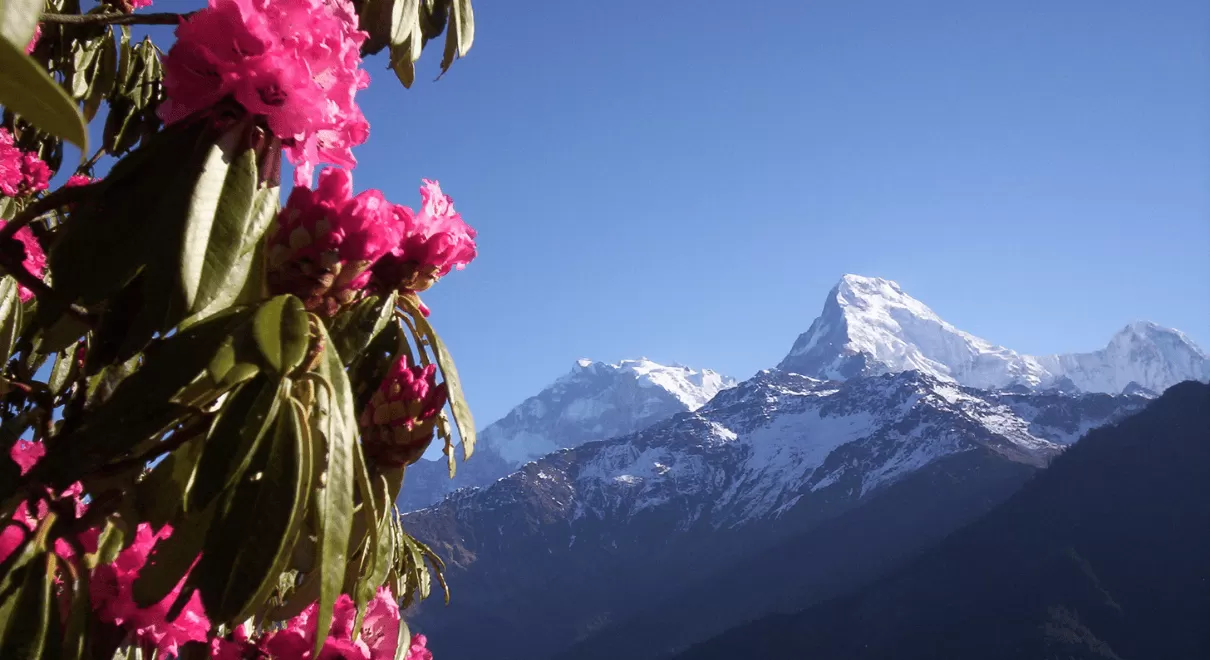
The reasons for choosing this trek vary, as people want to see the sunrise, which reveals Dhaulagiri, Annapurna South, Hiunchuli, and Machhapuchhre. Other people want to experience a short trek in Nepal, which they can complete during their two-week vacation. The rhododendron forests attract many visitors because they display beautiful red, pink, and white flowers in the spring. The Ghorepani Poon Hill Trek provides everything you need to experience your reason for visiting.
The trekking company has been operating for 18 years to guide people through the Annapurna region. All kinds of hikers have become passionate about this trail, the company has noticed. The trail attracts both solo trekkers in their 20s and anniversary-celebrating couples and families with teenage children and retired adventurers who want to complete their bucket list dream. The package offers one of the easiest and most valuable trekking experiences in Nepal.
What the Ghorepani Poon Hill Trek Actually Feels Like
The answer to the question requires an honest response. The situation presents its most extreme difficulties according to its most advantageous conditions. The mountain paths provide actual mountain access through their combination of stone staircases, forested ridges, and narrow hillside tracks. You will achieve significant height increases throughout the day, and you will have earned all your steps when you reach Poon Hill, which stands at 3,210 meters. stick flights, which take 25 minutes, or buses, which take 6 to 8 hours.
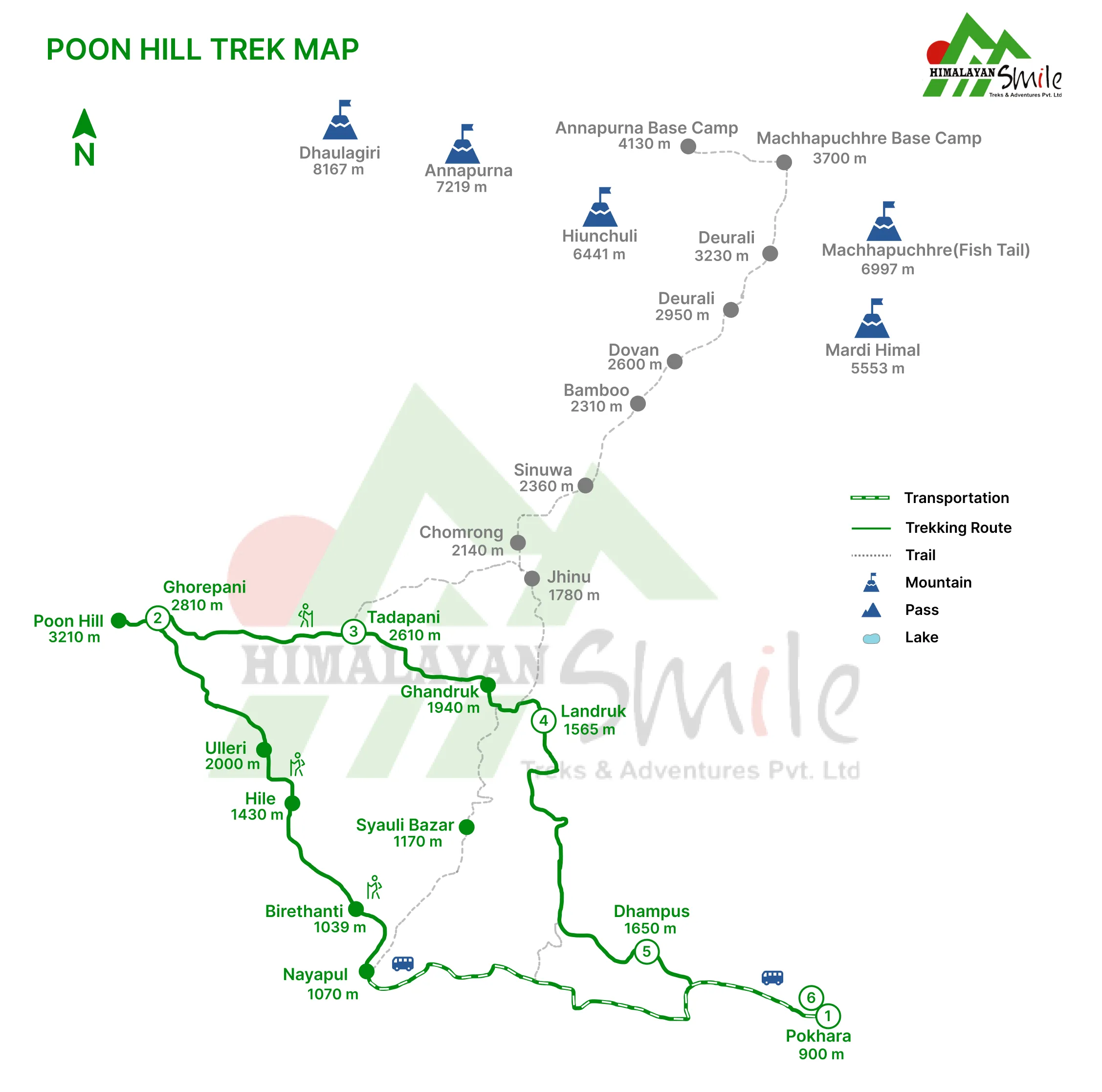
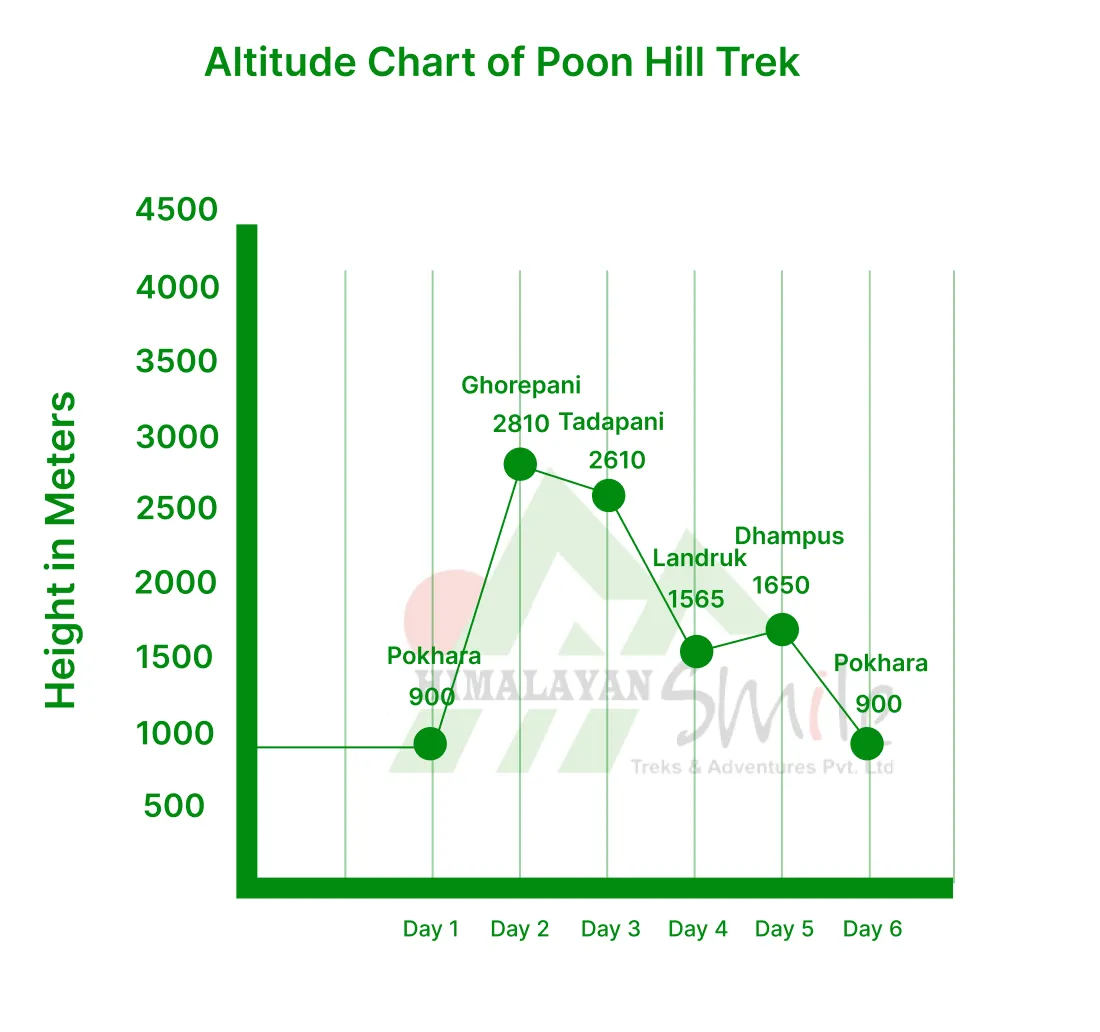
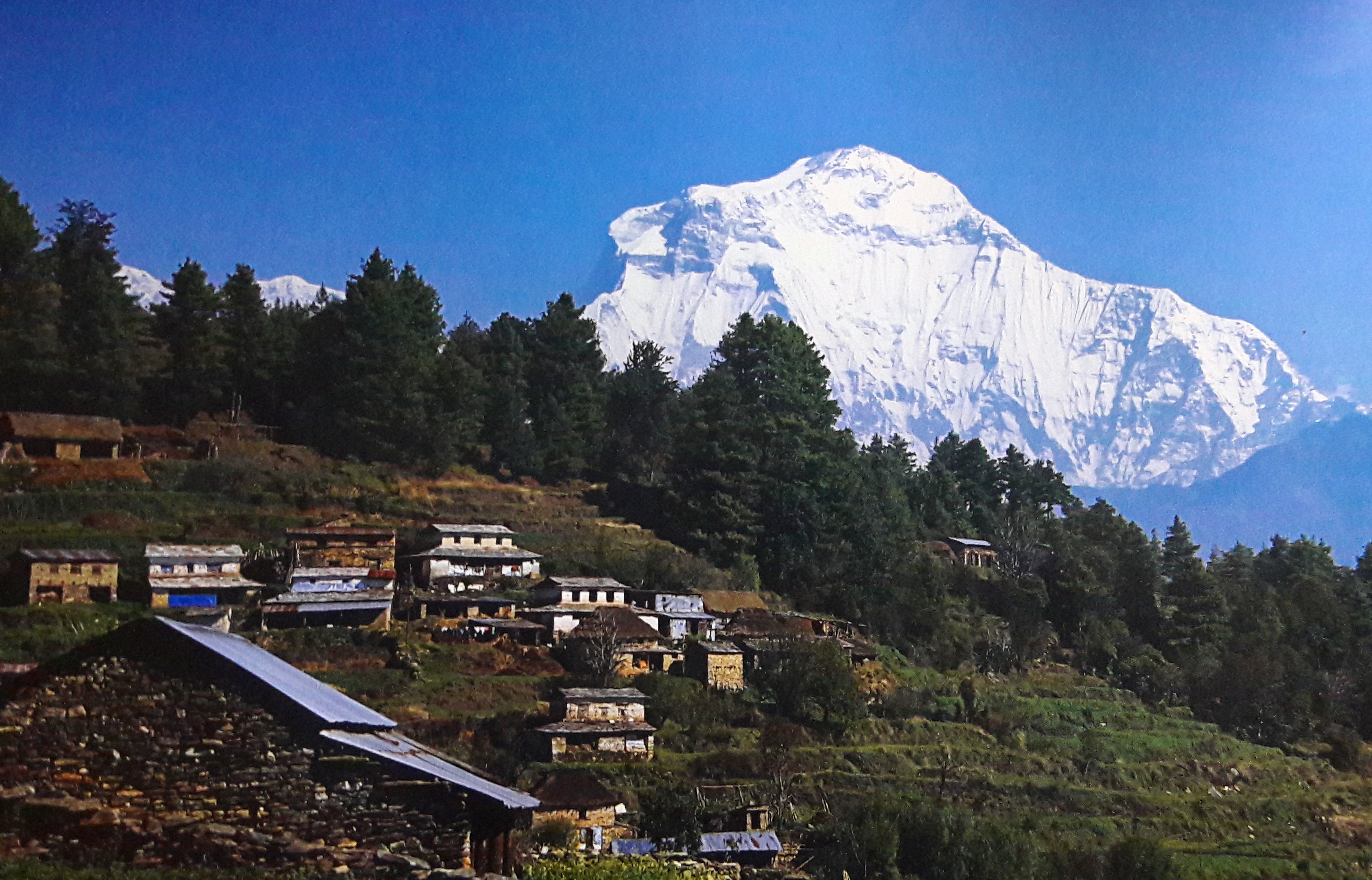
The landscape exhibits a beautiful transformation. The path from Nayapul leads you through warm lowland villages and terraced rice fields. The legendary stone staircase will test your lungs as you ascend from Ulleri. The area above Ulleri develops into a dense forest composed of rhododendron and oak trees, which leads you to Ghorepani, where you experience cool mountain air at an altitude of 2,860 meters and can see the mountain peaks above the tree line.
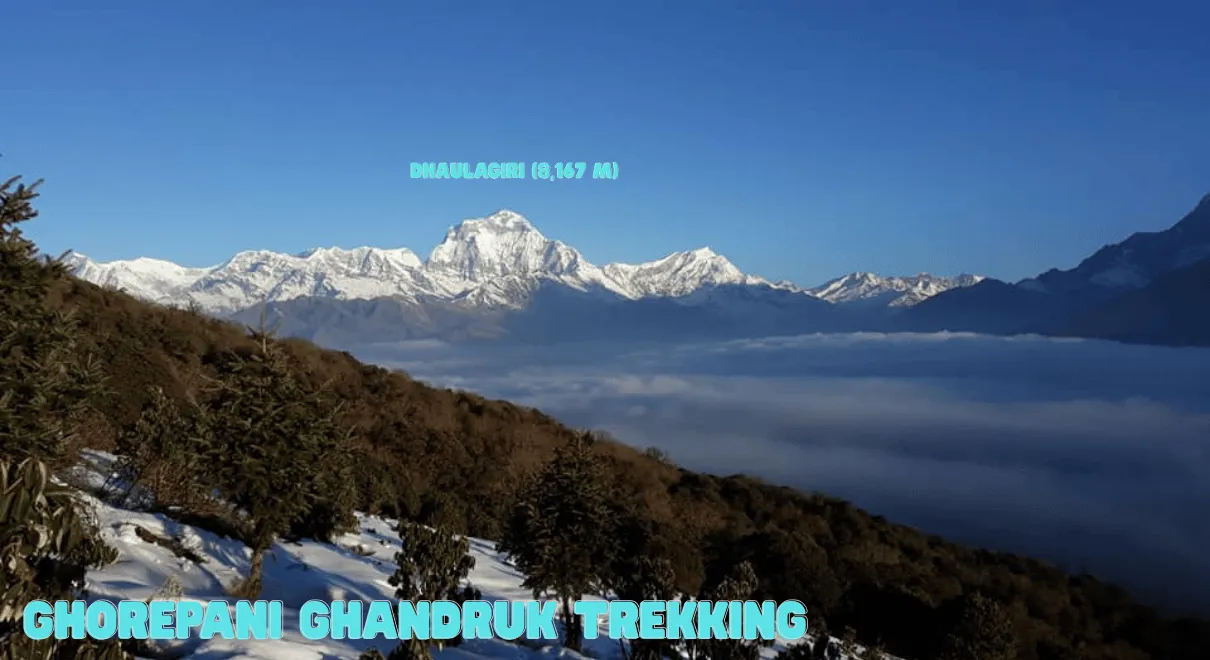
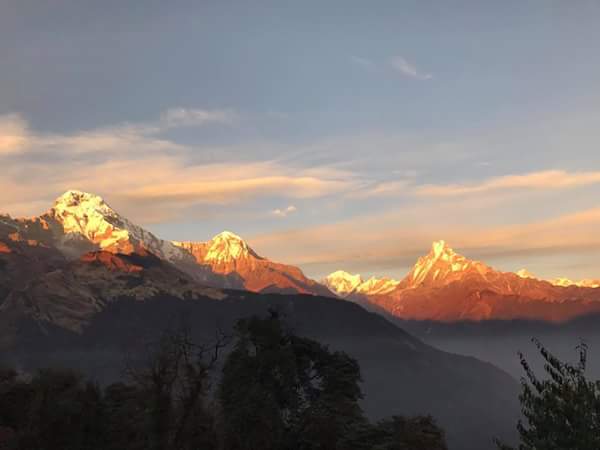
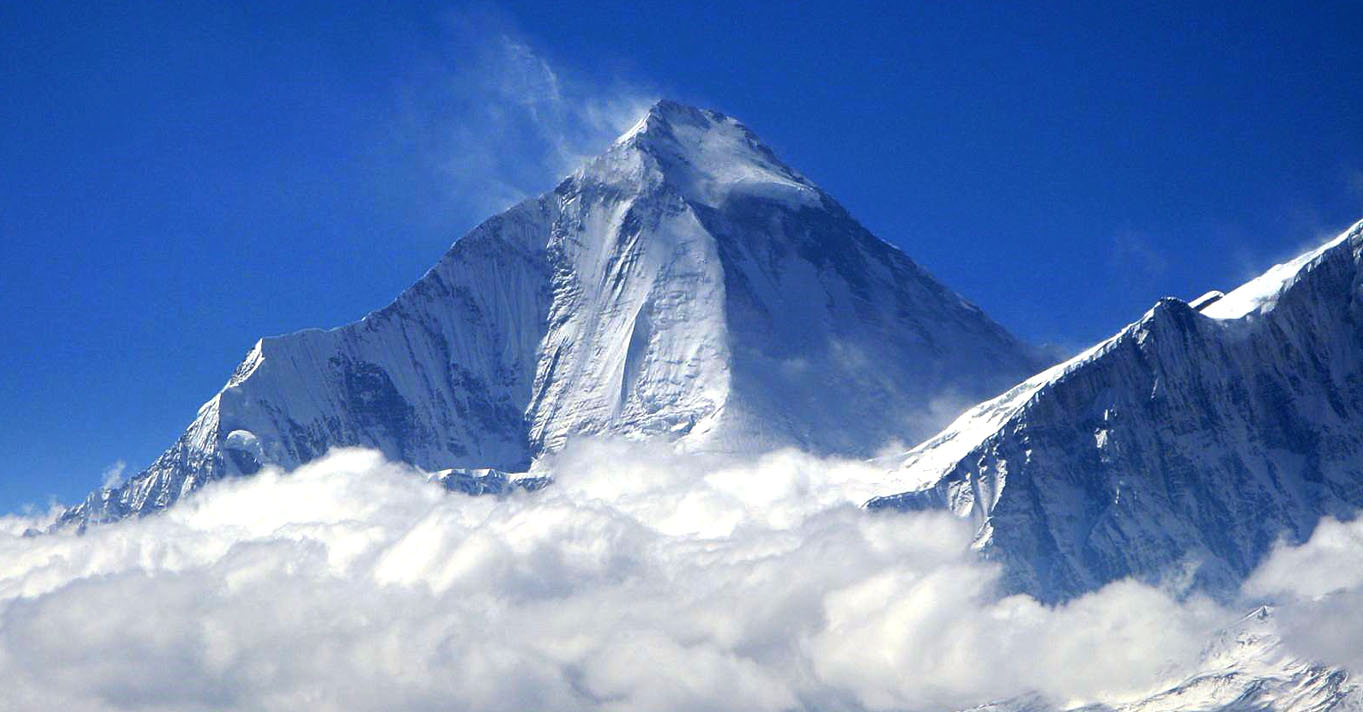
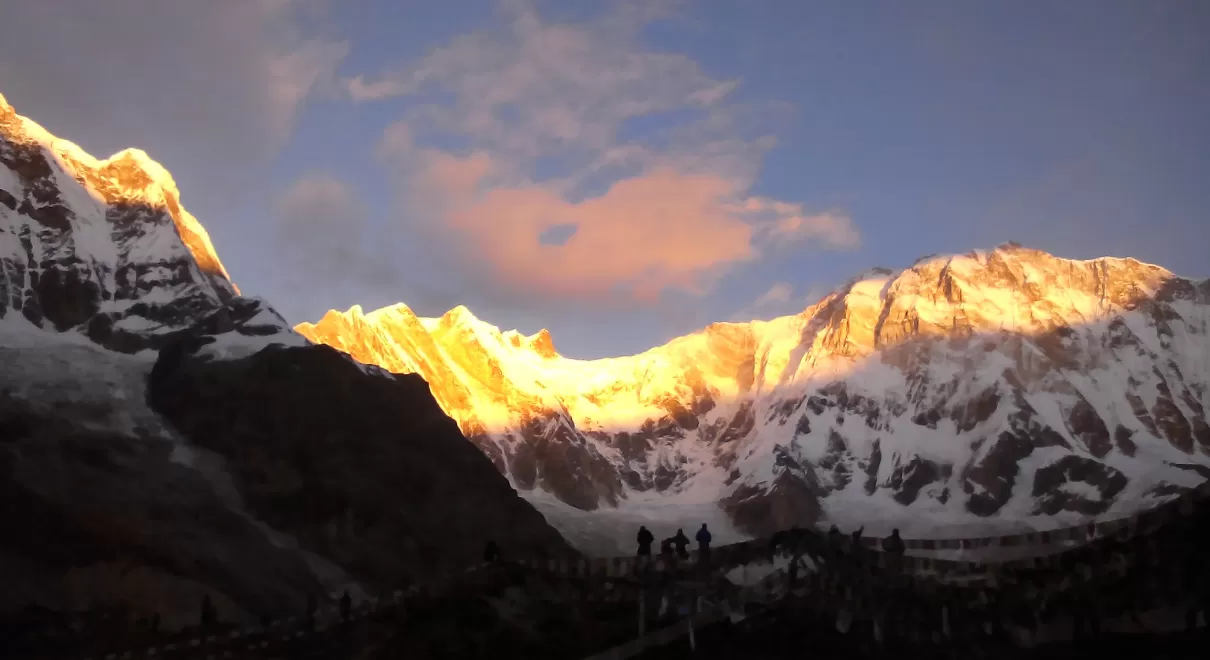
The trek reaches its highest point at the Poon Hill sunrise view, which requires trekkers to climb from Ghorepani before dawn. Most trekkers stop speaking as Dhaulagiri (8,167 m) first light transforms snow into gold and the Annapurna massif turns into a black-and-white picture against the colorful sky. That silent moment explains the entire situation.
When to Do the Ghorepani Poon Hill Trek
The two golden windows for the Poon Hill trek from Pokhara are the following:
Autumn (October–November): This season establishes itself as the peak trekking time because hikers encounter perfect weather conditions, and they can see all the mountain peaks. The Poon Hill sunrise view offers its best experience because more trekkers use the trail during this period.
Spring (March–April): The rhododendron forests display their complete bloom, which creates bright colors that cover the entire hillsides. The weather remains comfortable throughout the day. The Ghorepani Poon Hill Trek reaches its highest visual appeal during this season, which most benefits viewers who seek more than mountain views.
Winter (December–February): People can go outside during this time, but they need to know that excellent conditions exist. Snowfall happens frequently in the area above Ghorepani. Hikers should carry winter equipment, and they must expect to see less in hazardous weather.
Avoid traveling during the monsoon (June–August) due to heavy rain, which creates hazardous paths and obstructs mountain views.
Culture and People: The Soul of the Trek
The Ghorepani Poon Hill Trek takes trekkers through Magar and Gurung villages, which serve as the main settlement areas for both ethnic groups, who are among Nepal's most prominent hill-dwelling communities. The Gurungs who served as Gurkha soldiers throughout history show a warm and resilient nature while providing exceptional hospitality to others. The tea house owners who operate their businesses along the trekking path belong to Gurung families, who have provided accommodation to trekkers for many years
You should engage with your hosts through conversation. You should learn a few words of the Nepali language. You need to inquire about the festivals. The Tihar festival lights, the daily life patterns of people who live at high altitudes, and the distance that children from the mountains travel to their schools create the special experiences that make a successful trek turn into a transformative journey.
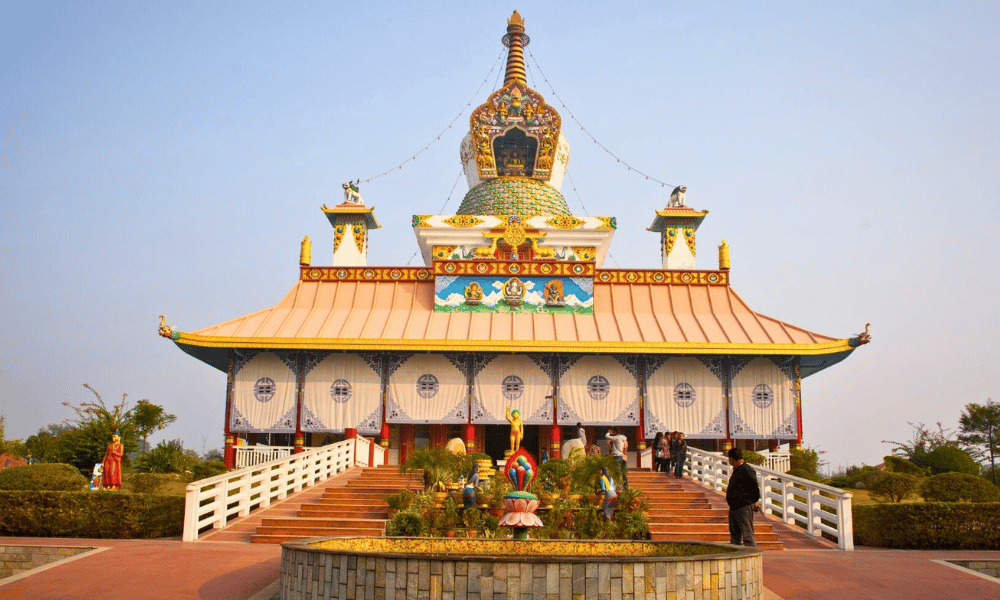
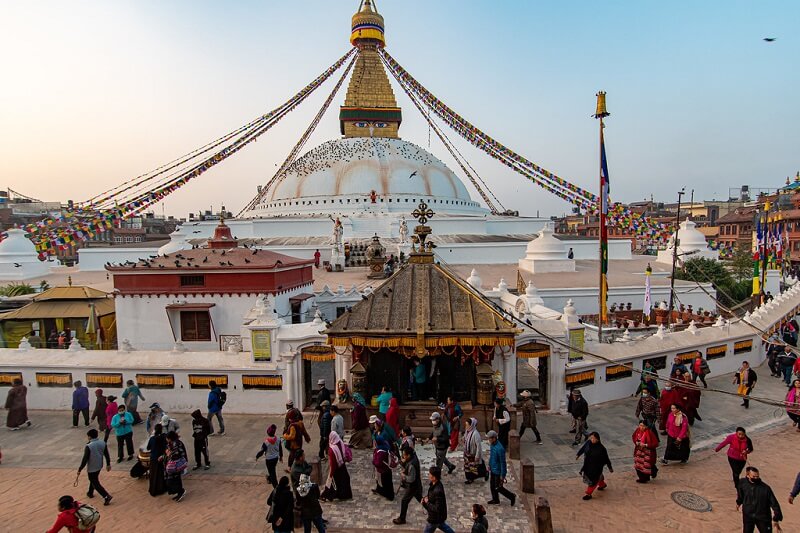
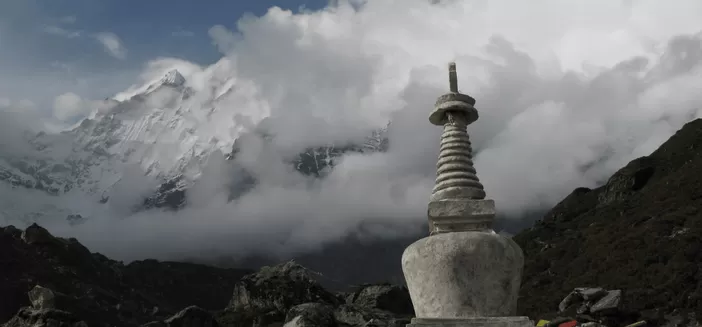
The Annapurna trek in Nepal introduces hikers to stone-paved village streets that extend through the area, together with prayer wheels and vibrant Buddhist stupas and strings of prayer flags that flap in the breeze. The local customs require people to remove their shoes in homes that they visit through invitation, to walk clockwise around stupas and mani walls, and to wear modest clothing in village areas.
Permits and How to Get There
Permits required:
ACAP (Annapurna Conservation Area Permit): The entrance fee costs NPR 3,000, which equals approximately USD 22
TIMS Card (Trekkers' Information Management System): The entrance fee costs NPR 2,000, which equals approximately USD 15
You can obtain both documents at the Nepal Tourism Board office in Pokhara or through your trekking agency.
Getting there: All Ghorepani trek packages typically begin with a drive from Pokhara (roughly 30 minutes by vehicle) to Nayapul or Birethanti. Kathmandu provides domestic flights, which take 25 minutes to reach Pokhara, while buses take 6 to 8 hours for the same journey.
Accommodation, Food, and What to Pack
Accommodation: The complete pathway follows the traditional route, which leads to tea houses throughout the journey. The lodges provide basic yet pleasant rooms that include twin beds and blankets, plus shared bathroom facilities. The establishment provides hot showers, which require customers to pay a small charge. The lodges provide Wi-Fi access, which fails to function properly for users who attempt to connect from areas above Ghorepani.
Food: The basic meal for trekkers consists of dal bhat, which includes lentil soup and rice, and provides maximum satisfaction for hikers who complete their trail activities. The most common items offered by most lodges include pasta and noodles, plus fried rice, eggs, pancakes, and tea house favorites. Budget NPR 600–1,200 per meal.
Packing essentials:
Common Problems Trekkers face and how to solve them
1. The Ulleri staircase shock
Problem: The people who trek through the area make an error when they plan their second day of trekking. The path to Ulleri requires trekkers to ascend a stone staircase that contains almost 3000 steps, creating an unending climbing experience.
Solution: The suggested method requires trekkers to maintain a slow walking speed. The recommended walking speed should enable you to carry on a conversation without experiencing breathing difficulties. The walking pace needs to be maintained through the use of small walking movements. The walker should rest during the walk whenever they require it. The trek to the summit does not operate under competitive rules because all hikers who reach it experience a deep sense of accomplishment.
2. Cold at Poon Hill summit
Problem: You will ascend to a height of 3210 meters between 430 and 500 AM while the area remains dark. The weather conditions during the autumn and winter periods can produce temperatures that fall below zero.
Solution: You should sleep while wearing your trekking clothes. You need to bring all your warm clothing items for this particular morning. The thermos is an essential item for transporting hot tea from your lodge up the mountain.
3. Altitude discomfort
Problem: The altitude of 3.210 meters does not qualify as extreme, yet some trekkers experience mild headaches and breathless conditions beyond the Ghorepani point.
Solution: People need to drink sufficient water by consuming 3 to 4 liters of water daily. They should ascend at a steady pace. People should descend when their symptoms become worse instead of better. The Ghorepani Poon Hill Trek itinerary demonstrates gradual acclimatization because it helps trekkers reach their highest point, yet most people consider this route an accessible trek in Nepal because of its altitude.
4. Overloading your backpack
Beginners who start the hiking process face problems because they pack too much. The solution requires you to select a day pack that weighs between 8 and 10 kilograms. Your agency can help you arrange for a porter who will carry your main bag at a low cost to improve your daily experience.
Mistakes Beginners Make on the Poon Hill Trek
Booking without a guide or porter: The trail is well-marked, but a local guide provides two benefits because he shows visitors the local culture and protects their safety while helping the community.
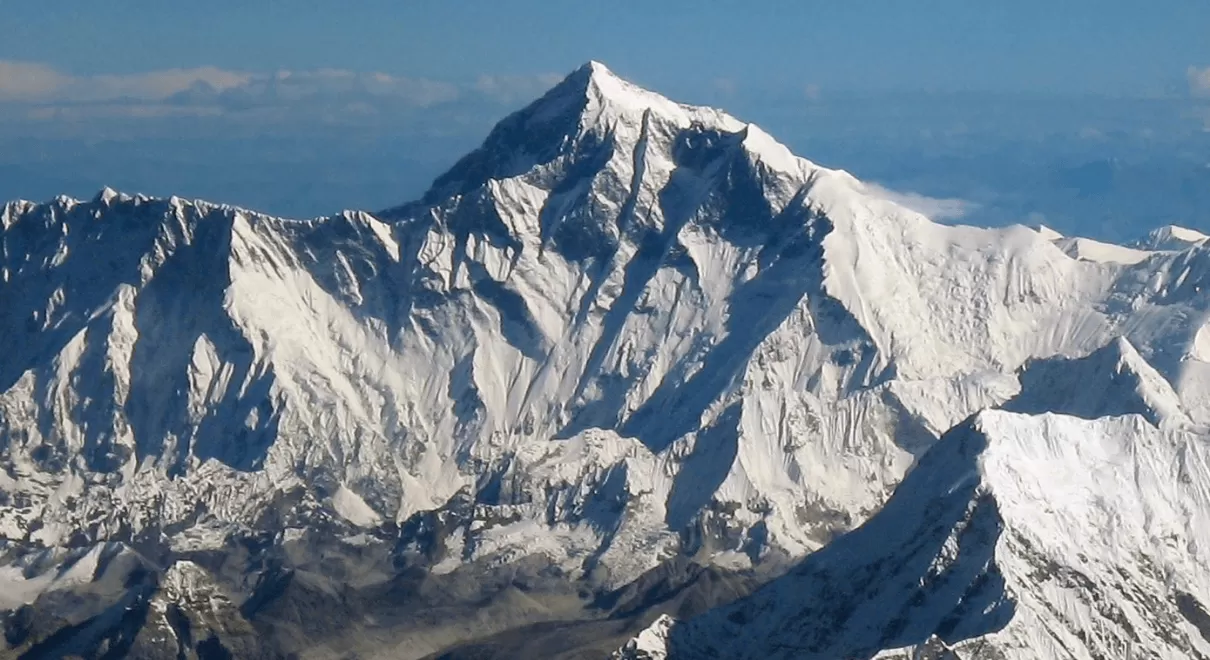
Neglecting to train beforehand: The two weeks of daily walking and stair climbing will improve your trekking experience at the base of Mt Everest.
Skipping the sunrise: Some trekkers skip the 4:30 AM alarm. Your most unwise choice for this trek is to make this decision. The entire purpose of the trek is for visitors to see the sunrise from Poon Hill.
Rushing through villages: The trail provides equal value through cultural encounters, which match the mountain views. You should walk at a slower pace through the village.
Underestimating weather changes: You should bring rain gear to the dry season because mountain weather remains unpredictable. The mountain weather conditions will make it impossible to predict.
Tips and Research: Making the Most of Your Trek
You need to book your Ghorepani trek package with a licensed, registered Nepali trekking operator because this method guarantees your trekking permits, delivers professional guiding services, and provides complete insurance protection.
Please bring cash; ATMs exist in Pokhara, but they don't operate on the trail. Your daily expenses should range between USD 20 and 30 because this amount will cover your extra food costs, accommodation expenses, and other incidentals, which your package does not include.
You need to follow the "leave no trace" principle. The Annapurna Conservation Area is one of Nepal's most biologically diverse regions. You must return your plastic waste to Pokhara.
You should plan an extra day at Ghorepani if your schedule allows for it. The second morning on Poon Hill,when most trekkers have moved on, is quieter and often just as stunning.
Flora, Fauna, and the Living Mountain
The Ghorepani Poon Hill Trek trail passes through forests that grow in one of the planet's most biologically diverse protected regions. The Annapurna Conservation Area contains more than 1200 flowering plant species, which include Nepal's national flower, the red rhododendron, and it also hosts 478 bird species and various mammals, including the hidden Himalayan tahr, barking deer, and rare clouded leopards.
Photographers organize whole trips to Ghorepani because the rhododendron canopy above the area reaches its maximum thickness and most colorful state during springtime. The forests display their autumn colors through amber and gold hues. The birds create valuable experiences, which make it necessary to keep both your eyes and ears active during the walk.
Book Your Ghorepani Poon Hill Trek
The Ghorepani Poon Hill Trek is the best 6-day Annapurna trek from Pokhara, and it is one of the most rewarding outdoor experiences available anywhere in the world at this price point. The combination of proper preparation, proper guidance, and your willingness to accept new experiences will transform your understanding of mountains and yourself.
Our Ghorepani trek package includes airport/hotel transfers, all permits, an experienced English-speaking guide, a porter, all tea house accommodation, and breakfast and dinner throughout the trek. We have operated this route for many years, which gives us knowledge about each lodge, every shortcut, and all the viewpoints that deserve your attention.
Ready to take the first step? Contact us today to check availability for your preferred dates. Spaces fill quickly during the October–November and March–April peak seasons — don't miss out on the sunrise that will stay with you forever.
Sunrise at Poon Hill at an altitude of 3240 m. Observing Dhaulagiri, Annapurna, and Machhapuchhre emanate the golden hue of the alpenglow from the summit of Poon Hill is a spectacular moment in the Himalayas, and will be etched in your memory forever.
Rhododendron Forests in Full Bloom The national flower of Nepal creates beautiful red and pink forest tunnels which connect Ulleri and Ghorepani. The tunnels reach their most beautiful state during the months of March and April.
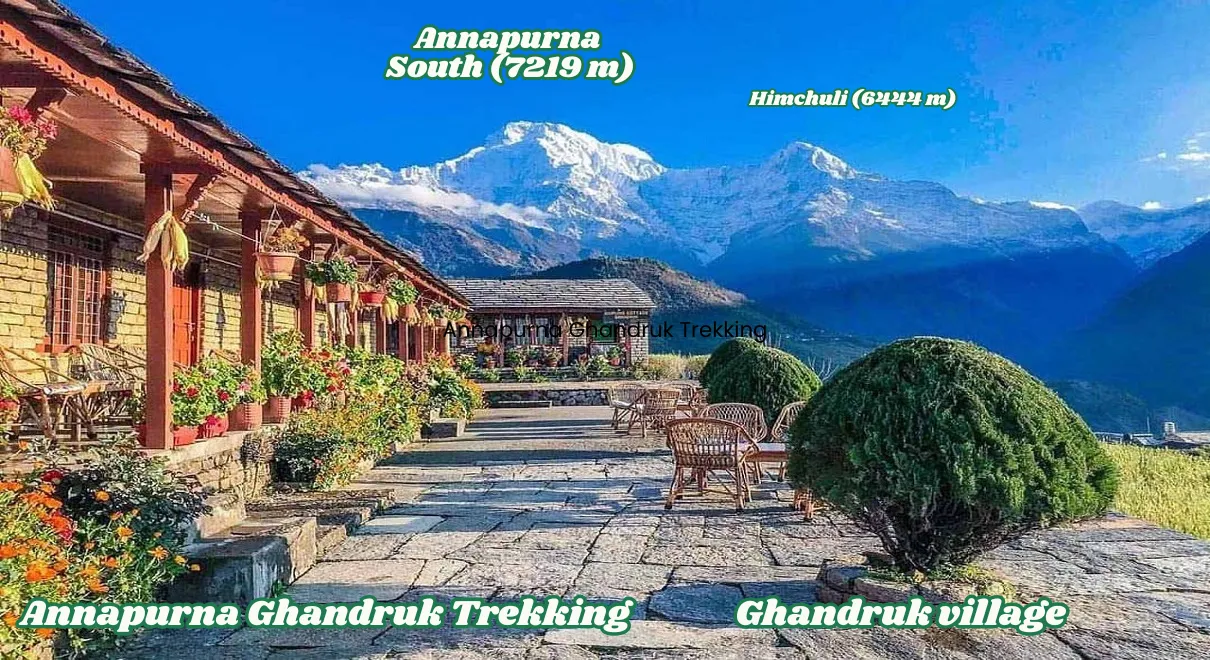
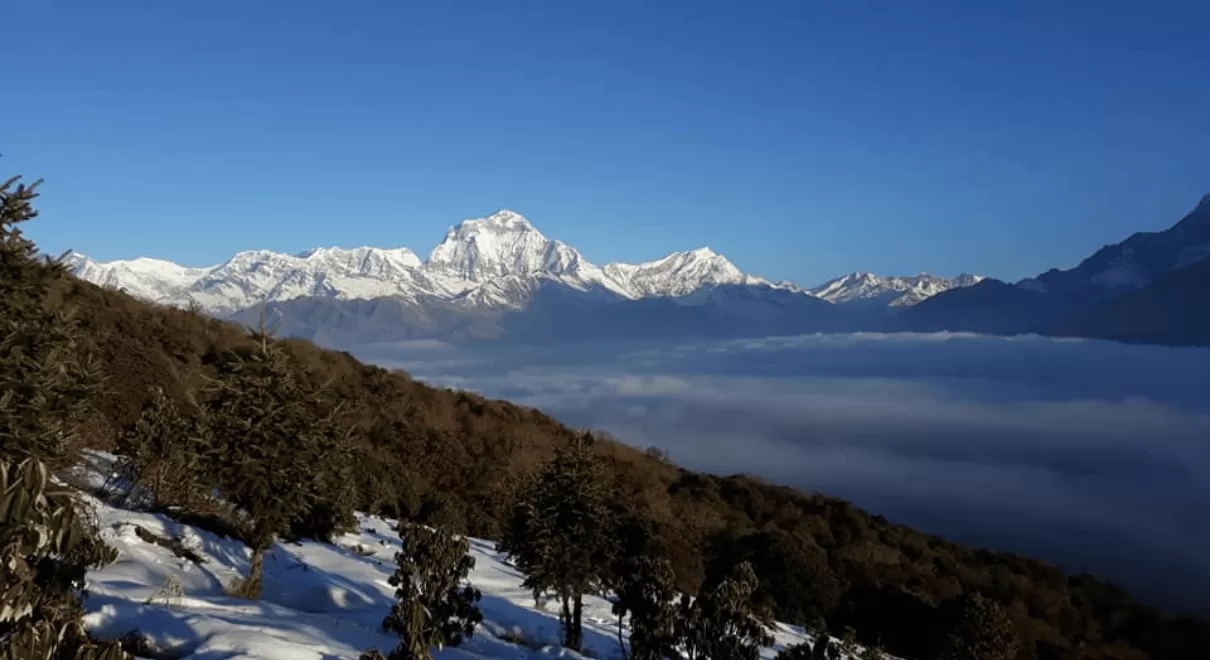
The Annapurna Range Panoramas display their entire mountain range. The villages situated along the ridge which includes Ghorepani and Ghandruk provide continuous views of the Annapurna massif from sunrise to sunset.
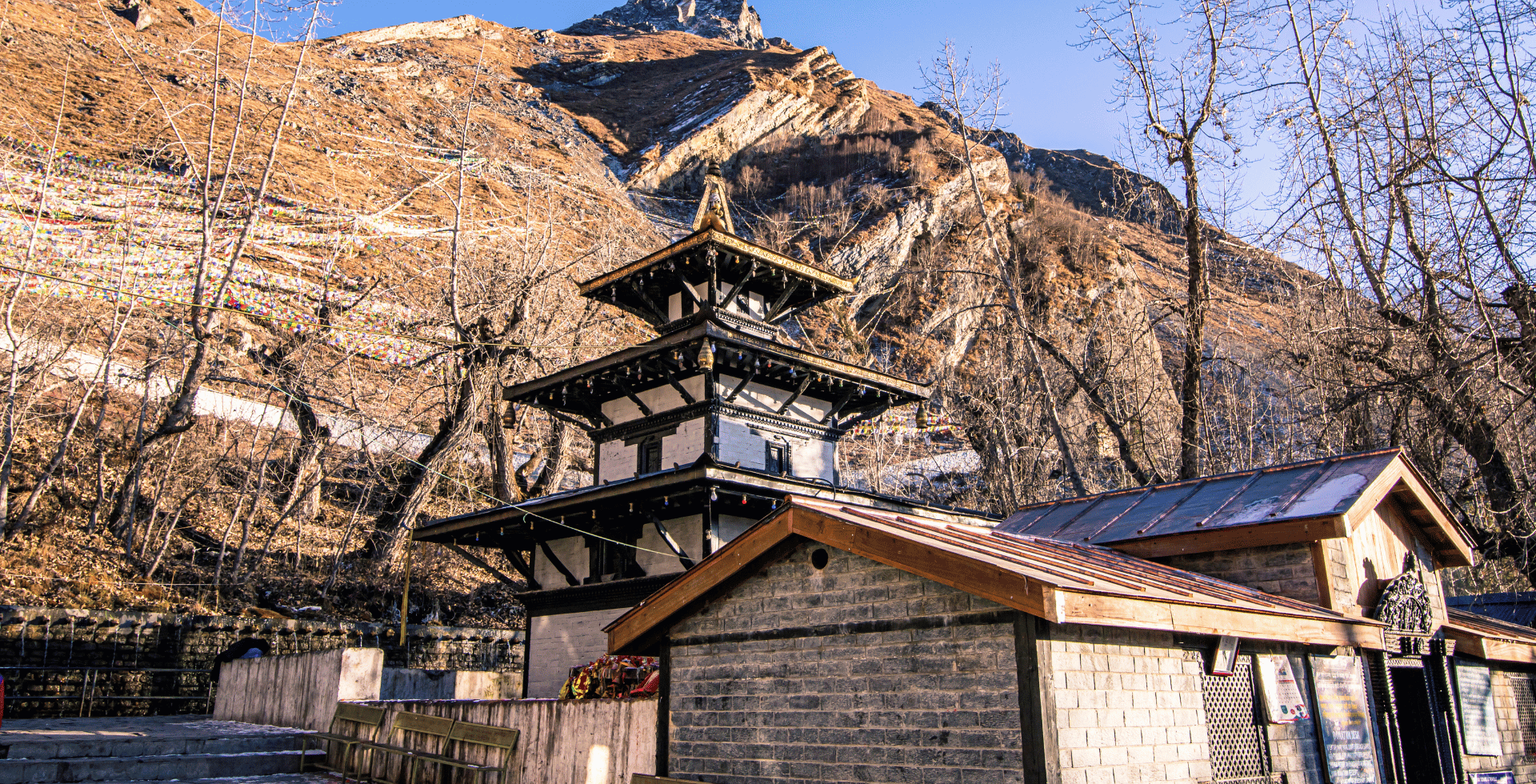
The Ghorepani poon hill trek provides authentic cultural experiences through its genuine stone villages and Buddhist mani walls and traditional Gurung customs. The Himalayan trek provides authentic cultural experiences through its genuine stone villages and Buddhist mani walls and traditional Gurung customs.
The warmth and hospitality of the teahouse create a comfortable atmosphere for visitors. The teahouse provides a warm and friendly environment which becomes especially inviting for visitors after they complete their mountain hiking activities.
| 1 | 2 | 3 | 4 | 5 | 6 | 7 | 8 | 9 | 10 | |
| USD 580 | USD 345 | USD 345 | USD 295 | USD 300 | USD 280 | USD 280 | USD 270 | USD 270 | USD 260 | |
| USD 760 | USD 525 | USD 525 | USD 480 | USD 480 | USD 460 | USD 460 | USD 445 | USD 450 | USD 440 |
Start From
Get personalised guidance for any Nepal adventure — with expert planning and safety support.
We offer expert advice, flexible options, and tailor-made itineraries.

Himalayan Smile Treks provided an excellent experience through their Ghorepani Poon Hill Trek. Guide Lakpa Sherpa ensured safety and comfort throughout. The Poon Hill sunrise created a breathtaking experience, which displayed stunning views of Annapurna. The trek became smooth and enjoyable because of the scenic trail and excellent organizational efforts.
The Himalayan Smile Treks organized an excellent Ghorepani Poon Hill Trek. The guide Karma Sherpa showed both friendliness and professional behavior. The trek provided picturesque forests, together with traditional villages and breathtaking mountain vistas. The sunrise at Poon Hill created an everlasting memory that transformed the entire experience into something extraordinary.
The Ghorepani Poon Hill Trek through Himalayan Smile Treks proved to be better than we expected. Guide Chiring Sherpa ensured a safe and enjoyable journey. The Annapurna region provided an ideal trekking experience through its rhododendron forests and picturesque villages, and its stunning sunrise views.
Trekking Ghorepani Poon Hill with Himalayan Smile Treks was fantastic. Dawa Sherpa, who served as my guide, provided both his expertise and assistance throughout our journey. The short trek became highly rewarding because the trail maintained its quality, and the sunrise view from the Annapurna range created breathtaking sights.
The Himalayan Smile Treks company provided outstanding trekking services through the Ghorepani Poon Hill route. The trek guide Namel Dherpa managed all operational tasks. The trek route provided beautiful views through forested areas and traditional settlements and breathtaking Himalayan landscapes. The Poon Hill sunrise experience created an unforgettable moment that made the trip special.
The Himalayan Smile Treks company conducted the Ghorepani Poon Hill Trek which became an unforgettable experience. The guide Dorje Sherpa delivered excellent assistance throughout the journey. The trek provided a tranquil experience combined with beautiful scenery and stunning mountain vistas. The sunrise viewpoint delivered a magical experience which justified every step taken to reach it.
The Ghorepani Poon Hill Trek became a safe and enjoyable experience through the efforts of Himalayan Smile Treks. Kami Sherpa, the guide, managed the trek by controlling its speed to secure his group's comfort level. The trail showed its beauty through the existence of rhododendron forests and the breathtaking views which presented both Annapurna and Dhaulagiri mountain ranges.
The Ghorepani Poon Hill Trek with Himalayan Smile Treks proved to be an excellent short trekking experience. The guide Ang Dorje Sherpa displayed professional conduct throughout the trek. The combination of mountain sunrise views and beautiful hiking paths and welcoming local communities created an unforgettable experience.
The Himalayan Smile Treks offers an excellent trek on the Ghorepani Poon Hill route. Guide Nawaraj Tamang displayed both a friendly personality and profound knowledge. The trek provided both peaceful scenery and breathtaking mountain vistas, together with an unforgettable sunrise experience.
The Ghorepani Poon Hill Trek organized by Himalayan Smile Treks demonstrated excellent planning. Michele Tamang the guide provided protection to all members while maintaining their well-being. The trail presented breathtaking views together with an extraordinary sunrise experience from Poon Hill.
The team at Himalayan Smile Treks created an unforgettable experience through their Ghorepani Poon Hill Trek. Guide Dhurba Khanal showed professionalism while providing assistance to the group. The trek provided stunning natural scenery, together with traditional village experiences and breathtaking views of the Himalayas.
Himalayan Smile Treks arranged the Ghorepani Poon Hill Trek which succeeded in achieving what they planned to do. Pramod Paggeni who served as the guide led the group through their entire journey without any problems. The trek provided excellent rewards because of its beautiful trails and its stunning sunrise vistas.
The amazing Ghorepani Poon Hill Trek was provided by Himalayan Smile Treks. The guide Dharma Shubedi showed his expertise through his friendly approach to the trek. The trek provided beautiful views together with a tranquil atmosphere which made it suitable for all trekkers.
Himalayan Smile Treks organized the Ghorepani Poon Hill Trek perfectly, which included all necessary elements for the trek. Nawaraj Khadka, the guide, provided safe protection during the trek. The trek became exceptional through its beautiful views and its unforgettable sunrise.
Himalayan Smile Treks created an exceptional experience for the Ghorepani Poon Hill Trek through their services. Lapsang Dherpa served as the guide, providing both support and his extensive knowledge of the area. The trek provided visual beauty and tranquil moments, showcasing breathtaking mountain scenery.

$1800
.jpeg1696849633jpeg "Ghandruk Loop Hot Spring Trek")
$500
$645
$840
.jpeg1134057841jpeg "Annapurna base camp trek")
$ 630
$290
$670
$1185
$740
$250
.jpeg198170075jpeg "Jomsom Muktinath Ghorepani Trekking")
$780
$750
$340
.jpeg1576845833jpeg "Panchase Trek")
$700
.jpeg1822983722jpeg "Khopra Danda Trek")
$
.jpeg1154213768jpeg "Dhaulagiri Sanctuary Trek")
$2500
.jpeg1278648188jpeg "Gurung Heritage Trail Trek")
$1500
$
$600
$
$2500
$
$
$
$490
$


↑
.png "NTB")
.png "Pata")