
1 Night 2 Days Poon Hill Trek
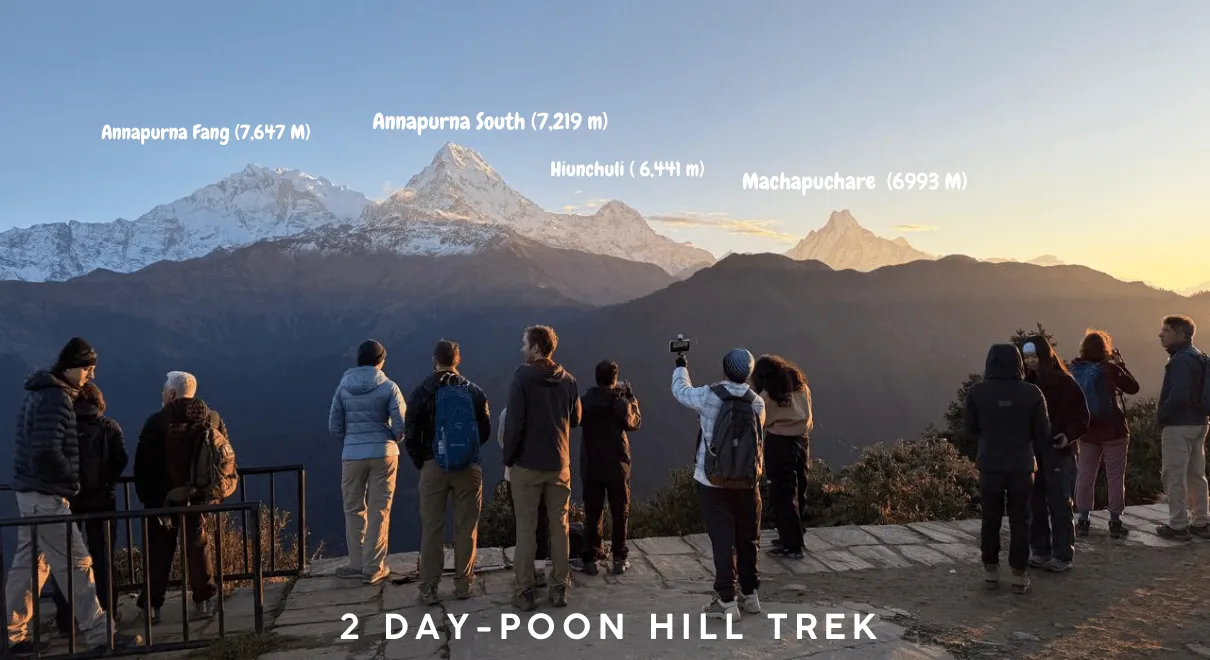
1 Night 2 Days Poon Hill Trek from Pokhara is a quick sunrise trek in the Annapurna region, where you can view two of the world's highest mountains, Annapurna and the Dhaulagiri range. The short hike starts from a 2-and-a-half-hour Jeep drive from Pokhara to Ulleri Village (2,050 m / 6,725 ft). From here 5 hours hike to Ghorepani (2,874 m / 9,429 feet).
On the second day, you will climb Poon Hill (3210 m) for majestic views of Dhaulagiri and the Annapurna range. The views cover Churen Himal is located in the Dhaulagiri region of western Nepal, Annapurna and Manaslu mountain ranges
The quick Poon Hill Trek offers excellent mountain views, Gurung and Magar culture, and terraces in Tekhedunga and Ulleri Village. The old trade route of the Thak Khola and Tibet via Upper Mustang. In the trekking route, you will have all modern facilities, including an attached bathroom, wifi, electricity, and western food.
The 1 Night 2 Days Poon Hill Trek from Pokhara accomplishes your dream to view with your bare eyes the prestigious mountains of Annapurna and Dhaulagiri. The Ghorepani Village, situated at 2,880 metres (9,449 feet), has several mountain lodges with good hospitality and is an overnight stop for the next morning Poon Hill sunrise.
Drive from Pokhara to Ulleri by Jeep.
The Annapurna Conservation Area Project (ACAP) entry checkpoint is in Birethanti, so it’s the right place to show your trek permits (ACAP and TIMS) before continuing. Have copies of your passport and permit ready, and ask your driver to wait while you check in. Allow 20-30 minutes.

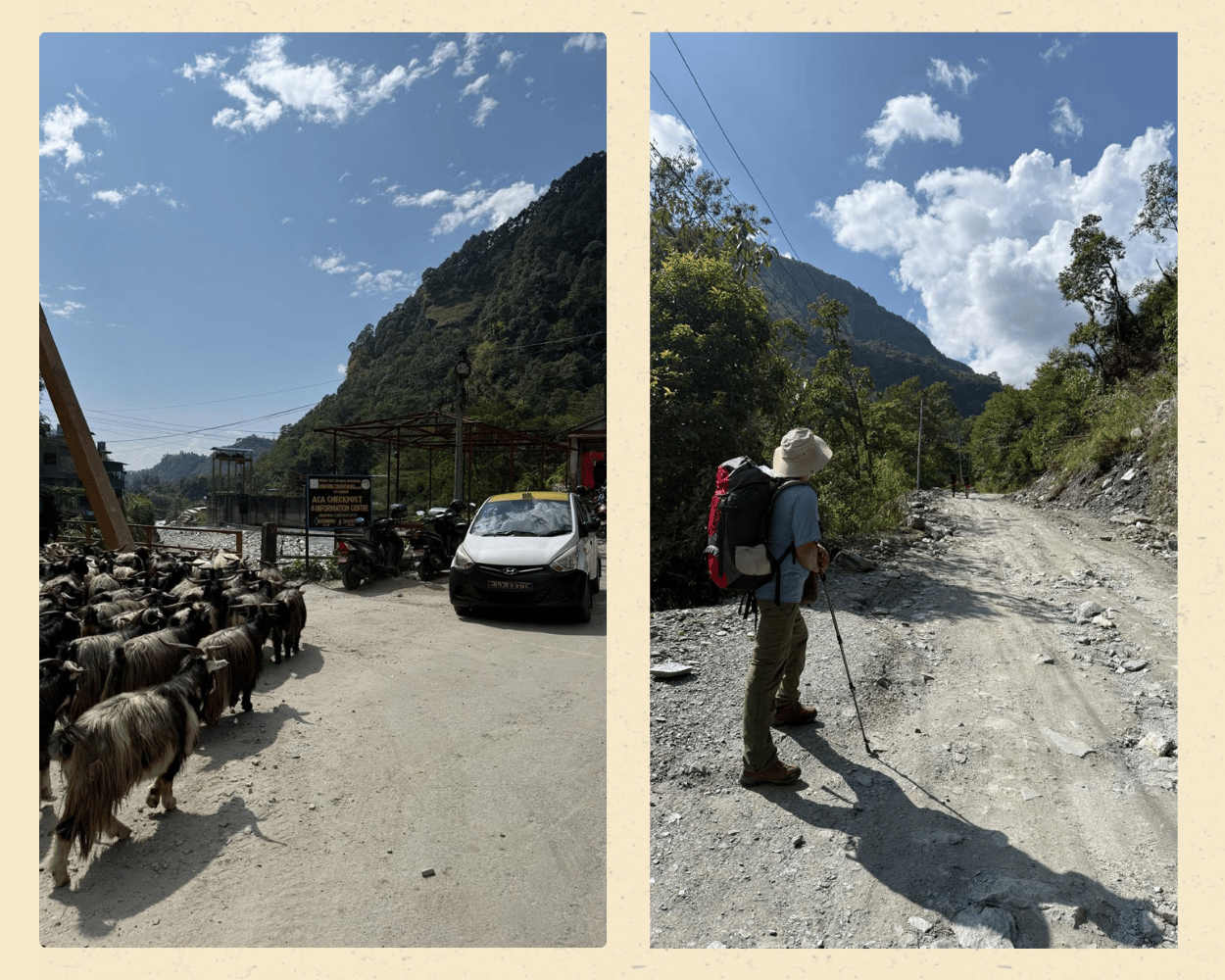
There is a road of 40 km from Pokhara to Ulleri. One travel agency's plan indicates a total of 40 km for four hours, while another indicates the 42 km Pokhara to Birethanti leg is only part of the trip. The overall distance of 40-45 km is likely for all.
About 3 to 4 hours with stops. Pokhara to Nayapul is about 1.5 hours, and Nayapul to Ulleri is about 3 hours on the rougher part.
The road is paved all the way to Nayapul; after Nayapul Bazaar, it is off-road. It is rough and only accessible by a 4-wheel vehicle. One traveler thought it was doable, with only a couple of very bumpy stretches. Check with your driver on the day, as the track is new and not sealed, and can be badly affected by rain. Reports say vehicles come in Ulleri mainly in dry months. November is a dry month, so conditions ought to be good.
Hille on the Poon Hill Trek
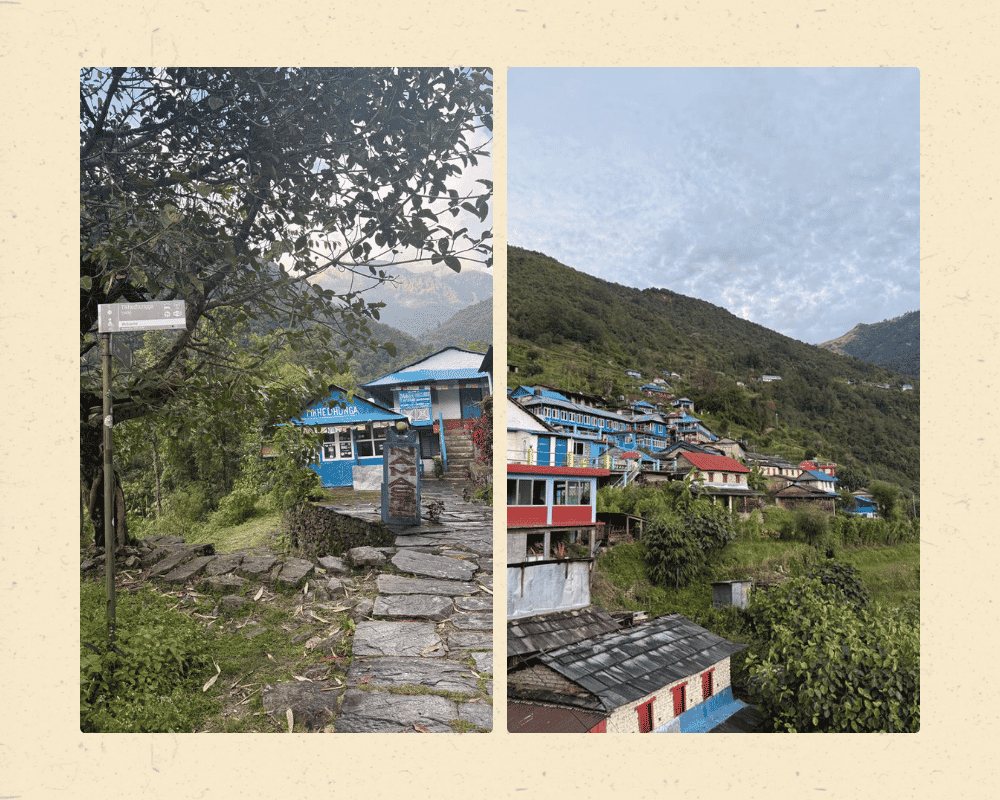
In the Annapurna Conservation Area of Nepal is the village of Hille, located at an elevation of 1500m on the Ghorepani - Poon Hill Trek route. A few steps before Tikhedhunga and on the banks of Bhurungdi Khola is the village, populated by people from Gurung and Magar ethnicities. A stone-paved footpath leads trekkers from Birethanti and Nayapul through the village. A rugged jeep road also passes through.
The village is situated at a moderate elevation of the Annapurna Foothills, providing trekkers a pleasant entry. Along the route to Hille, one encounters waterfalls, and the area around is dominated by terraced millet and rice fields. Further on, there are rhododendron-covered hills. Several simple tea shops provide warm food, drinks and beds for trekkers.
Ulleri: The Village with No End to Stairs
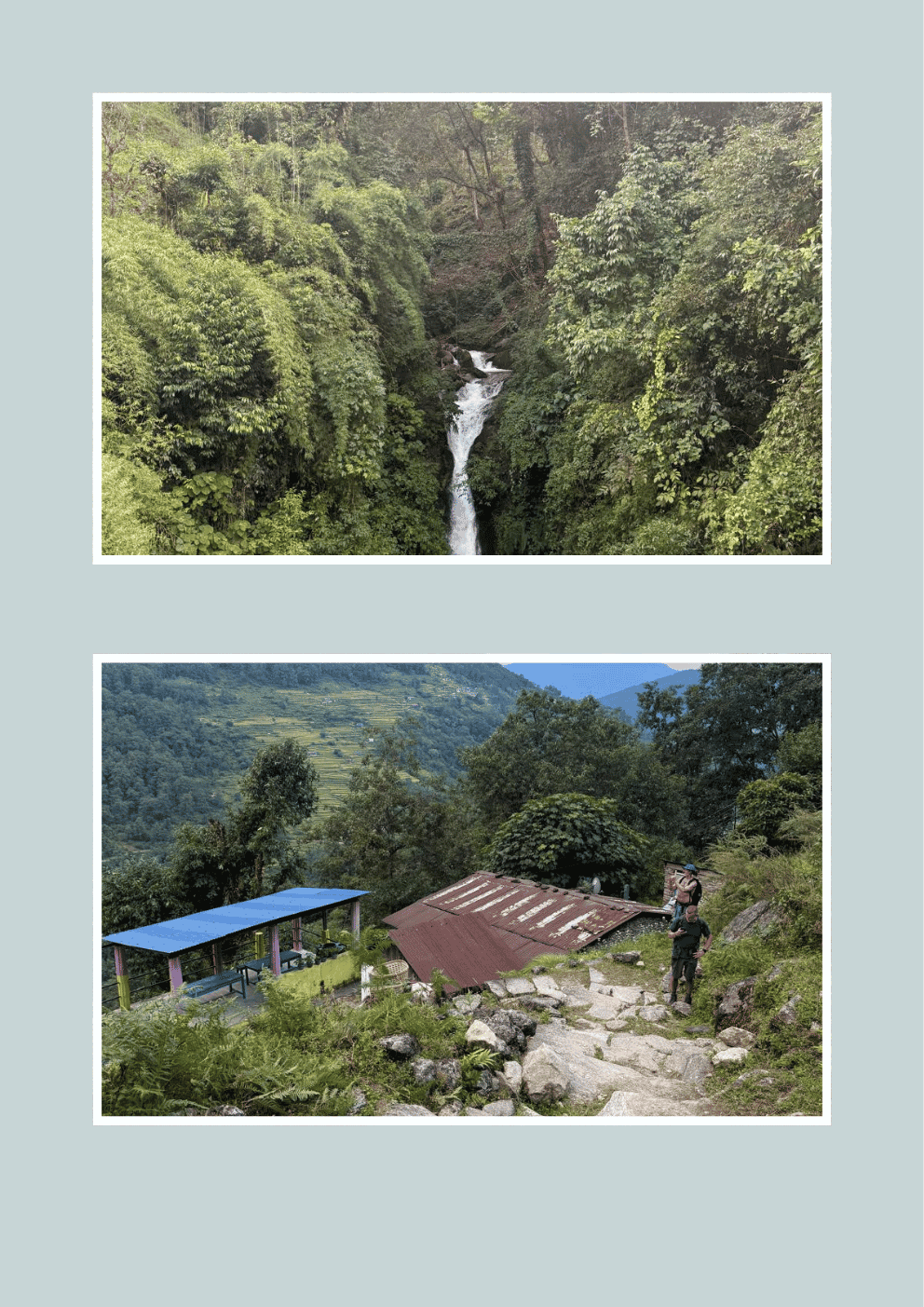
Ulleri is a Magar and Gurung village in the Annapurna Conservation Area in Kaski District, at an altitude of about 2070 meters. Ulleri is located right above Tikhedhunga and on the way to the Ghorepani-Poon Hill Trek. Ulleri is known for the stone staircase that leads into the village. Most trekkers consider this section to be the most grueling of the trek; however, the great views reward the effort. It consists of over one thousand steep steps, originating from the valley of Bhurungdi Khola.
Once inside the village, the views open up. Cultivated fields are on the terraced hillsides, and small slate houses built from local materials line the alleys. On a good day, Annapurna South and Hiunchuli are visible over the top of the hills. Higher still, in the direction of Banthanti and Nangethanti, are the oak and rhododendron forests.
Ulleri has a population whose culture and way of life are both welcoming and uncomplicated. Farming and raising livestock are the means by which most households survive and flourish, supplemented by trekking. A simple meal of hot dal bhat (lentil soup and rice), tea, and a basic room at one of the teahouses run by the families is enough to sustain and provide a restful pause before the final stage to the destination of Ghorepani.
Ghorepani: The Gateway to Poon Hill
Ghorepani is an active Gurung and Magar village located in Myagdi District of the Annapurna Conservation Area. At 2,860 meters, it is the major stop on the trek from Ghorepani to Poon Hill and is located on a ridge below Poon Hill. The name may be interpreted as "horse water" as this was the place where mule caravans would come to have water and rest during their travel from the hills to the plains.
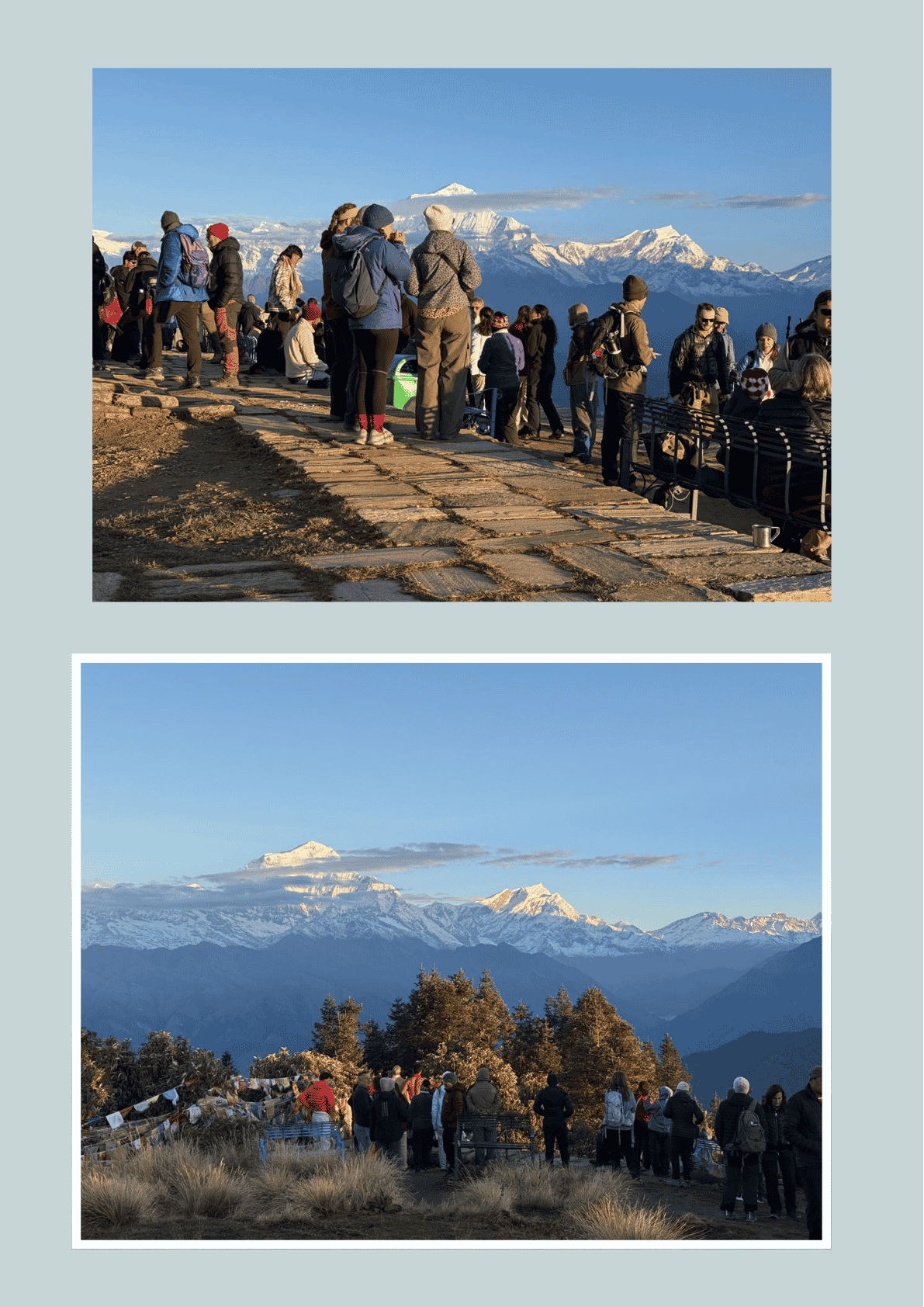
This village is known for its sunrise view. Just before sunrise, trekkers start climbing Poon Hill which reaches 3,210 meters above sea level, and there they enjoy golden sunlight that illuminates Dhaulagiri, Annapurna South, Machhapuchhre, and many other mountains. This is considered one of the most famous mountain views in Nepal.
Ghorepani is characterized by its narrow alleys, which are filled with stone and slate houses with dining areas glazed and heated by stoves. Trekkers will find typical Nepalese food such as dal Bhat, noodle soup, and hot lemon tea here. The social atmosphere of Ghorepani allows guests to get acquainted with each other while they have dinner.
Red and pink flowers in the rhododendron forest in the surrounding area during the spring season make March and April very beautiful. Skies become bright and clear in autumn. Sometimes winters are cold and snowy, yet the village remains very friendly.
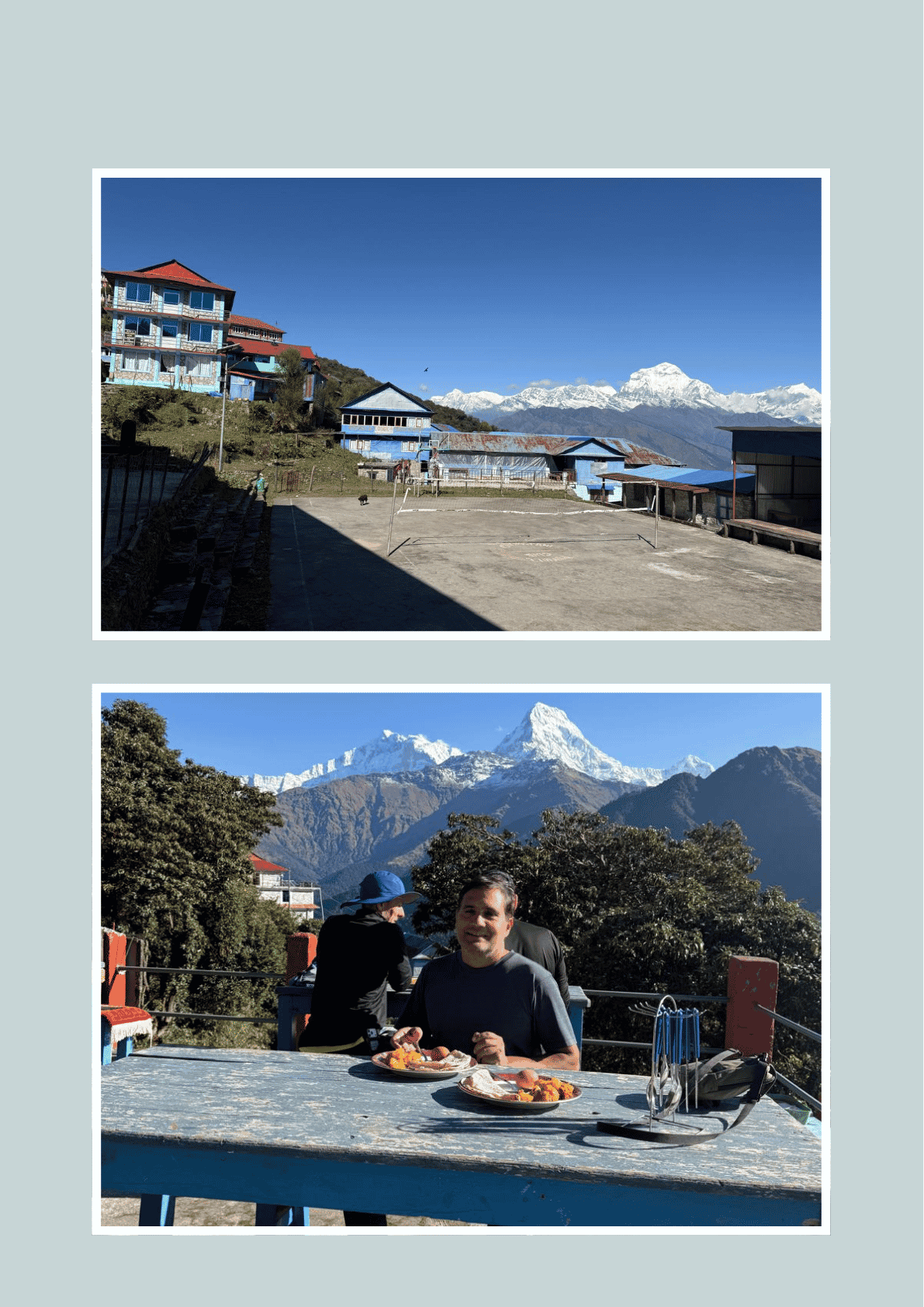
Poon Hill – Nepal’s Best Sunrise Point
Poon Hill is a hill point that is situated at an altitude of about 3,210 meters in the district of Myagdi in the Annapurna Conservation Area in Nepal. It is just above the village of Ghorepani and constitutes the best part of the Ghorepani-Poon Hill trek. The hill derives its name from the Magar ethnic group and has always been a significant landmark in the area.
The visitors usually start trekking towards the summit early in the morning, using a rocky-dusty track passing through the silent forest of rhododendron trees. The distance between Ghorepani and Poon Hill is about 45 to 60 minutes of climbing in total darkness.
The pay-off is spectacular views. With sunrise comes the glow that covers Dhaulagiri, Annapurna South, Annapurna I, Hiunchuli, Machhapuchhre, and Nilgiri, amongst many other peaks. There are often clouds in the valley below, which makes the scenery even more dramatic.
The best times are spring and autumn, when there are flowers and the sky is clear. Winter is snowy and quiet, while the monsoon rains usually obscure the view.
Many hikers then visit Ghorepani for a good breakfast before heading on to Tadapani or Chhomrong. Easily accessible and unforgettable, Poon Hill makes for a wonderful introduction to the Himalayas.
Trip Fact.
Duration: 2 Days
Maximum altitude: 3,210 m
Difficulty: Easy to moderate
Best Season: Oct–Nov and Mar–Apr
Accommodation: Tea house | Mountain Lodge
Meals: Included
Start/End Point: Nayapul
1 Night 2 Days Poon Hill Trek Highlights:
- Viewing the Sunrise at Poon Hill: Watch the sun rise over the snow-covered Dhaulagiri, Annapurna South, and Machhapuchhre peaks from a vantage point 3,210 meters high.
- Ulleri Stone Steps: Climb the famed stone staircase stretching up from Tikhedhunga, a hard but memorable part of one of the best trekking routes in the world.
- Rhododendron Forests: Walk through silent rhododendron and oak forests; in spring, the area becomes a feast of colors with its blossoms painted red and pink.
- Night at Ghorepani Village: Enjoy a comfortable night spent in a teahouse run by Gurung people, eating hot dal-bhat and having interesting conversations with other trekkers.
- Culture and Landscape: Travel past rice terraces, waterfalls, and villages of Magar and Gurung ethnicities located in the foothills of the majestic Annapurna range.
1 Night 2 Days Poon Hill Trek Itinerary.
Day 1: From Pokhara to Ulleri & Ghorepani
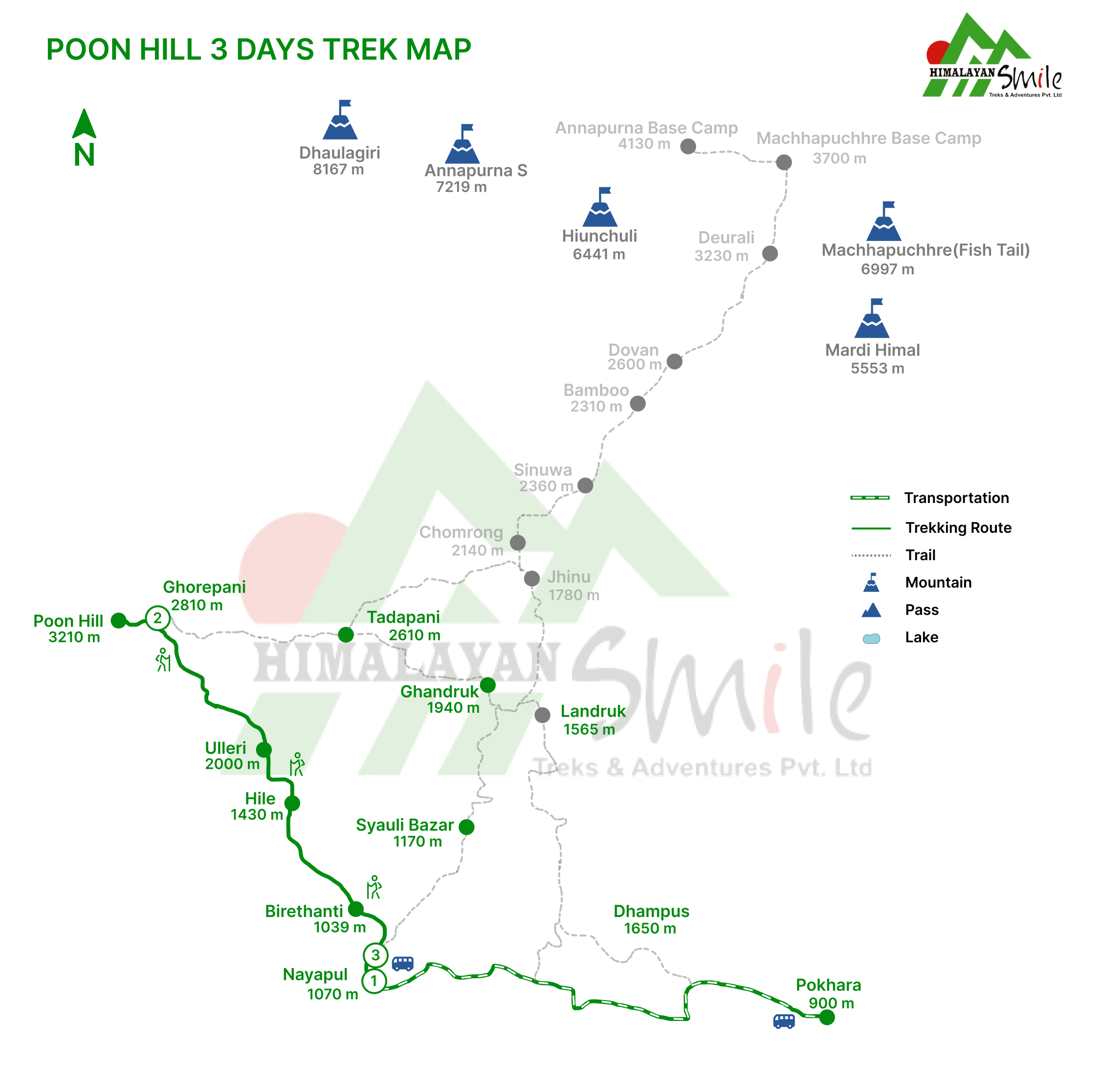
Commence the day by traveling from your hotel in Pokhara to Nayapul via a car that will take one and a half hours via the road linking Pokhara and Baglung. From Nayapul, you will drive via a jeep passing through Birethanti, a trailhead town located on the banks of the Modi River, to Ulleri via a steep road through the hills.
From Ulleri, start trekking to Ghorepani. The trek will be an easy one through the oak and rhododendron forest for 5 hours, passing by Banthanti and Nangethanti. You will reach Ghorepani by afternoon and check into a tea house for dinner of dal bhat and early next morning to climb up Poon Hill.
Day 2: Poon Hill Sunrise and Return to Pokhara
Start your second day before the sun rises. Take a quick hike to the summit of Poon Hill to see the beautiful sunrise and watch the sun illuminate the mountains and clouds below. After taking in the sights, return to Ghorepani for some breakfast, pack your things, and begin your trek back. Go down to Ulleri through rhododendron forests. Make your way past terraced farmland and waterfalls toward Tikhedhunga, Hille, and eventually Birethanti.
The trek back takes about 5 or 6 hours but can be shortened if you decide to take a jeep from Ulleri or Hille. Once you reach Nayapul, you will have a 1.5-hour drive to return to Pokhara. The rest of your time will be spent reflecting on your beautiful mountain trek and your time with the warm and welcoming people.
1 Night 2 Days Poon Hill Trek Cost
Two People: 280.00 Per Person (Twin sharing)
1 Night 2 Days Poon Hill Trek Price Including
- Accommodation in a mountain lodge run by local people during trek
- Meals on full board (breakfast, lunch, and dinner) during trekking
- One highly experienced mountain Guide and three porters (1 porter for 2 people),
- Accommodation food, drinks, salary, insurance, transportation of both trek guide and porters
- Group medical supplies (first aid kit)
- All necessary paper works and Annapurna conservation area entry permit
- TIMS Card (Trekker’s Information Management System card)
- All additional government tax
- Kathmandu/ Pokhara / Kathmandu transportation for guide and porter
- Pokhara to Ulleri 4 wheel drive.
- Nayapul / Pokhara private transportation
1 Night 2 Days Poon Hill Trek Price Excludes
- Nepal entry visa fee (USD 30 for 15 days / USD 50 for 30 days from the date of issue) (You may easily get a Nepal visa upon your arrival at Tribhuvan International Airport, Kathmandu)
- Airport to hotel pick and drop
- Hotel in Kathmandu and Pokhara
- International airfare
- Travel insurance
- All kinds of drinks (Alcohol, hot and cold drinks)
- Lunch and dinner in Pokhara (Approx 10-12 USD)
- Bar bills, telephone bills, and other personal expenses (shopping/ laundry)
- Tips to guide and porter
- Extra night accommodation in Kathmandu because of early arrival, late departure, and early return from the mountain(due to any reason) than the scheduled itinerary
- All expenses due to unavoidable events e.g. Personal illness strike etc.
- Helicopter evacuation charge in case of emergency whilst trekking
1 Night 2 Days Poon Hill Trek Frequently Ask the Question
1. Is it possible to complete the Poon Hill Trek in 1 night and 2 days?
Is a two-day trek possible? The standard trekking time to complete the Ghorepani Poon Hill Trek is about 4-5 days, but yes, you can complete it in two days. However, it would require significant speed. The itinerary starts by taking a jeep to Birethanti or even farther to Tikhedhunga. From there, it is about a five- or six-hour walk to Ghorepani, where you spend your first night. On the second day, you will walk an additional 45-60 minutes to Poon Hill (3,210m) to catch the sunrise. Finally, descend and jeep back to Pokhara.
Skipping days means missing local villages and gradual acclimatisation. This itinerary is for people who want to see Poon Hill, but only have a limited amount of time. You must start as early as possible.
2. How difficult is the 1 Night 2 Days Poon Hill Trek?
This Poon Hill Trek has an intermediate difficulty level. It can even be challenging as it tries to pack a longer itinerary into just a day and two nights. The biggest hurdle to this hike is Ghorepani. There is a huge height gain and steps to go with it. You'll probably end up hiking at least five to seven hours a day depending on where your jeep stops.
There's no difficulty associated with this hike. A little bit of hiking experience should suffice, along with headlamps and a bunch of warm clothes for the Poon Hill ascent before sunrise. While the altitude at 3,210m isn't really that much, the ascent to Ghorepani can make a few people feel sick. There's really nothing technical that's needed to enjoy this hike.
3. What is the highest altitude of the Poon Hill Trek?
Poon Hill Trek reaches its climax in Poon Hill itself, which stands 3,210 metres (10,531 feet) high above the ground. You reach it on the second morning of your trek after Ghorepani that is located slightly lower, at about 2,860 metres. This means that the last ascent will be just 350 metres.
However, even at this altitude, altitude sickness can become an issue, though not a very common one on a fast schedule. Headaches or fatigue may occur, and you should take enough water and climb slowly.
You will be rewarded with one of the most beautiful views of mountains, including Dhaulagiri, Annapurna South, Annapurna I, and Machapuchare.
4. Where does the 1 Night 2 Days Poon Hill Trek start?
Poon Hill trek takes one night and two days and usually begins from Pokhara, from where one takes a jeep or taxi to reach the starting point of the route. The majority of trekkers reach Nayapul via jeep/taxi (which takes about 1.5 hours), then go to Birethanti for permit checking. As a way to save time, most people travel further to Hille or Tikhedhunga by jeep as it helps save a few hours of walking.
Further, the trail rises through Ulleri’s famous steps towards Ghorepani. Depending on your drop-off place by jeep and your physical capability, the starting point can differ. Therefore, make sure that you know about road conditions.
5. Where do we stay overnight during the trek?
You will be staying overnight in Ghorepani, which is a small village located approximately 2,860 meters above sea level. This is normally the typical place to stay since it lies immediately below Poon Hill; hence, you will begin your journey towards the sunrise as soon as it breaks dawn.
Teahouses provide the accommodation here. These are small houses with rooms with twin beds, bathrooms, and a dining room where people take their meals. It is quite cold during November nights; thus, it is advisable to carry a warm sleeping bag. Booking should be done well ahead during peak seasons, which run from October to November.
6. Can I see the sunrise over the Himalayas from Poon Hill?
Yes, that is the very reason that Poon Hill is renowned for. In the early morning rays, the sun comes up behind a majestic range of the Himalayas, including such majestic mountain ranges as Dhaulagiri, Tukuche, Annapurna South, Annapurna I, and the famous shape of Machapuchare. And that is why almost all trekkers go for a climb at dawn.
The climb to the top requires you to get out of Ghorepani somewhere at 4:30 or 5:00 am and take your headlamp, gloves, and warm clothes, as it is pretty chilly at the top.
The chances of having clear weather usually increase from October till November and from March till April. Clouds can spoil the view.
7. What is the best season for the 1 Night 2 Days Poon Hill Trek?
Autumn (October to November) and spring (March to May) are the ideal seasons. The reason for this is that the clear sky, good weather conditions, and clarity of vision of the mountains become very crucial when the entire vacation depends on the sunrise.
Spring will offer warm weather conditions and rhododendron blossoms along the trail, although there would be a lot of haze in the afternoons that might not offer you very clear views of the mountains.
However, monsoon season should not be considered because of the rains, leeches, and clouds hiding the view of the mountains. Winter season would offer very cold weather in Ghorepani with chances of snowfall.
8. Do I need a trekking guide for the Poon Hill Trek?
Yes, because the Tourism Board of Nepal has issued instructions in 2023 that trekkers need to be accompanied by a licensed guide. Even though there has been some laxness about enforcing this rule, having a guide ensures you comply with this rule.
In a 1-night 2-day Poon Hill trek schedule, having a guide also means he makes arrangements for your jeep and permits and takes you at a convenient pace to ensure that you are able to catch the sunrise. The guide will assist you in case of any bad weather conditions, any altitude sickness issues, and in case the trail becomes confusing.
9. What permits are required for the Poon Hill Trek?
Two permits are usually necessary, which include Annapurna Conservation Area Permit (ACAP) and TIMS card (Trekkers’ Information Management System). The former is provided by the Nepal Tourism Board, and its price is NPR 3,000 for foreigners. The latter used to be NPR 2,000 for individual trekkers. The cost and requirements may vary, and it is necessary to check the current fees.
It is possible to obtain both permits in the offices of the Nepal Tourism Board in Kathmandu and Pokhara; your travel company will do that for you. Passports and passport-sized photos are required. You should be aware that permits are checked at the Birethanti checkpoint.
10. What should I pack for the 1 Night 2 Days Poon Hill Trek?
Travel light, because you will be lugging everything up the mountain. A 20 to 30 liter daypack is sufficient.
Clothing: Base layer that wicks away moisture, fleece and down jacket for the freezing Ghorepani night and morning summit. Include a raincoat, hiking pants, hat, gloves, and extra socks.
Gear: Comfortable and well-broken-in hiking boots, head torch, trekking poles for navigating the rock steps, and water bottle with purification tablets.
Necessities: Passport, permits, money in rupees, sunscreen, sunglasses, basic first aid kit, and any prescription drugs you need.
Miscellaneous: Power bank, toiletries, snacks, and sleeping bag liner. Teahouses provide bed sheets, but it’s cold at night.
11. Is the Poon Hill Trek suitable for beginners?
Yes, Poon Hill Trek is indeed among the most novice-friendly treks in Nepal, although the trek that lasts 1 night and 2 days is harder compared to the classic 4/5-day trekking route. The path is marked clearly; there are teahouses along the way, and technical skills and experience with trekking are not required.
The toughest part of the trek is hiking up to Ghorepani through thousands of steps in just one day. Novices who are physically fit enough to walk uphill for 5/6 hours should be capable of accomplishing the task without much difficulty.
Practicing before the journey through stair climbing or uphill walking is very useful.
12. Can I do the Poon Hill Trek without a porter?
A porter is not necessary, and generally, most trekkers on the 1-night, 2-day trek to Poon Hill carry their own luggage. Since you have just one night on the trip, you will carry very few things, so a backpack measuring 20-30 litres and weighing around 5-7 kilograms is perfectly fine for novices.
The challenging part of the trek is climbing the stone staircase to Ghorepani, and carrying less weight will make this task less demanding. In case you have knee problems or carrying a lot of weight in the bag is an issue for you, hiring a porter is advisable.
13. Is the 1 Night 2 Days Poon Hill Trek suitable for families?
It is possible, although it will take some advanced preparations and should be done only with older children. The 1-night and 2-day hike includes a tough walk up the mountain in 1 day, including about 3,000 stone steps and at least 5 hours of walking uphill, which is exhausting for smaller kids. Older children aged 10 and above who have experience in hiking cope quite well.
For families with small children, it will be more appropriate to choose a longer hike lasting 3-4 days with shorter walking days. You need to hire a guide; you might want to use a porter, bring snacks and warm clothes. The pre-dawn climb up to see the sunrise is quite cold.
14. What is included in the 1 Night 2 Days Poon Hill Trek package?
Typical 1 night, 2 days Poon Hill package involves the following:
Transport: Private jeep or car for travel from Pokhara to the starting point of the trail and back so that you don’t need to walk for miles along the road.
Permits: ACAP and TIMS cards will be obtained by the agency.
Guide: You will have a licensed guide and sometimes a porter as per your request.
Accommodation: One night’s stay at Ghorepani teahouse.
Meal: Tea/coffee, lunch/dinner.
15. Can I do the Poon Hill Trek from Pokhara?
Yes, Pokhara is the most popular city to commence the Poon Hill trek. Pokhara serves as the base camp for the Annapurna region and provides agencies, guides, and equipment shops. Also, you can get your permit here.
From Pokhara, a jeep or taxi will drive you either to Nayapul, Birethanti, or to a higher place like Hille or Tikhedhunga, which takes about 1.5 to 2.5 hours. Your trek continues until you reach Ghorepani, from where you will trek to Poon Hill the following day after staying overnight.
Coming back from your trek, you can follow the reverse route and take a ride in a jeep to Pokhara. One night and two days' trekking from Pokhara is totally possible.
16. Can I book a private 1 Night 2 Days Poon Hill Trek?
Absolutely! It is possible to hire a private 1-night, 2-day Poon Hill trek, which happens to be the most popular option for this sort of trip. A private tour will provide you with your personal guide and your personal vehicle; hence, you have control over the starting point and the speed of your trip.
All of the agencies in Pokhara and Kathmandu will offer you private departures at prices depending on the number of people in the group and whether you wish to hire a porter or not. Group costs go down per person as the size increases. You should plan at least 1 week in autumn.

.png "NTB")
.png "Pata")