How Long Does It Take to Climb Kala Patthar?
How Long Does It Take to Climb Kala Patthar? The Black Rock That Steals Your Breath
The Everest Base Camp trek requires you to answer one essential question, which all trekkers ask: how long does it take to climb Kala Patthar? The viewpoint lets you experience a legendary Himalayan journey by providing a direct view of Everest, making you feel as if you possess the world's highest peak. The process of understanding how long it takes to reach the summit of Kala Patthar will allow you to create your travel plan while your body remains active and you achieve a safe return with everlasting memories.
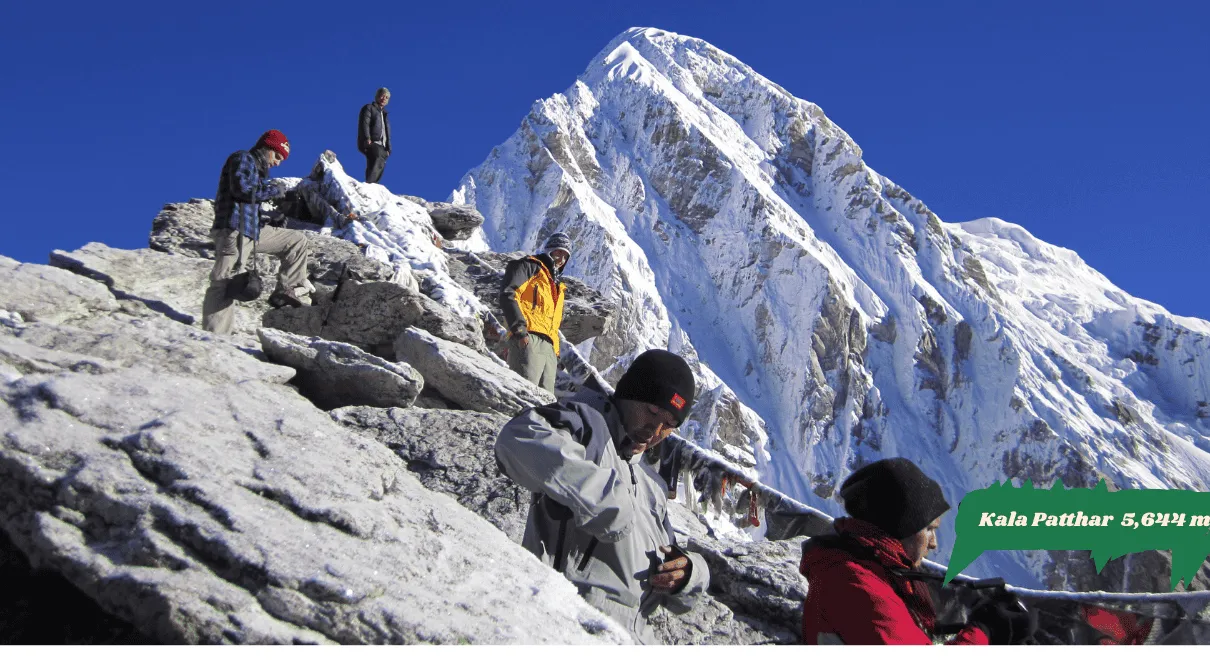
The Everest region of Nepal contains its most visited high-altitude viewpoint at Kala Patthar, which reaches an elevation of 5,644 meters (18,514 feet) above sea level. Every year, thousands of trekkers from different countries visit this location because it offers multiple good reasons to do so. The Everest view from Kala Patthar is unmatched by any other accessible point on the planet.
Why Choose the Kala Patthar Climb on Your Everest Trek?
Many trekkers wonder whether they should prioritize Everest Base Camp or Kala Patthar. The guidebooks fail to provide this information that reveals the superior view of Mount Everest from Kala Patthar, which outmatches the view from Base Camp. At EBC, Everest is partially obscured by the Khumbu Icefall and surrounding ridgelines. From the Kala Patthar viewpoint, you get a clear, unobstructed panoramic view that includes Everest, Lhotse, Nuptse, Changtse, and Pumori.
Most trekking packages include a pre-dawn hike to Kala Patthar to catch sunrise from Kala Patthar, an experience so visually stunning it often moves grown adults to tears. The golden light which covers the peaks, together with the high altitude air and the enormous size of the Himalayan mountains create a moment that adventure travelers most frequently photograph.
How Long Does It Take to Climb Kala Patthar? The Direct Answer
How long it takes to climb Kala Patthar depends on your physical condition, ability to adapt to high altitude and current weather conditions, trail conditions, and your location. But here is the essential breakdown every trekker needs:
- From Gorakshep to Kala Patthar summit: 1.5 to 3 hours (ascending)
- Distance from Gorakshep to summit: approximately 1.5 km (0.9 miles) • Descent from Kala Patthar back to Gorakshep: 1 to 2 hours
- Total round-trip time: 3 to 5 hours on average
The short answer to how long it takes to climb Kala Patthar shows a duration of 2 hours for the ascent and 1.5 hours for the descent, yet trekkers should prepare for all five hours because they need time to rest and take pictures, and their bodies will take longer to adjust to the high altitude. Trekkers make one of the most frequent mistakes when they try to walk at a faster pace than their bodies can handle at this high-altitude location.
When to Do the Kala Patthar Trek: Best Seasons
The Himalayas operate under a time-sensitive system that dictates their functioning. The calculation of time spent climbing Kala Patthar requires seasonal conditions assessment because they determine both hiking speed and protection levels.
Best Season: October to November (Post-Monsoon / Autumn)
This period represents the highest peak of trekking activities throughout Nepal. The monsoon has ended, resulting in clear skies, and the temperatures remain comfortable, which provides the best viewing point of Everest from Kala Patthar. The trail conditions remain solid while all lodges maintain complete workforce availability.
Second Best: March to May (Pre-Monsoon / Spring)
The spring season delivers both reliable weather patterns and exceptional sight distance. The trail's initial sections display blooming rhododendrons throughout their entire length. The warmer temperatures lead to shorter periods of acclimatization, which reduces the time needed for effective body adaptation.
The two time periods that should be avoided include December to February and June to September
The winter season brings extreme freezing temperatures and powerful gusts, which create dangerous conditions at the summit of Kala Patthar. The monsoon season extends from June to September and brings heavy rainfall, which generates dense cloud cover and causes dangerous conditions with leeches on lower trails and extremely restricted visibility that eliminates all viewing possibilities. The two seasons will determine both the required time for reaching Kala Patthar and the assessment of its climbing conditions.
How Is This Trekking? Difficulty and Trail Conditions
The Kala Patthar climb has a difficulty level that ranges between moderate and strenuous. The Gorakshep trail ascends with continuous steepness because its peaks do not permit any false summits, which would trick you into believing otherwise. The rocky path ascends approximately 300 meters, which occurs over a brief distance because the terrain requires climbers to ascend while they experience 50 % of the oxygen available at sea level.
The height of Kala Patthar presents climbers with their most difficult obstacle. Your body experiences extreme physical demands at 5,644 meters. Walking becomes increasingly difficult because every step requires more effort, and your breathing rate decreases while your heart rate increases whenever you move at a slow pace. The trail does not provide any advantages for people who try to complete it quickly because this trail requires different time periods for climbers to reach Kala Patthar.
A trekker who possesses good fitness levels and has completed proper acclimatization will complete the ascent within 90 minutes. A trekker who has not yet fully adjusted to the altitude will require 3 or more hours because they need to take rest breaks. The only thing that matters for climbing success is that climbers reach the Kala Patthar viewpoint without any danger to their safety.
What Problems Do Trekkers Face on the Kala Patthar Climb?
The explanation of possible failures enables your organization to select appropriate solutions that will provide accurate answers for your specific situation at the Kala Patthar climbing assessment.
- Acute Mountain Sickness AMS causes Headaches nausea, dizziness, and fatigue to develop in people who ascend above 4000 meters. Your Kala Patthar climb needs to be postponed or canceled when AMS becomes serious.
- The summit of Kala Patthar exposes all its areas to extreme cold and wind conditions. Before sunrise, wind chills reach below -20°C and continue to drop. You will need to stop your journey because the cold will become too much for you to handle without proper temperatures.
- Dehydration occurs because dry mountain air and high altitude decrease your thirst feeling, which leads to hidden dehydration that decreases your ability to move.
- Poor trail visibility: Clouds can roll in quickly. Trekkers who start too late in the day often face whiteout conditions and lose trail markings.
- Your body reaches its exhaustion point when you arrive at Gorakshep after completing the EBC trek for 10 to 12 days. The Kala Patthar hike is the hardest effort on legs that are already well-worked.
Real Challenge: What's the 2 PM Rule in Everest?
The 2 PM rule in Everest serves as a crucial safety measure that all high-altitude trekkers must follow. The rule requires all trekkers to reach their summits and high-altitude points before 2:00 PM and return to base. After this time, afternoon weather windows close, clouds build rapidly, and storms can develop with alarming speed.
The rule determines both the required climbing duration for Kala Patthar and the time at which climbers should begin their ascent. Most experienced guides recommend departing Gorakshep no later than 3:30–4:00 AM for a sunrise summit. The schedule includes 2 to 3 hours for the ascent and time at the top for the sunrise, and a safe descent window, which takes place before afternoon weather starts to deteriorate.
The 2 PM rule must be followed because you will experience dangerous conditions when you try to answer 'how long does it take to climb Kala Patthar' through hour-based answers. The mountain does not accommodate bad timing.
What Mistakes Do Beginners Make?
The trekkers who are new to trekking develop excitement about upcoming Everest treks, but they make critical mistakes that determine their success rate and their climb duration to reach Kala Patthar.
- The human body requires acclimatization days because it needs time to adapt to higher altitudes. The main problem with the itinerary occurs because climbers attempt to save time by pushing their schedule forward, which leads to acute mountain sickness.
- The trek needs to start before 6 AM because climbers must traverse the sunlit trails, which become more challenging when weather conditions worsen, and they will not see the beautiful sunrise from Kala Patthar.
- Cotton becomes dangerous because it keeps moisture and loses all its heat protection when it gets wet. At the Kala Patthar height, this danger becomes significant. The body needs to wear moisture-wicking base layers together with fleece mid-layers and a high-quality down jacket.
- The return journey proves difficult for trekkers who save all their strength for climbing because they arrive back at Gorakshep in complete exhaustion. The body experiences faster descent times, yet it remains difficult for legs and knees that have already been exhausted.
- Local guides possess knowledge about micro-weather patterns and trail systems, which enables them to track your health while making important safety decisions that first-time trekkers cannot manage.
What Are People Afraid Of? Common Fears Addressed
People who try to climb Kala Patthar for the first time will experience fear, which this research shows to be a normal reaction. The following list shows people most commonly experience these fears, but they receive truthful answers to their doubts:
Fear: 'I'm not fit enough.'
You will reach the Kala Patthar viewpoint when you can walk 6 to 8 hours each day while carrying a light daypack for two weeks. The trek requires strength to complete but it does not involve technical climbing skills. The trek requires no mountaineering skills because it needs no ropes or crampons.
Fear: 'The altitude will stop me.'
With proper acclimatization and a conservative pace, most reasonably healthy adults can reach Kala Patthar. The route to higher elevations requires hikers to rest at Namche Bazaar and Dingboche before they continue their trek.
Fear: 'What if the weather turns?'
The risk decreases when participants follow the 2 PM rule together with the October to November and March to May time periods. The guide needs to check weather forecasts with their team every night before they plan their summit attempt.
Research-Backed Tips for Trekkers: How to Climb Kala Patthar More Effectively
The evidence-based tips that you should follow will help you achieve the safest and most rewarding experience to climb Kala Patthar.
- Hydrate aggressively from day one: Drink 3–4 liters of water daily throughout the trek. Consider adding electrolytes.
- Take Diamox if prescribed: Acetazolamide (Diamox) can help prevent AMS when taken as directed by a doctor. Discuss this with a travel medicine specialist before departure.
- Eat high-carbohydrate meals: Carbs become easier to metabolize at high altitudes. The best food option for your trek is dal bhat, which is the traditional Nepali lentil and rice dish.
- Sleep lower, climb higher: You should always go to a lower elevation for sleeping when you feel unwell because this method is necessary for your medical safety.
- The use of trekking poles: Poles reduce knee strain by an estimated 25% and help maintain rhythm and balance on the steep rocky terrain of Kala Patthar.
- Your sunrise kit should be packed the night before: You should prepare a headlamp, extra batteries, warm gloves, a hat, and your camera and snacks before you go to sleep.
Your personal experience of how long it takes to climb Kala Patthar will be shaped most powerfully by your commitment to acclimatization and your willingness to go slow. Your health requires immediate attention because tomorrow the mountain will still be present.
A Trekker's Personal Story: Standing on the Black Rock
The trail begins with an immediate upward slope, which features loose footing that makes breathing difficult because of the cold, thin air. The trail begins with an immediate upward slope, which features loose footing that makes breathing difficult because of the cold, thin air. The trail begins with an immediate upward slope, which features loose footing that makes breathing difficult because of the cold, thin air. Your legs begin to speak loudly after one hour of work. You stop. You breathe. You look up: the stars above 5,000 meters are outrageously bright, unpolluted by any city light for hundreds of kilometers.
The first gray light begins to edge the ridge above you. Someone ahead shouts quietly, reverently, and points. You reach the summit cairn located at the peak of the mountain. The mountain begins to burn when the sun rises. Lhotse glows pink. The southern face of Nuptse ignites with flames. The sunrise that you see from Kala Patthar requires all your effort to reach because every step through the cold air leads you to answers about the time needed to ascend Kala Patthar.
You stand there for forty minutes. People remain because they have no desire to depart.
Expertise, Authority, and Trustworthiness: Who Should You Listen To?
The online research about climbing Kala Patthar shows extreme variation in finding climbing duration between bloggers who state a 45-minute time and sources who recommend an entire day for the ascent. The actual time required to complete the task depends on your personal fitness level, previous experience at high altitudes, and the specific weather conditions of that day.
The reliable information shows that trekking agencies that have registered with the Nepal Tourism Board and certified high-altitude guides who possess verified EBC experience and peer-reviewed research about altitude physiology become the best sources of information. The proper way to validate a single source requires you to compare it with multiple trustworthy sources. You should always follow your guide's decision about mountain matters instead of reading any blog post, including this one.
Make Your Trek Visually Memorable: Photography Tips from the Kala Patthar Viewpoint
The best time to capture Everest from Kala Patthar occurs during the first 20 to 40 minutes of morning light, according to professional photographers. For optimal results, you should bring a low-light camera that allows your wide-angle lens to capture the entire scene while shooting in RAW format to enable better post-processing work. Your phone camera will experience difficulty because it cannot handle the wide dynamic range between the bright rising sun and the dark rock surfaces.
The famous photographs show a single person standing on a rocky peak that overlooks Everest from a position just below the main cairn. For the best visual composition, you should position yourself at a point that is slightly lower than your current location.
What to Do Next: Your Kala Patthar Action Plan
Your next step requires you to complete the following checklist after you learn about the duration required to climb Kala Patthar and the elements that will determine your journey.
- Book your trek with a reputable Nepal Tourism Board-registered agency at least 3–6 months ahead for peak season.
- Begin physical training: 3–4 months of cardio, hiking with a weighted pack, and strength training for your legs and core.
- Visit a travel medicine clinic: get vaccinations updated, discuss Diamox, and arrange a comprehensive pre-trek health assessment.
- Invest in quality gear: especially boots, a sleeping bag rated to -15°C, a down jacket, and a quality headlamp for your pre-dawn summit attempt.
- Download offline maps of the Khumbu region as a safety backup.
Your climbing speed to reach Kala Patthar depends on three factors, which include your current level of mountain training, your respect for the mountain, and your ability to adjust your walking speed to match the altitude requirements.
Frequently Asked Questions
How Long Is the Kala Patthar Hike from Gorakshep?
The Gorakshep to Kala Patthar hike extends 1.5 kilometers (0.9 miles) but requires trekkers to climb 300 meters during their ascent. The uphill walking duration for most trekkers ranges from 1.5 to 3 hours, which depends on their fitness level and acclimatization status. The descent typically takes 1 to 1.5 hours, which results in a total round-trip time of 3 to 5 hours. The trail at Gorakshep starts from 5,164 meters and ascends to the peak at 5,644 meters. The path does not include any flat areas because it maintains a constant upward slope, which requires trekkers to follow a slow and steady walking pace to navigate this trail effectively.
Kala Patthar Climb Time, Distance, and Difficulty Guide
The height of Kala Patthar reaches 5644 meters, which equals 18514 feet. The distance from Gorakshep to the summit requires climbers to travel 1.5 kilometers while ascending 300 meters. The trail presents moderate to strenuous difficulty because climbers face challenges from high altitude not from the trail's technical difficulties. The ascent requires between 90 minutes and 3 hours for travelers who take the fastest and slowest routes. The average round-trip duration for the journey takes between 3 and 5 hours. Climbers need to navigate through rocky areas, which also include patches of ice, because there are no technical climbing sections. Your body will face its greatest difficulties at high altitudes, and your ability to climb safely depends on proper acclimatization during your 10 to 12 days of trekking beforehand.
Kala Patthar Hike Duration: How Many Hours Does It Take?
How long does it take to climb Kala Patthar? The ascent will take 2 to 3 hours, while the descent requires 1 to 1.5 hours, which brings the total hiking time to 3 to 4.5 hours. The majority of guided groups plan extra time to conduct breaks and take pictures, and monitor weather conditions, which results in their full outing duration extending to 5 hours. Trekkers attempting the pre-dawn sunrise hike leave Gorakshep between 3:30 and 4:30 AM to arrive at the summit by 6:00–6:30 AM. The time of your return from this activity back to your lodge matches the golden hour, which presents you with enough time to reach safety before the afternoon weather changes.
Kala Patthar Climb Guide: Time, Height, and Tips
Kala Patthar reaches an elevation of 5,644 meters above sea level. The 5,164-meter trek from Gorakshep requires 2 to 3 hours for uphill travel and 1 to 2 hours for downhill travel. Key tips: start before dawn to catch sunrise from Kala Patthar, dress in multiple warm layers, carry a headlamp, drink at least 500ml of water before departure, and walk at a deliberately slow pace. The Kala Patthar viewpoint rewards patience because rushing to the summit results in altitude sickness and exhaustion. You must always tell your lodge about your scheduled departure time, and you need to go down to Gorakshep or more accessible areas when you experience AMS symptoms, which include severe headache, vomiting, and confusion.
How Hard and How Long Is the Kala Patthar Climb?
The ascent requires intense physical efforts because Kala Patthar reaches a height of 5644 meters, which decreases oxygen levels to 50 percent of its sea level value. Trekkers evaluate the difficulty level at 7 out of 10 because they experience altitude challenges that exceed their technical skills. The trail presents a steep incline, which trekkers can navigate without needing to use ropes or mountaineering equipment. The uphill trek takes 2–3 hours to complete, while the descent requires 1–2 hours. Most trekkers struggle with the altitude because it makes them need to take breaks more often than they need to for the path's steepness. The good news for climbers shows that their ascent becomes safer when they proceed at a slower pace.
Is Kala Patthar a Difficult Trek?
The difficulty of the Kala Patthar hike exists because hikers must deal with extremely high-altitude conditions instead of facing technical challenges. The journey to reach Kala Patthar height requires two complete weeks of ascending to higher altitudes, which includes several acclimatization days and demands the ability to endure extreme cold and physical discomfort and altitude sickness. Non-mountaineers who possess good fitness levels and receive appropriate guidance will succeed in reaching their target. Every year, thousands of trekkers successfully reach the Kala Patthar viewpoint. Most healthy adults need to maintain a conservative pace while following acclimatization procedures to reach the summit and experience the unique Everest view from Kala Patthar.
What Does Kala Patthar Mean?
The phrase Kala Patthar originates from both the Sanskrit and Nepali languages and its English translation means 'Black Rock'. The name describes the dark rocky outcrop which creates the summit of the mountain, which appears visually different from the surrounding white glaciers and snowfields of the Himalayan peaks. The name is straightforward but the place it identifies exists as a special location that people should explore. Most trekkers reach their maximum distance from civilization at the Kala Patthar viewpoint which provides the best open sight of Mount Everest's north and west faces. The experience of standing on this black rock at 5,644 meters becomes a transformative moment that alters both physical and mental perspectives.
How Long Does It Take to Climb Kala Patthar?
How long does it take to climb Kala Patthar is the question every EBC trekker eventually asks. The comprehensive answer: from Gorakshep, the ascent takes 1.5 to 3 hours, depending on fitness and acclimatization. The descent requires 1 to 1.5 hours. Total round-trip with rest and photography: 3 to 5 hours. Most trekkers start their journey between 3:30 and 4:30 AM to reach Kala Patthar before sunrise. Your time to complete the task depends on weather conditions, trail conditions, your personal fitness level, and your experience with high-altitude environments. The 5-hour window gives you enough time to complete the hike safely while enjoying one of the world's most amazing high-altitude trails.
What Is the 2 PM Rule in Everest?
The 2 PM rule in Everest — and across high-altitude Himalayan trekking — is a widely accepted safety guideline that requires all mountain climbing and unprotected ridge traveling to finish before 2:00 PM, while climbers must begin their descent at that time. The weather starts to worsen after that time because afternoon thermal heating causes clouds to form along ridgelines and multiple weather conditions to change within minutes. The Kala Patthar ascent requires climbers to start their journey between 5:00 AM and 5:00 AM to reach the summit and view Everest from Kala Patthar and safely return to Gorakshep before noon. The 2 PM rule operates as an unbreakable rule for Khumbu region guides who enforce this practice throughout their work.
What Are the Challenges of Kala Patthar?
The primary challenges of the Kala Patthar climb include acute mountain sickness (AMS), extreme cold and wind at the summit, dehydration, fatigue accumulated over the preceding two weeks of trekking, poor visibility because of cloud cover, and the psychological difficulty of pushing hard when every breath feels inadequate. The oxygen availability at Kala Patthar, which stands 5,644 meters above sea level, provides only 50 percent of what climbers need at sea level, which makes all physical activities more difficult to perform. The most effective methods to overcome these challenges require climbers to properly acclimatize, start their climbs at dawn, wear multiple layers of clothing, drink enough water, and receive help from knowledgeable guides.
Ready to Answer This Question for Yourself?
The time required to reach the summit of Kala Patthar between the two points of this mountain should be determined through experience of climbing the mountain. Every step up that black rock leads you to a greater experience, which connects you to the sky, the mountain, and your personal boundaries. You should create complete preparations for your task. You must move at a slow pace. You should begin your day before sunrise. The sunrise view from Kala Patthar will satisfy you as your reward. The time required to reach the summit of Kala Patthar between the two points of this mountain should be determined through experience of climbing the mountain. Every step up that black rock leads you to a greater experience, which connects you to the sky and the mountain, and your personal boundaries. You should create complete preparations for your task. You must move at a slow pace. You should begin your day before sunrise. The sunrise view from Kala Patthar will satisfy you as your reward.
For booking and detailed information about the Everest Base Camp Trek, please visit our website or contact us directly. You can email us at info@himalayastrek.com or reach us on WhatsApp at +977-9851361235. Our team will be happy to assist you with your trekking plans.
The mountain is waiting. Now you know exactly how long it takes to get there.

.png "NTB")
.png "Pata")