How to Choose the Best Trek in Nepal for Your Experience Level
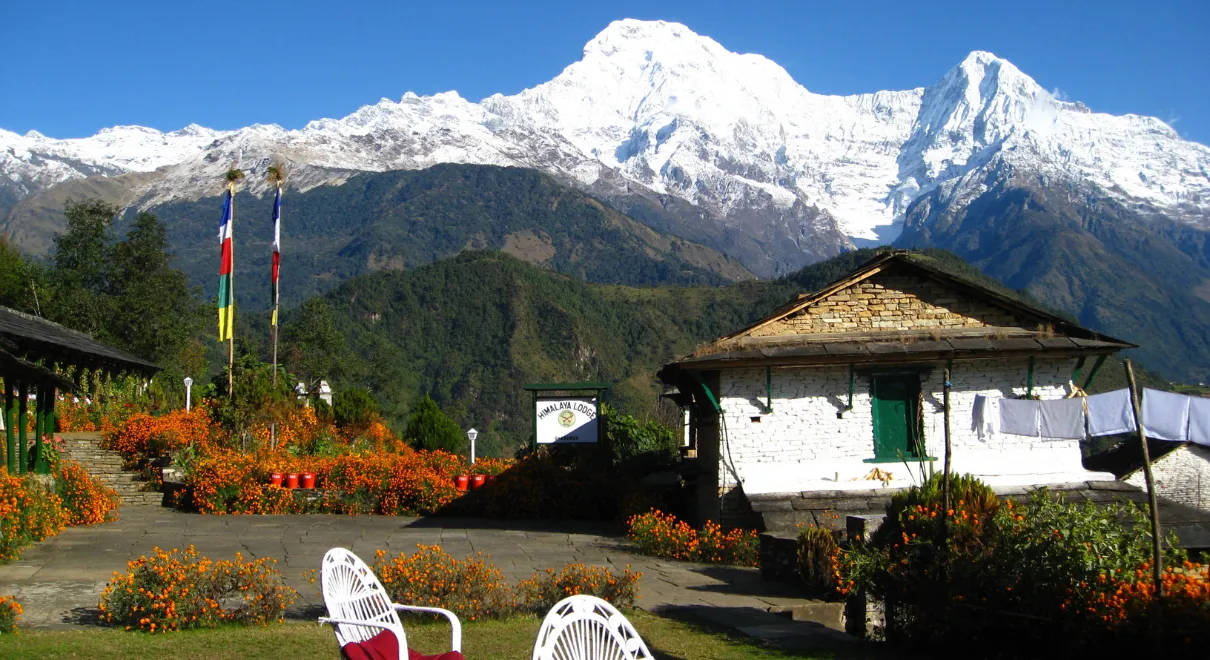
A guide leaned over his tea at a lodge in Ghorepani and told me something I still repeat to every first-time trekker who asks for advice: “The mountain doesn't care how badly you want to reach the top. It only cares whether your body is ready for where you are right now". That one sentence basically wraps up most of what goes sideways when people plan a trip to the Himalayas. They choose a trek because of a photo, a bucket list point, or a friend's suggestion, not because it actually matches their fitness, their time frame, or their altitude comfort level. Learning how to pick the best trek in Nepal for your experience is less about sheer grit and more about honest self-evaluation, and this guide goes through how to do that, step by step.
Table of Contents
- Why Nepal draws trekkers from every fitness level
- The core mistake behind most trekking regrets
- Understanding Nepal's four trekking difficulty tiers
- Matching yourself to a route: beginner through expert
- Non-negotiable factors beyond difficulty
- Best months to trek by region
- Permits, guides, and legal requirements
- Physical training timeline
- Quick-reference decision checklist
- FAQs
Why Nepal Draws Trekkers From Every Fitness Level
Unlike single-destination hiking trips, Nepal sort of packs in this full spectrum of trekking difficulty, all in one country. A retiree with moderate fitness can end up doing a three-day village walk in the Annapurna foothills, no big drama, while an ultramarathon runner might spend three weeks crossing 5,500-meter passes in the Khumbu region—usually only a few hours drive away from where the other person even started.
That whole range is also what makes Nepal really attractive, but yeah, also kind of risky. The same brochure that shows a mild rhododendron forest trail may be selling a trek that later in the itinerary includes this punishing high-altitude pass. Learning how to read past the marketing and then actually judge the real difficulty is the kind of skill this article is built around.
The Core Mistake Behind Most Trekking Regrets
Ask any trekking agency in Kathmandu and, what do they say causes the most cancelled or cut- short trips? Usually altitude sickness is at the very top of the list— not injuries, not weather, not fitness. Altitude sickness doesn’t really care about your age or how much gym time you got; it’s more about ascent speed and your own body chemistry, and it can hit a 25-year-old athlete just as hard as a 55-year-old casual walker, you know?
The real underlying problem is kind of always the same thing: a trekker ends up choosing a route that climbs quicker than their body can adapt, often because the itinerary was picked for scenery value or bragging points, instead of a sensible acclimatization rhythm. Fixing it isn’t that complicated; it’s mostly about matching. Choose a trek where the daily elevation increase and the overall altitude profile fit what you can handle right now, not what you want to prove later.
Understanding Nepal's Four Trekking Difficulty Tiers
A lot of trekking companies sort their routes into four rough tiers, but the exact cutoffs kinda drift a bit depending on the operator or season, so don’t treat it like a strict rulebook:
Tier 1 — Easy / Beginner. Usually max altitude around 3,000m, time length 3–6 days, and the ground feels pretty kind, with well-kept stone steps, plus villages or stops you can reach every few hours. This tends to fit pretty much anyone with decent general health.
Tier 2 — Moderate / Intermediate. Max altitude typically 4,000–4,500m, duration 7–12 days, longer walking days (5–7 hours), and you’ll meet a few sharper ups , not just gradual slopes. You should have steady hiking fitness and basic knowledge of altitude (how to pace and recover).
Tier 3 — Challenging / Advanced. Max altitude about 5,000–5,500m, generally 12–16 days, and there are usually multiple acclimatization days (so you don’t rush it). Expect cold nights, thinner air that can mess with sleep and even your appetite. Most people do this only after one “moderate trek” first.
Tier 4 — Strenuous / Expert. Above 5,500m, often meaning multiple high passes, sometimes glacier-like ground, and 16+ days. This one wants prior high-altitude know-how, a solid mental backbone, and occasionally basic technical habits such as using crampons.
Matching Yourself to a Route: Beginner Through Expert
If you’re new to trekking, yeah, the Ghorepani–Poon Hill route, or the Dhampus–Australian Camp loop, can really wow you with Annapurna range scenery in about three to five days, while also keeping you from going beyond 3,200m. That makes it a solid “trial run” before you commit to something longer, more drawn out.
For a comfortable hiker, and maybe it’s your first time dealing with altitude? Consider the Annapurna Base Camp trek or the Mardi Himal trek. They give you a 7-10 day schedule that usually climbs up to roughly 4,100 to 4,500m, so you get plenty of time to check how well you acclimatize, without that extreme kind of exposure you see on higher, more intense routes.
If you’re an experienced multi-day hiker, then the Everest Base Camp trek and the Langtang–Gosainkunda route are usually the go-to. Both sit around 12-14 days, and you’ll be in the 5,000 m+ territory, which is great for trekkers who already know they can handle altitude reasonably well, not just in theory.
And if you’re a seasoned high-altitude trekker, then the Everest Three High Passes trek, plus the full Annapurna Circuit via Thorong La Pass, takes things further by pushing past 5,300 m, with tough daily distances. These are best saved for people who’ve already finished at least one trek at the Everest Base Camp level; otherwise, it can feel like too much too soon.
Non-Negotiable Factors Beyond Difficulty
Your difficulty rating gets you about 80% there, but there are a couple other variables that really should be treated like they matter just as much, not less:
• Vacation time that you actually have — some routes can’t be safely shortened, because you may need those acclimatization days; otherwise, it turns into a mess
• Season plus current trail conditions — a “moderate” walk during monsoon season feels completely different than the same trek in autumn, seriously
• Total cost — permits, guide fees, lodge expenses, and flights (especially for regions like Everest) all tend to rise as the trip gets longer and more remote
• Existing health situation — if someone has heart or lung issues, they should book a medical check before considering high-altitude travel
• Group dynamics — going out with a fitness level mismatch can make an otherwise pleasant trek feel uncomfortable for everyone involved
Best Months to Trek by Region
Late September through November gives you the clearest skies and the steadiest weather really of the year almost everywhere— honestly the best stretch for first-timers, like the easiest time to catch it right away.
Then March through May is a near second, with higher daytime warmth and rhododendron forests that start flowering; however, the sightline can be a bit blurrier than what you get in autumn.
December through February can still be good if you’re sticking to lower elevation paths, but it also shuts down a lot of the high mountain passes because of snow, and biting cold that just hangs around.
June through August is the monsoon season and usually the weakest window, with hard rain, leeches on the simpler trails, and mountain panoramas that stay in the clouds. There is one exception, though, in rain-shadow areas like Upper Mustang and Dolpo, where conditions stay rather dry, even when the rest of the region is soaked.
Permits, Guides, and Legal Requirements
It feels like pretty much every trek has to come with a TIMS card, plus some kind of conservation zone permit that matches the region or a national park pass. There are also the restricted sections—Upper Mustang, Manaslu, and chunks of the far west—which need special paperwork and, by law, a licensed guide. And even when it turns out it isn't strictly required, booking a local guide, in practice, tends to help a lot with safety at altitude, and the spend goes right back into the local economy.
Physical Training Timeline
If you’re doing a Tier 1 or Tier 2 trek, then usually 4-6 weeks of regular cardio and stair climbing is plenty for prep. For Tier 3 and above though, most trekkers seem to do better with 3+ months of structured training: think weighted pack hikes on back-to-back days, leg strength work, and if it’s possible, a practice trek up at elevation. That lets you see how you respond to thinner air, because how your body reacts can swing hugely between people, even if their fitness level is similar.
Quick-Reference Decision Checklist
1. Rate your current hiking experience, honestly and without flexing too much: none, occasional day hikes, regular multi-day trekker, or seasoned high-altitude trekker
2. Match that level to a tier above, and then pick a route at or under it, not higher than that.
3. Make sure the season actually matches your chosen region, not just “kind of works."
4. Look up permit rules and confirm whether a guide is required by law, not merely recommended.
5. Put together a training schedule that fits your tier, and start at least a month before you leave.
6. Book everything with extra buffer days, especially for weather slowdowns, and especially if your plan depends on flights like Everest
FAQs
Can a beginner trek to Everest Base Camp?
Honestly, yeah, but it’s tricky in a way that people don’t always say out loud. It’s physically demanding rather than technical, so someone who is reasonably fit can finish it, sometimes. Still, if you go in with no real multi-day hiking background, even just once in a while, the risk of altitude sickness goes up, and an early turnaround becomes way more likely.
What is the safest way to avoid altitude sickness?
Go with an itinerary that already includes acclimatization days. Ascend gradually; don’t try to “win time” on the trail. Keep sipping water throughout, and if you notice symptoms, don’t bargain with your body—turn back or rest immediately at the first signs instead of pushing through like nothing is happening.
Can you trek in Nepal without a guide?
On many of the popular routes, yes, but a few restricted areas do require a guide by law. Also, even when it’s permitted, first-time trekkers usually get an extra safety buffer from having someone along, because things can change fast up there.
Final Thought
The best trek in Nepal isn’t automatically the one with the most dramatic photos. It’s the one that actually matches where you are as a hiker right now. Rate yourself honestly, choose a difficulty tier that fits your current reality, and let the mountain reward your preparation instead of punishing your ambition.

.png "NTB")
.png "Pata")