kilimanjaro vs everest base camp
Base Camp of Everest versus Kilimanjaro: Best of Trekking Comparisons
Wherein lofty iconic expeditions are concerned, the Kilimanjaro vs. Everest Base Camp comparison is the queen of chatter when trekkers are conversing. Both expeditions are life-changing experiences, but your decision to climb Mount Kilimanjaro versus trek to Everest Base Camp depends on your fitness, budget, and personal preferences. This detailed comparison helps unveil which of these two stunning expeditions best aligns with your adventure aspirations.
Understanding the Basics: Mount Kilimanjaro vs. Everest Base Camp—Treks, Heights,
Kilimanjaro: Africa's Roof in
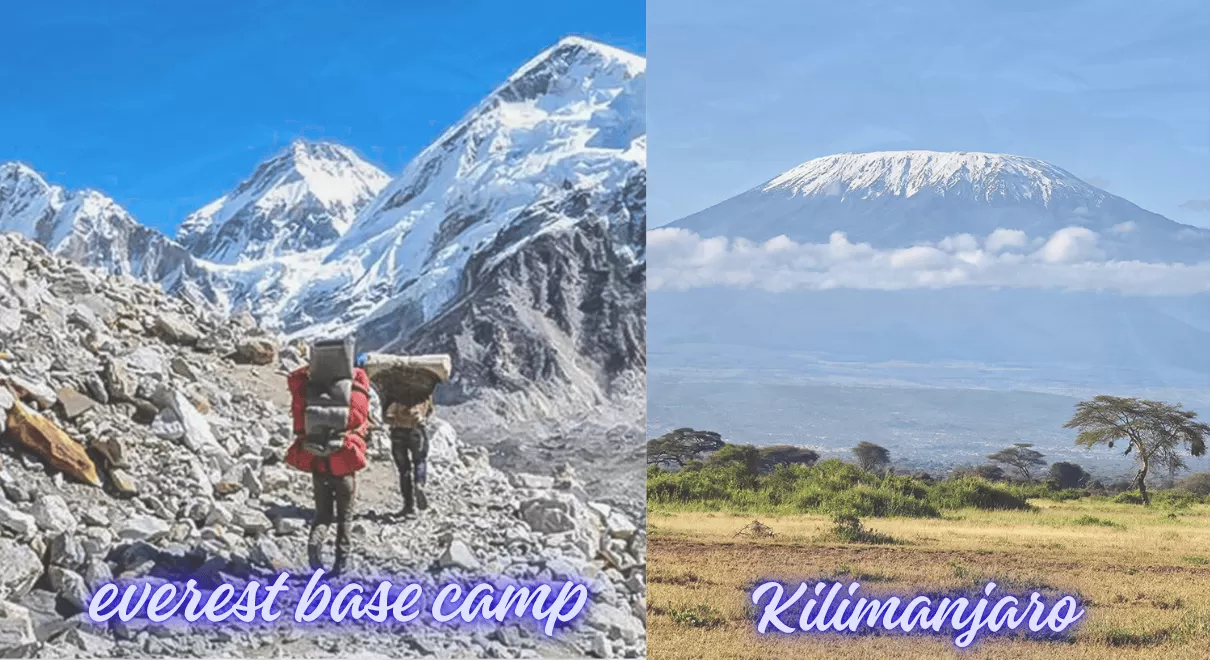
Kilimanjaro, which towers 19,341 feet (5,895 meters) above sea level in Tanzania, East Africa, is the highest peak of the continent of Africa. It is a stratovolcano that provides adventurers a chance to climb up to a true summit, which provides a wonderful feeling of accomplishment.
Why is Tanzania famous for Kilimanjaro?
Tanzania is a globally renowned trekking site because the summit of Kilimanjaro is among the Seven Summits. It is famous for premier destinations of safari at Ngorongoro Crater alongside Serengeti National Park, thus making it possible for one to experience a combination of mountain climbing alongside wildlife safari. Its stable polity, well-developed infrastructural base of tourism, and warm reception from the hosts, including the guides, porters, have transformed Tanzania into Africa's leading center of adventure. Conservation spirit, sustainable tourism, and preserving the ecosystems of Kilimanjaro, from tropical rainforests to alpine deserts, are Tanzanians' credits.
Nepal: Gateway to the Tallest Mountain of the Globe, Mount Everest Base Camp
Everest Base Camp lies at 17,598 feet (5,364 meters) in South Asia, Nepal, from where climbing expeditions for the summit of Everest are initiated. You don't climb to the peak of Everest, but the Kilimanjaro vs EBC trek features unmatched panoramas of the highest mountain on Earth.
Why Nepal Remains So Popular for Everest Base Camp:
Nepal is deserving of the name of the best trekking haven, for boasting eight of the world's fourteen summits that reach above 8,000 meters, including the highest, Mount Everest. Nepal is renowned for having a rich Sherpa culture, ancient Buddhist monasteries, and the cultural mountaineering heritage of being the first to climb Everest many years back in 1953 via Sir Edmund Hillary and Tenzing Norgay. The Nepal Himalayas bring more than 200,000 trekkers annually because of the well-developed infrastructure for trekking, professional resident guides, and the spiritual environment of mountain villages. Its economy relies heavily on adventure tourism, so highly specialized that they are masters of delivering world-class trekking adventures with superior standards of safety and logistical backup.
Elevation Comparison: Is Everest Base Camp Higher Than Kilimanjaro?
Another that gets mentioned quite a lot is, Base Camp bigger than Kilimanjaro? No—Uhuru Peak at Kilimanjaro is 19,341, whereas Base Camp at Everest is 17,598. This, of course, doesn't automatically make the latter the lesser of the two hikes.
One common question is, is Everest Base Camp higher than Kilimanjaro? The answer is no, Uhuru Peak on Kilimanjaro is 19,341 feet, and Everest Base Camp is 17,598 feet. But that does not necessarily mean Kilimanjaro is the easier trek.
Difficulty Assessment: Which Is Harder—Kilimanjaro or Everest Base Camp?
Physical Demands
The Kilimanjaro vs. Everest difficulty comparison reveals distinct challenges:
Kilimanjaro challenges:
- Steeper, more direct ascent
- Shorter acclimatization time
- The final summit push requires mental fortitude
- Higher success rates (65-70%)
Everest Base Camp challenges:
- Longer duration (12-14 days vs 5-9 days)
- More technical terrain
- Extended exposure to altitude
- Unpredictable weather conditions
Physical Requirements
- The Kilimanjaro vs. Everest challenge comparison brings some glaring obstacles:
- Kilimanjaro challenges:
- Steeper, more direct ascent
- Shorter acclimatization time
- The final summit push requires mental fortitude
- Higher success rates (65-70%)
Everest Base Camp challenges:
- Longer duration (12-14 days vs 5-9 days)
- More technical terrain
- Extended exposure to altitude
- Unpredictable weather conditions
Fitness Requirements
Both trips will require good cardiovascular fitness; however, the comparative fitness level for Everest Base Camp and Mount Kilimanjaro is slightly different. The demands of the trek to your final destination on summit day will require explosive endurance and stamina on Kilimanjaro, whereas Everest Base Camp will involve continuous stamina over two weeks.
Itinerary and Duration of the Treks
Kilimanjaro Trek Duration
Typical route duration: 5-9 days
Local favorite routes: Machame (6-7 days), Lemosho (7-8 days)
Days hiking: You can expect to hike between 4 and 8 hours per day.
Everest Base Camp Duration
Typical itinerary: 12-14 days
Acclimatization days: These are integrated into the schedule, and the length of the expeditions ensures they permit proper acclimatization.
Days hiking: Expect between 5 and 7 hours of hiking per day.
Cost Analysis: Going to Everest Base Camp vs Kilimanjaro Budget
The Everest base camp trek cost vs. the Kilimanjaro climb cost is very different:
Kilimanjaro prices are
- Trek packages $1,500-$5,000
- The shorter duration means lodging is less
- There are required guide fees and porter fees
The Everest base camp costs are
- Trek packages priced $1,200-$3,500
- The longer duration means food and lodging are much higher
- Plus, you have a flight to Lukla, which costs $300-$500
Best Time for Trekking Everest Base Camp versus Kilimanjaro
Kilimanjaro trekking seasons:
- Dry seasons: January-March, June-October
- Avoid April-May and November (rainy seasons)
Everest Base Camp trekking seasons:
- March-May and September-November are the best times to trek to Everest Base Camp.
- Avoid if possible: June-August (monsoon) and December-February (extreme cold)
Altitude Sickness: Comparing Everest Base Camp to Kilimanjaro
Altitude Sickness: Everest Base Camp vs. Kilimanjaro raises a variety of issues:
Altitudinal sickness of Kilimanjaro
- Too-fast climb raises risk level
- Less time for acclimatization
- Descent gives immediate relief
EBC altitude sickness:
- A gradual increase lowers risk
- Optimized acclimatization program
- Additional exposure to high altitude
Scenic Beauty and Cultural Experience
Landscape Diversity
Which is more scenic, Everest or Kilimanjaro? Both are stunning but of a different nature:
Scenery of Kilimanjaro
- Five of the other climate zones
- Diverse ecosystems from rainforest to arctic
- Volcanic landscapes and glaciers
Everest Base Camp scenery:
- Himalayan landscapes
- Sherpa villages and monasteries
- Timeless summits such as Ama Dablam and Lhotse
Cultural Immersion
The cultural nature of the Everest vs. Kilimanjaro climb is quite dissimilar:
Kilimanjaro culture:
- Dealing with the local porters and guides
- Aspects of Maasai and Chagga culture
- Minimal contact with the village
EBC culture
- Sherpa reach culture
- Buddhist prayer flags and Buddhist monasteries
- Interactions at Namche Bazaar market
Requirements for Gear and Equipment
Kilimanjaro vs. Everest Base Camp trekking gear overlaps significantly but branches off quite dramatically:
Common for both:
- Three-layer clothing system
- Decent hiking shoes.
- Lightweight socks for cold weather
- Walking poles
Kilimanjaro-specific gear:
- Sleep insulating bag (recommended -10°C rating), Scree sections, Gaiters for
EBC-specific gear:
- Sunglasses for glacier glare, Ice spikes for ice-covered parts
For Beginners: Kilimanjaro vs Everest Base Camp
Kilimanjaro Base Camp or Everest Base Camp for newbies depends on your interest:
Kilimanjaro advantages for beginners:
- Shorter commitment
- No technical climbing skills required
- Actual summit achievement
EBC advantages for beginners:
- Better acclimatization schedule
- More forgiving if you need rest days
- Established infrastructure
Deciding Between Your Options: Everest Base Camp or Kilimanjaro?
Kilimanjaro Choose
- A shorter but more intense challenge
- To submit something
- Multiple ecosystems in one trek
- An African adventure experience
Choose Everest Base Camp if you want:
- A longer, more immersive experience
- The Himalayan Mountain culture
- A better acclimatization process
- Classic trekking infrastructure
infrastructure Conclusion
The above now becomes a personal decision of your goals, time, and adventure type. Both climbs are life-changing and physically and psychologically challenging, but will create a memory for a lifetime. If Africa's highest peak or the gateway to the world's highest peak, proper preparations, alongside modest expectations, are essential for a most rewarding adventure. Think about your fitness level, budget, and time available, together with the level of cultural exposure desired, before making this thrilling choice. Either way, you'll be among a small group of explorers who have taken themselves to the level of challenge of some of the globe's finest mountain landscapes.

.png "NTB")
.png "Pata")