Langtang Trek
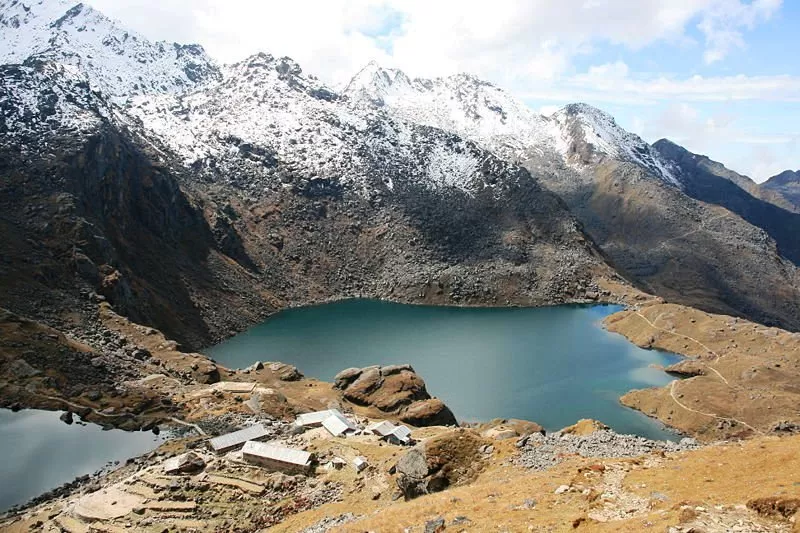
The world contains a specific type of location that exists without any attempts to impress visitors. The place exists in complete existence because it exists without any need for others to recognize it. The Langtang Trek exists as a location that requires this kind of experience.
The trekking community dedicates its complete attention to discussions about Everest Base Camp and the Annapurna Circuit, whereas Langtang Valley provides travelers with an authentic Himalayan experience that combines untouched nature with living culture and breathtaking mountain scenery when they venture beyond popular tourist spots. This trek does not distribute its promotional materials through marketing brochures. The trail earns its reputation through the experience of one silent morning when you leave a teahouse at dawn and experience cold air against your skin while Langtang Lirung appears above the ridgeline as a natural formation from the earth's imagination.
The present guide accommodates mainly intrepid trekkers. Not merely thrill-seekers who can consider the trek to Langtang as a distinct accomplishment, but rather those who acquire all three portions of its exaction—what the Langtang trek Nepal offers, what the Langtang trek Nepal exacts, and how to earn the realization.
The Langtang Region: More Than a Trekking Destination
The period before you examine operational details requires you to comprehend the actual situation that you will encounter.
The Langtang Valley exists within Langtang National Park, which became Nepal's first Himalayan national park in 1976 and extends to the northern border with the Tibetan plateau. The region extends from its lowest point of 800 meters to its highest point, which exceeds 7200 meters at Langtang Lirung. The vertical extent of the area contains diverse ecosystems, which include subtropical forests with bamboo and rhododendron plants, alpine meadows that yaks graze, and glacial moraines and high-altitude wetlands.
The human story here is equally layered. The valley serves as the main settlement area for the Tamang people, who belong to a Tibetan Buddhist ethnic group that has lived in this region since before Nepal existed as a country. The people of the Langtang trekking route maintain their traditional building styles, monastic practices, and land use practices, which they have followed for centuries.
And then there is the earthquake.
The 7.8 magnitude earthquake on April 25, 2015, caused an avalanche that destroyed Langtang Village with millions of tons of ice, rock, and snow. About 350 people died within a few minutes, which included both trekkers and residents. The community rebuilding process that followed this event created one of the most quietly inspiring yet hidden achievements in this area. Langtang Village has been rebuilt to its previous state. The village exists now as a place that people can enter. The village exists now as a place that people can enter. The village exists now as a place that people can enter. Walking through the village demonstrates to visitors how the residents of this valley live their lives, which no guidebook can adequately describe.
The Langtang valley trek provides you with more than just a beautiful hiking path. The Langtang valley trek lets you experience how people overcome challenges through their stone structures and their prayer flags.
Where the Trek Begins and What You Will Find There
The Langtang trek starts in Syabrubesi, a border trading town sitting at 1,470 meters in the Rasuwa District. From Kathmandu, the journey requires 117 kilometers to reach the destination, which involves traveling through the Trishuli River valley while observing terraced fields and waterfalls. The travel time varies from seven to nine hours because road conditions and seasonal changes affect the journey.
Syabrubesi itself is not glamorous, but it is functional and friendly. The site contains teahouses and a permit checkpoint and small shops which provide essential trekking items, whereas the area establishes itself as a boundary between urban life and natural mountain territory. This location serves as the point where you check your permits while you prepare to leave after drinking one last cup of tea.
The trail from Syabrubesi initially follows the Bhote Koshi River through dense forest. This area exhibits humid conditions, which produce a green environment and allow people to hear lashed langur monkeys who move through the trees above. The lower forests serve as a habitat for red pandas, which are shy and mostly active during nighttime hours.
The following days will show you how the landscape changes when you reach higher elevations. Open hillside areas emerge when forested areas start to fade away. The entire system of villages disappears, then reappears, and finally disappears again. The river becomes narrower while its sound volume increases. The valley walls start to retreat while the high peaks become visible, which enables you to pinpoint your location.
The Langtang Trek Route: Day by Day
The best Langtang trek itinerary for most travelers is seven days. The actual time needed to complete the trek is explained through this breakdown, which uses realistic time estimates instead of the optimistic time estimates found in various guides.
Day 1 — Kathmandu to Syabrubesi.
Seven to nine hours by road. The day lasts for an extended period. The road has various parts that require careful driving. You should bring a book to read, bring motion sickness medication if you need it, and you should have realistic expectations about the road conditions. The journey to Syabrubesi leads you to arrive at your destination as a tired person who is prepared to proceed. You should go to bed early.
Day 2 — Syabrubesi to Lama Hotel (2,470m).
The route requires between five and six hours of walking. The path ascends through forested areas. The route includes suspension bridge crossings, river gorge walking, and passage through small temporary settlements. The first lodge built at this location has developed into a teahouse complex, which now exists as Lama Hotel. The name stuck. The food is hot. The guests will experience an excellent night of sleep.
Day 3 — Lama Hotel to Langtang Village (3,430m).
Five to six hours. This is where the valley begins to open, and the views become serious. You pass through Ghoda Tabela — once a government yak farm, now a military checkpoint — and the trail edges out of the forest into wide alpine terrain. Langtang Village is visible long before you reach it. When you arrive, you will notice the newness of the construction and understand why. Spend the evening talking to locals if you can.
Day 4 — Langtang Village to Kyanjin Gompa (3,870m).
The trail offers three to four hours of easy walking through moderate terrain. You should not underestimate the distance because it appears short. You should arrive at your destination before your scheduled time and complete your check-in process at the teahouse before starting your acclimatization session. The visitors will explore Kyanjin Gompa monastery and walk to the adjacent cheese factory, which produces outstanding yak cheese, and observe how glacier light transforms during the afternoon.
Day 5 — Acclimatization and Kyanjin Ri Ascent (4,773m).
This date represents the most crucial moment, which determines how people will experience the trek. The path to Kyanjin Ri begins from a dark starting point for climbers who wish to reach the peak at sunrise. The ascent requires climbers to navigate through steep terrain, which does not present any technical challenges but demands physical effort, which takes three hours to ascend and two hours to descend. The summit provides visitors with a complete 360-degree view, which encompasses all Himalayan peaks together with Langtang Lirung and Dorje Lakpa, and the expansive Tibetan plateau which lies beyond. On a clear morning, it is genuinely difficult to describe. Photographs are inadequate. The Langtang National Park trekking area contains this location, which serves as one of its best viewing points.
Day 6 — Kyanjin Gompa to Lama Hotel
The descent becomes fast as it moves through the terrain, but it needs careful walking during its steeper parts. Your knees will remind you that downhill is not the same as easy. Trekking poles are your best friends today.
Day 7 — The journey begins from Lama Hotel and ends at Syabrubesi.
The final descent will begin with an early start, which will be followed by the extended driving journey back home. Your arrival in Kathmandu will show that you are exhausted and covered in dust, and your inner self has changed because of the trekking experience.
When Exactly Should You Go? An Honest Seasonal Assessment
The Langtang valley trekking calendar operates according to seasonal patterns. The wrong window selection will result in decreased trekking experience. The premier season occurs between mid-September and mid-November. The monsoon has washed the atmosphere clean, which results in extraordinary visibility during clear daytime hours. The trail reveals mountain details that remain hidden during the hazy springtime period. The weather conditions provide cold temperatures that people can handle. The trails maintain solid conditions. The Langtang trek reaches its peak quality during this time.
The period from March to May serves as the second most favorable time for outdoor activities. The rhododendron forests below 3500 meters display their vibrant colors through deep crimson, soft pink, and white flowers, while the mountain scenery provides excellent views during the early morning hours before afternoon clouds begin to form. The temperatures during this season exceed autumn temperatures, which some trekkers find more desirable. The trekking conditions during springtime rainfalls exceed the rainfall amounts during autumn, yet the period remains fully suitable for hiking.
People do not recognize the worth of winter, which lasts from December through February. The trails remain mostly unvisited because of their silent state, while visitors can see breathtaking mountain views during clear weather. The actual difficulty comes from frigid temperatures, which can reach -15°C at night in Kyanjin Gompa, while some teahouses stop their operations or completely shut down. Winter brings exceptional solitude to experienced trekkers who have the right equipment and experience with cold weather, because this experience remains unavailable during peak times.
The monsoon period from June until mid-September presents dangerous conditions that prevent most travelers from visiting. Trails become slippery and landslide-prone. Visibility collapses. The lower forest areas become dangerous because of the presence of leeches. The mountains remain mostly covered by clouds. The trekking route remains possible for trekkers who complete it successfully, but their experience will suffer compared to other seasons.
The Honest Difficulty Assessment
The Langtang trek is genuinely accessible to people without prior high-altitude trekking experience.
The daily walking hours (five to seven) on uneven mountain terrain will test your cardiovascular fitness and the endurance of your legs, hips, and feet. The altitude at Kyanjin Gompa (3,870m) and especially Kyanjin Ri (4,773m) will affect you physiologically, whether you feel it immediately or not. Your body needs time to adapt. You should respect the itinerary because it provides you with the necessary time, but people should not try to complete it faster than scheduled.
Altitude sickness is the most important consideration. People should always take these symptoms, which include persistent headache, nausea, loss of appetite, disrupted sleep, and dizziness, as serious medical conditions. The condition known as mild acute mountain sickness usually resolves itself when people descend to lower altitudes, which exceed a distance of three hundred meters. You should carry altitude sickness medication (Diamox/acetazolamide), which your doctor prescribes, so you need to recognize the signs of your condition and trust them more than your personal desires.
The trek requires proper footwear and a suitable backpack, together with the ability to maintain a slow walking speed on days when you feel the urge to move at a faster pace. The experienced Langtang trek guides who lead treks through the area provide a common observation, which shows that trekkers who experience the most difficulties during their trek period are those who maintain excessive speed during their first two days.
Permits, Practicalities, and Money
The Langtang National Park Trek requires two permits.
Langtang National Park charges an entrance fee of approximately NPR 3000, which equals USD 2224 for each visitor. The entrance fee can be purchased at the park entrance or obtained beforehand at the Department of National Parks office located in Kathmandu.
The TIMS Card for trekkers costs NPR 2000 to individual hikers and NPR 1000 to those who trek with a registered agency. The Nepal Tourism Board provides access to the service.
The two documents need verification at several locations throughout the trail. You should keep your items in an outer pocket that people can reach instead of storing them deep inside your backpack.
The trail contains no ATMs because no financial machines exist beyond Syabrubesi. The situation presents a serious logistical challenge that affects unprepared trekkers who attempt the trek each year. You should take sufficient Nepali rupees from Kathmandu to fund your complete trek. You need to allocate a larger budget because prices at mountain peaks exceed those found in urban areas.
The Cost of the Langtang Trek: What You Actually Need to Spend
The Langtang trek costs less than other high-altitude treks, which are found in Nepal. The total expenses become higher when you assess all costs through accurate calculations.
During a standard trek of seven days, the following expense is likely to be incurred:
The total permit costs between USD 35 and USD 40, while the shared jeep transportation from Kathmandu back to Kathmandu costs between USD 30 and USD 50. Teahouse accommodation costs between USD 6 and USD 15 for each night. Hikers on the trail spend between USD 15 and USD 25 for their daily meals. The daily cost for a licensed guide ranges between USD 28 and USD 35. The daily cost for an optional porter service ranges between USD 18 and USD 25.
A solo trekker who hires a guide and porter for seven days will spend between USD 550 and USD 750 for all expenses except those required to enter Kathmandu. The budget reaches USD 300 to USD 400 when people choose to hike without a guide, although this method is not recommended. Reputable Kathmandu agencies offer organized packages which start at USD 550 for group departures and between USD 700 and USD 900 for private guided arrangements.
On Hiring a Guide: Beyond the Safety Argument
The majority of travel content establishes safety as the sole framework through which it examines the guide question. The point holds validity, but the primary reason shows stronger evidence because a skilled local guide enables you to perceive things that lead to your complete understanding.
A licensed Langtang trek guide does not just know the trail. The guide possesses knowledge about the family that reconstructed their teahouse following the earthquake. The guide knows both the name of the monastery's chief lama and the actual contents of the murals which exist within the building. The elderly Tamang farmer's conversation contains two distinct parts, which they can make understandable through their translation skills. The guide possesses knowledge about which hidden paths lead to unrevealed scenic spots.
The Langtang valley exists beyond its physical features. The area functions as a dynamic cultural environment. A guide serves as your interpreter of the landscape while he guides you through the area.
What Beginners Get Wrong — And How to Get It Right
The trekking mistakes on the Langtang trek are usually not due to failure to gather information or to book sturdy hiking boots.
Overpacking. The 15-kilogram pack weight will become increasingly difficult to carry. Your weight should not exceed 9 to 11 kilograms through all your expenses, including water. All other items must either remain in Kathmandu or be transported by a porter.
The forest trail from Syabrubesi is easy to traverse due to its lower elevation. Trekkers push their limits until they reach Lama Hotel with intense leg pain. The same legs that carried them through the previous day now must traverse steeper paths for the next four days. The first day should be handled at a slower pace.
People fail to recognize the dangers of extreme cold temperatures. The temperatures at Kyanjin Gompa reach freezing levels during the night throughout October. Trekkers who pack a single fleece and a thin sleeping bag have a miserable night. You should bring a high-quality down jacket along with thermal base layers and a warm hat.
People who reject the first signs of altitude sickness. The body uses a mild headache at 3,500 meters to send you a warning. You should pay attention to it. The patient needs to drink water and rest until the symptoms completely disappear before they can continue to ascend.
Frequently Asked Questions
Is the Langtang trek appropriate for someone who has never trekked before?
A successful journey requires proper preparation. The Langtang trek represents one of Nepal's easiest trekking paths, which first-time trekkers can choose after they complete their essential preparation work. You should spend four to six weeks before your trip to develop cardiovascular fitness through hiking, cycling and running, which you should do at least three to four times each week. You should choose uphill walking as your main exercise because it helps you practice for actual trail conditions. The trek provides all necessary training because it teaches you how to control your pace during uphill segments and how to deal with tiredness on multiple days of mountain walking.
How long does the Langtang trek take?
The standard itinerary runs seven days, which provides a comfortable pace with adequate time for acclimatization and rest at higher elevations. A compressed version can be completed in five days for experienced trekkers who are already well-conditioned and altitude-adapted, though this leaves little margin for weather delays or recovery. The extended route to Gosaikunda Lake requires three to four additional days to complete, which provides spectacular mountain views and a sacred high-altitude lake. Buffer days become essential for practical planning, so you should include them in your travel schedule.
Is the Langtang trek safe?
The Langtang trekking route has established trail paths which provide monitoring services through teahouses and checkpoints that extend throughout the valley. The local guides, together with lodge owners and other trekkers, establish a friendly atmosphere that exists along the trail. Travelers can handle the three main risk factors, which include altitude sickness and sudden weather changes, and changing trail conditions, through proper preparation and sound judgment. Your essential safety equipment consists of a first aid kit, together with proper hydration, gradual altitude ascent, and knowledge about altitude sickness symptoms. Trekking with a registered guide adds a worthwhile layer of security.
What is the highest point on the trek?
The standard Langtang trek reaches its highest point at Kyanjin Ri, which sits at an elevation of 4,773 metres above sea level. The summit provides trekkers with extensive panoramic sightlines that showcase the entire Langtang Himalayan range together with its glaciers and high ridgelines. The Tserko Ri extension provides climbers with an extra challenge because it takes them to 4,984 metres, which enables them to experience more impressive mountain views. Both ascents require physical strength, although they lack technical difficulty, which makes it necessary for climbers to spend the previous day at Kyanjin Gompa for their safety and complete enjoyment.
Do I need any special equipment?
The Langtang trek does not need any climbing equipment because trekkers can complete the trek without spending money on essential gear. However, your essential equipment needs to meet specific standards because it determines your trail experience regarding comfort and safety. Hikers need good waterproof trekking boots with strong ankle protection because the trails present both wet conditions and uneven surfaces. Hikers can protect their knees from excessive stress during extended downhill walks by using trekking poles. Hikers need to wear warm clothing that includes a fleece mid-layer and a down jacket because of the cold temperatures that occur during morning and evening hours at high altitudes. The essential items for this activity include a high-quality rain jacket, moisture-wicking base layers, a sun hat, and UV-protective sunglasses.
The Langtang trek does not offer the name recognition of Everest or the established mythology of Annapurna. The trek provides visitors with an authentic Himalayan experience, which they can explore at their own pace. The distances are walkable. The communities exist as actual entities that inhabit the area. The mountains present an experience that exceeds all limits of natural beauty. The valley, which underwent reconstruction after a disaster, now stands with impressive dignity while its deep historical significance transforms a holiday into a spiritual journey.
You should move through the space at a reduced pace while using your complete focus on the environment around you. You should provide a generous tip to your service staff members. You must maintain the original sound level of the valley when you leave.
The Langtang Trek will meet you more than halfway.

.png "NTB")
.png "Pata")