Larkya La Pass
Conquering Larkya La Pass: Your Complete Guide to the Manaslu Circuit's Crown Jewel
Larkya La Pass reaches its highest point at 5160 meters, which equals 16929 feet, making it the most prominent feature of the Manaslu Circuit Trek and one of Nepal's most remarkable mountain passes. This website provides all the necessary information on the height and difficulty of Larkya La Pass for your research. This complete guide draws on both firsthand trekking experiences and expert knowledge to help you overcome this beautiful Himalayan challenge.
Why Choose the Larkya La Pass Trek?
When I first decided to trek the Manaslu Circuit, one name kept appearing in every conversation with fellow trekkers: Larkya La Pass. The Manaslu Circuit Trek leads to its highest pass, which provides two distinct experiences that are not found in the busy trails of Everest Base Camp and the Annapurna Circuit.
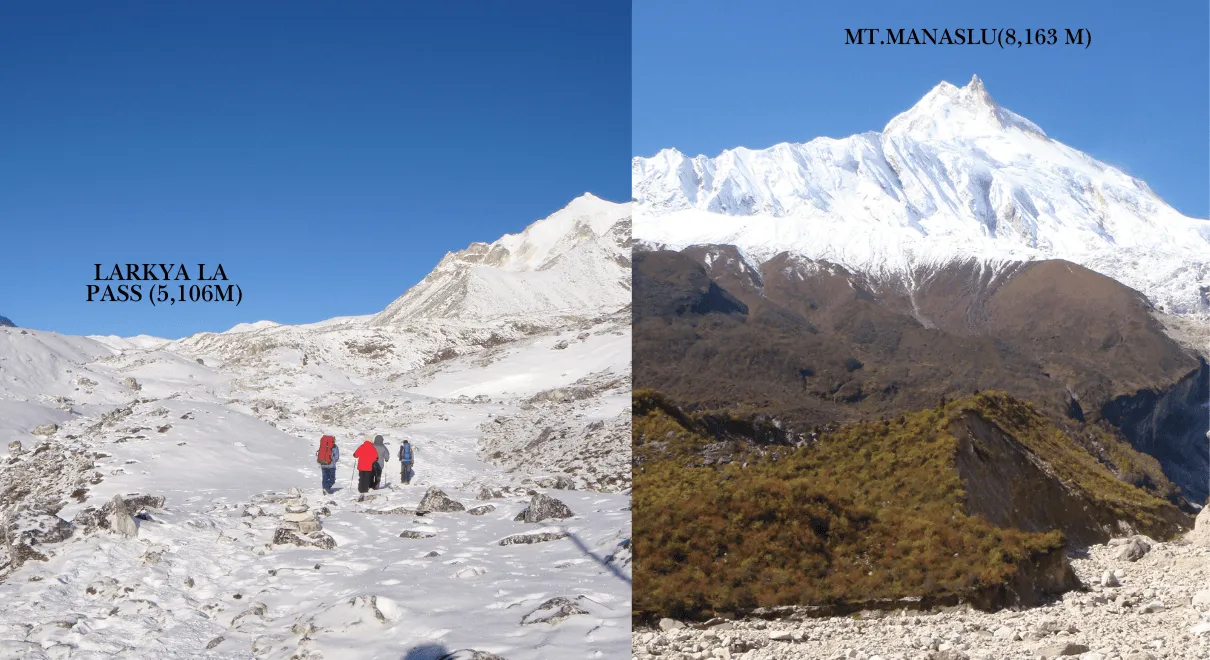
The Larke Pass (also spelled Larke La Pass or Larkela Pass) serves as both an elevation point and a main emotional peak for one of the world's most renowned trekking routes. The viewpoint provides you with a breathtaking view of Manaslu, which stands at 8,163 meters as the eighth-highest mountain in the world, and the Himlung Himal, Cheo Himal, and Kang Guru mountain ranges.
But here's the truth. The process of selecting this trek requires people to prepare through physical training and face the difficulties of high altitude and mountain weather, which can change unexpectedly.
Understanding Larkya La Pass: The Facts
The Larkya La Pass elevation reaches 5,160 meters, which makes it the most elevated trekking pass that non-mountaineers in Nepal can access. The Manaslu Circuit includes its most difficult section, which occurs between Dharmasala and Bimthang.
Most trekkers at Dharmasala start their Larkya Pass trek between 3 and 4 AM. Most trekkers reach the summit between 8 and 10 AM according to their fitness level and the present weather conditions. Most trekkers spend 8 to 10 hours to complete the full trek, which includes their descent to Bimthang.
When to Cross Larkya La Pass: Timing is Everything
Best time to cross Larkya La Pass: Spring (March-May) and autumn (September-November) mark the best periods for crossing the pass. These seasons provide the most consistent weather patterns, together with better visibility and easier hiking conditions.
Spring (March-May):
- Rhododendron forests burst into color at lower elevations
- Warming temperatures make the crossing more comfortable
- Snow begins melting, though early March can still be challenging
- Better visibility for photography
Autumn (September-November):
- Crystal-clear mountain views post-monsoon
- Stable weather patterns
- Popular trekking season, meaning more teahouses are open
- Colder temperatures, especially at night
The Larkya La Pass can be accessed during the winter months from December to February, but this route presents multiple difficult challenges to travelers. The route to Larkya La Pass becomes extremely challenging because the area experiences heavy snowfall and extremely low temperatures, which drop to -20°C at night, and teahouses operate at reduced capacity. Only experienced winter trekkers with proper gear should attempt this.
The weather conditions at Larkya La Pass experience a rapid transformation throughout the entire year. The optimal months for travel still require visitors to prepare for afternoon cloud formation, sudden temperature declines, and occasional snowfall events.
How Difficult is Larkya La Pass?
The question "How difficult is Larkya La Pass?" doesn't have a simple answer. The difficulty of the task becomes apparent through its multiple components, which need to be assessed.
Physical Challenge: The trek from Dharmasala requires 3-4 hours of steep climbing, which is followed by a more gradual ascent to the pass. At extreme altitude, every step requires concentration and effort. The descent to Bimthang becomes equally difficult for knees because it demands careful step placement, especially during Larkya La Pass snow conditions.
The location of this trekking path presents its most difficult challenges to trekkers. Altitude sickness at Larkya La Pass is a very real concern. At altitudes above 5000 meters, your body receives only 50 percent of the oxygen that exists at sea level. The symptoms of the disease begin with headaches and nausea, which can develop into dangerous medical emergencies if treated with neglect.
The trail itself presents no technical challenges because it requires neither climbing nor special equipment for its use. The path becomes hidden during snowy weather, while icy conditions make it necessary to use special equipment for safe navigation.
My Personal Experience: The 4 AM Start That Changed Everything
My crossing of Larkya La Pass remains forever in my memory. We began our journey at 3:30 AM from Dharmasala (4,460 m) after we spent a sleepless night there. The temperature stayed at -15°C, which caused my water bottle to freeze completely during the first hour.
The climb felt surreal because we could only hear two sounds, which were the boots of our team members walking on snow and the headlamps of our crew members who walked in front of us. The mountains displayed their true form at dawn when the first light revealed their outline. The first rays of the sun hitting Manaslu's peak remain one of the most beautiful sights I've ever witnessed.
I reached the mountain peak, which has prayer flags, at approximately 8 AM and experienced a powerful emotional response, which combined feelings of fatigue with excitement and deep respect. The descent proved to be a greater challenge to me than the ascent. The path from Dharmsala to Larkya La Pass and down to Bimthang demanded complete focus because of my exhausted legs, decreasing oxygen levels, and the difficult path conditions.
Common Problems Trekkers Face at Larkya La Pass
1. Altitude Sickness: This is the number one challenge. The symptoms of this condition include headache, nausea, dizziness, and fatigue. Severe cases can develop into High Altitude Pulmonary Edema (HAPE) or High Altitude Cerebral Edema (HACE), both of which are life-threatening conditions.
Solution: Proper acclimatization is non-negotiable. The "climb high, sleep low" principle must be followed. The climbers should take proper rest days at either Samagaon or Samdo. The climbers need to drink 3-4 liters of water per day while they climb at a slow pace and monitor their physical condition. The climbers need to descend immediately when their symptoms become worse.
2. Weather and Snow Conditions: Larkya La Pass snow can make the trail difficult or impossible to cross. Sudden storms can trap trekkers for days.
Solution: You need to monitor weather forecasts to create flexible schedules while you carry additional food supplies and warm clothing. Your guide possesses the expertise needed to determine safe times for weather assessment.
3. Physical Exhaustion: The long journey from Dharmasala-Ararat to Bimthang above the treeline is quite a challenging one and must test the endurance of many.
Solution: The long day from Dha Train for 3-4 months before your trek. The training program requires three elements, which include cardiovascular exercises and strength workouts, and altitude training when it is feasible. Build endurance for 8-10-hour trekking days. The trek from Bimthang to Rmasala creates difficulties that cause many trekkers to stop their journey.
What Mistakes Do Beginners Make?
Rushing the acclimatization:
The risk of altitude sickness becomes greater when people attempt to finish the circuit within a 10-to-12-day period, which conflicts with the recommended 14-to-16-day timeframe.
Inadequate gear: Underestimation of cold climate necessities. This calls for a sleeping bag rated for -15°C at the pass, a down jacket, proper gloves, and a good pair of boots.
Ignoring early symptoms: The person keeps working despite their headaches and nausea because they believe these symptoms will eventually pass. The symptoms at high altitudes do not get better until the person either rests or descends to lower altitudes.
Starting too late: When one begins to descend on an overcast afternoon with visibility deteriorating, he is also walking towards the end of the pilgrimage.
Poor hydration: The person does not drink sufficient water for two reasons. The first reason is cold weather conditions. The second reason is these bathroom breaks, which disrupt their water intake schedule.
Essential Tips for Your Larkya La Pass Trekking Guide
Before the Trek:
- You need to complete a full medical examination, which includes a heart assessment.
- You need to train for three months without interruption to meet your training requirements.
- You need to purchase high-quality equipment because this area requires superior products.
- You need to obtain the necessary permits, which include both the Manaslu Restricted Area Permit and the Manaslu Conservation Area Permit.
- You need to hire a professional Larkya La Pass trekking guide because this trek needs local expertise.
During the Trek:
- You need to spend one full rest day at Samagaon, which is at an elevation of 3530 meters, for proper acclimatization.
- You should plan for an additional acclimatization period at Samdo, which has an elevation of 3860 meters.
- You must drink enough water to stay hydrated while also eating food to meet your nutritional needs.
- You need to pack your summit day bag the night before, which should include warm clothing, snacks, water, and essential items.
- You should use trekking poles to descend because they will protect your knees from strain.
- You should take Diamox, which is known as acetazolamide, when your doctor advises you to do so.
- You need to begin your summit day crossing with fully charged headlamp batteries.
Technical Gear Checklist:
- Crampons or microspikes (essential if there's ice).
- The more dangerous ice climbing equipment requires specialized training.
- The hiker needs to use high-quality trekking poles for their hike.
- The headlamp requires additional batteries for operation.
- The sleeping bag provides four-season camping capabilities.
- The two insulated clothing items include a down jacket and down pants.
- The user requires two water bottles that provide thermal insulation.
- The user needs two products that protect from high-altitude sun, which include sunscreen and lip balm.
What Are Trekkers Afraid Of?
There are certain usual fears that you might bring to mind to prepare for your mental setup.
Fear of altitude sickness: Deserved concern. Know the signs, how to prevent, and when to go lower. Knowledge has decreased feelings of dread.
Fear of failure: The experience of defeat occurs when I fail to achieve the passing score. The strongest choice we can make at times requires us to return to our starting point. The mountains will always exist in their permanent state.
Fear of isolation: The area between Samdo and Dharamsala contains remote sections that create a complete sense of isolation. The trek reaches its enchanting point through its remote areas, which require trekkers to prepare themselves mentally for the journey.
Weather Fear: The unpredictable mountain weather creates the fear of the unknown. And flexible itinerary arrangement and trust in one's guides provide enough peace during the unpredictable weather phase.
Making Your Trek Authoritative and Trustworthy
The Manaslu Circuit Larkya La Pass crossing requires honest, comprehensive advice, which this guide presents through personal experience and researched information. I have completed the trek and faced its challenges while I gained knowledge from my achievements and my failures.
The Manaslu Circuit Trek crossing attracts increasing numbers of trekkers annually, yet it retains its wild character. The extraordinary trek maintains its future accessibility through three practices, which include respecting local communities and following Leave No Trace principles, and supporting sustainable tourism practices.
Your Next Steps
Are you prepared to meet this outstanding challenge? The following steps will guide you through the process:
- Book 12-18 months in advance for peak season (October-November, April-May)
- Initiate your training program because consistent practice delivers better results than intense workouts
- Research trekking companies that have built a good reputation and employ guides with extensive experience
- Acquire complete travel insurance that provides coverage for helicopter evacuation services that operate above 5000 meters
- Study Larkya La pass photos to familiarize yourself with the terrain and conditions
The Larkya La Pass Manaslu crossing stands as one of trekking's most difficult yet beautiful routes, which requires trekkers to master advanced skills in remote areas. The mountains provide permanent memory-making experiences when you prepare effectively, set achievable goals, and show mountain respect.
The prayer flags at 5,160 meters are waiting for you in Larkya La Pass. The mountains are calling. Will you answer?

.png "NTB")
.png "Pata")