Everest Base Camp Trek October & November 2026 / 2027
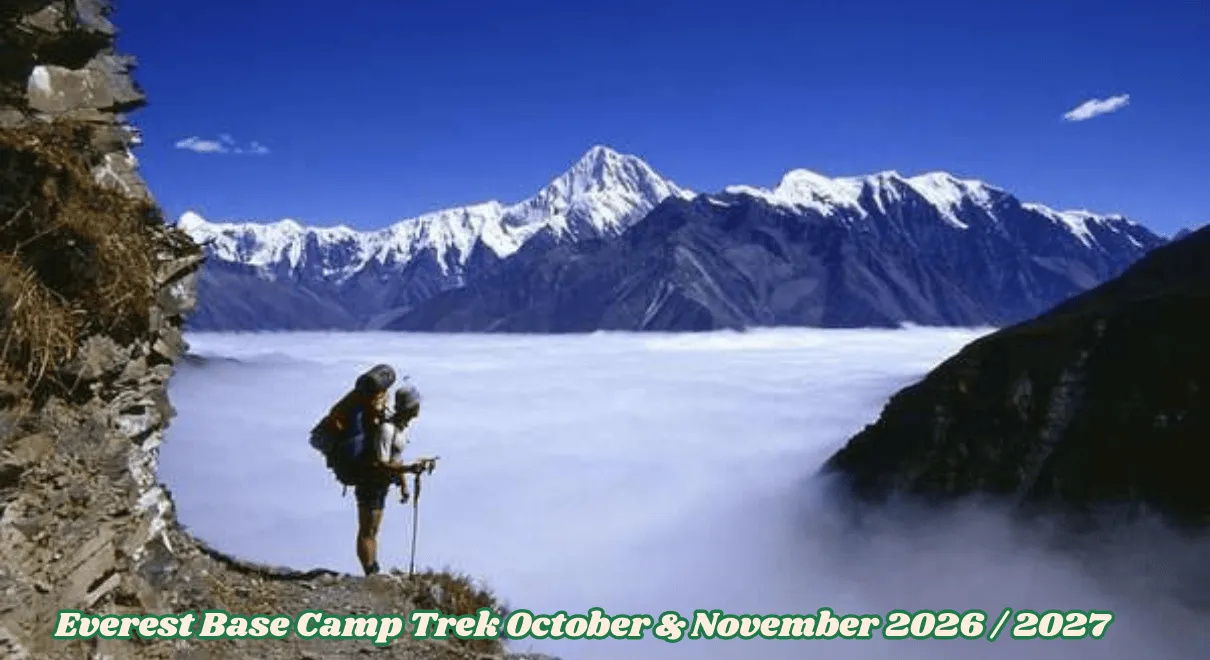
Everest Base Camp Trek October and November 2026/2027: Your Ultimate Autumn Trekking Guide
The Everest Base Camp Trek in October and November 2026/2027 stands as the single most essential trek, which all adventurers should include in their travel plans. The experience of waking up to golden rays that illuminate the world's highest peak while walking through Sherpa villages and breathing Himalayan air enables trekkers to traverse Earth's most beautiful landscapes. The experience is not exclusive to elite mountaineers because thousands of trekkers complete the journey every year, with October and November as the ideal time for trekking.
The Everest Base Camp Trek, which takes place from October to November in 2026 and 2027, represents the most important trek that every adventurer must include in their travel schedule. Trekkers experience Earth's most stunning landscapes through the combination of Sherpa village walks and Himalayan air, and the sunrise, which reveals the peak of the world's tallest mountain. The experience is not exclusive to elite mountaineers because thousands of trekkers complete the journey every year, with October and November as the ideal time for trekking.
The comprehensive guide provides all necessary information for the Everest Base Camp trek, which takes place from October 2026 until November 2027. The blog was created by authors who have personally experienced the trail, which they will describe to provide real travelers with trustworthy advice based on their own experiences. The post will provide you with all the necessary information to plan your 2026 or 2027 Everest Base Camp trek, which will become your most exciting travel experience.
Why Trek Everest Base Camp in October and November?
The Everest Base Camp trek in October and November stands as the most popular period for trekking throughout the entire trekking calendar. Let us break them down for you.
2.1 Best Weather Conditions
The monsoon season ends in late September because it brings clean trails and green vegetation and stable weather patterns to the Khumbu region. The Everest Base Camp trek becomes accessible to trekkers during the October and November 2026 and 2027 window because they will experience clear skies and comfortable temperatures with minimal rainfall. The current weather conditions create a joyful experience because every movement becomes delightful to the performer.
2.2 Exceptional Mountain Visibility
Autumn brings crystal-clear skies, which show complete views of Everest (8,848 m), Lhotse (8,516 m), Ama Dablam (6,812 m), Nuptse, and many other mountain peaks. Photographers and nature lovers agree: autumn is the single best photography season in the Khumbu Valley. People who want the famous photograph of Everest above the clouds at sunrise from Kala Patthar should visit during October and November.
2.3 Dry and Safe Trail Conditions
The post-monsoon paths maintain dry conditions, creating solid surfaces that enable safe travel. Summer trekkers face three main hazards: mudslides, slippery paths, and flooded river crossings. The Everest Base Camp trek becomes more enjoyable and accessible during the October and November period of the 2026 and 2027 season, which especially benefits beginner trekkers.
2.4 Festive Atmosphere and Sherpa Culture
The Khumbu region celebrates its most vibrant festivals during the months of October and November. The Tengboche Monastery Mani Rimdu festival serves as the main spiritual and cultural event of the year, where Sherpa monks present sacred dance performances to bring blessings to the local community. The unique Himalayan atmosphere emerges when trekkers walk through villages that display prayer flags and hear the sounds of monastery horns.
3. Weather and Temperature: What to Expect
Understanding the weather requires essential knowledge before you start the Everest Base Camp trek, which takes place in October and November 2026 and 2027. The following information provides an authentic assessment of what you will experience.
October Weather
- Daytime temperatures: 10°C to 15°C at lower elevations
- The night temperatures range from -5°C to -10°C at higher camps
- The skies remain mostly clear, which allows for exceptional visibility
- The precipitation amounts to nothing or only a slight amount, which constitutes minimal precipitation.
October marks the highest point of the autumn trekking season. The daytime temperatures allow trekkers to walk in light fleece clothing, while the nighttime temperatures require down jackets. The month of October sees the largest number of trekkers, which results in busy teahouses and active trail usage.
November Weather
- Daytime temperatures: 5°C to 12°C
- The night temperatures range from -10°C to -15°C at Base Camp and surrounding areas.
- The sky conditions display exceptional clarity, which exceeds the October threshold.
- The trail showed a significant drop in usage.
November is the month that brings both a peaceful atmosphere and beautiful mountain views, which reach their maximum clarity. The Everest Base Camp trek in November offers an unmatched experience for those who seek quiet trails and can withstand the cold by wearing more clothing during the evening. The cold becomes bearable through appropriate clothing layers, which lead to experiences of complete quietness and isolation within beautiful natural surroundings.
4. Everest Base Camp Trek Highlights in Autumn Season
The Everest Base Camp trek in October and November 2026/2027 is filled with iconic moments. Here are the highlights you will not want to miss.
- The scenic mountain flight operates between Kathmandu and Lukla (Tenzing-Hillary Airport), which provides passengers with one of the world's most exciting short flights.
- Namche Bazaar serves as the lively Sherpa capital, which functions as the main commercial center for Khumbu.
- Tengboche Monastery stands in front of Ama Dablam, which creates an amazing natural environment.
- Dingboche and Lobuche serve as high-altitude acclimatization villages, which offer visitors stunning views of the surrounding valleys.
- Everest Base Camp at 5,364 m serves as the starting point for world-class expeditions.
- The best viewpoint in the entire Khumbu region for Everest viewing exists at Kala Patthar sunrise, which occurs at 5,545 m.
- Visitors can experience Sherpa culture through their interactions with yak caravans and the exploration of ancient monasteries.
5. Everest Base Camp Trek Itinerary Overview (October / November)
The following 14-day Everest Base Camp trek itinerary for October and November 2026/2027 serves as a sample. The majority of trekking agencies follow this basic structure, which they adjust according to their specific pace requirements and acclimatization procedures.
Day-by-Day Schedule
Day 1: The group arrives in Kathmandu at an altitude of 1,400 meters. The group arrives at Tribhuvan International Airport, which provides transportation to their designated hotel. The group will conduct a trek briefing, which will involve preparation activities.
Day 2: The group travels from Kathmandu to Lukla, which has an elevation of 2860 meters, before they start their trek towards Phakding, which sits at an altitude of 2610 meters. The group embarks on a mountainous flight, which will take them to Lukla. The group starts their trek, which takes them through picturesque villages until they reach Phakding.
Day 3: The group tracks from Phakding until they reach Namche Bazaar, which sits at an elevation of 3440 meters. The group crosses suspension bridges to reach Sagarmatha National Park, which leads them to the famous Sherpa town of Namche Bazaar.
Day 4: The group will spend their day in Namche Bazaar to adjust their body to the altitude. The group hikes to the Everest View Hotel, which sits at an elevation of 3880 meters, to view Everest, Ama Dablam, and the surrounding mountains.
Day 5: The group follows a picturesque path through the mountains, which leads to their destination. The group will spend time at Tengboche Monastery, which stands as the largest monastery in the Everest region.
Day 6: The group travels from Tengboche to Dingboche by descending through forests and crossing rivers until they reach Dingboche village.
Day 7: The group will spend their day in Dingboche to adjust their body to the altitude. The group hikes to Nangkartshang Peak, which stands at 5083 meters, to use the peak for acclimatization purposes while enjoying mountain views.
Day 8: The group travels from Dingboche to Lobuche, which reaches an elevation of 4940 meters. The group passes climber memorials, which lead them to their destination of Lobuche.
Day 9: The group walks from Lobuche to Everest Base Camp, which sits at an elevation of 5364 meters, before heading to Gorak Shep, which stands at 5170 meters. The group reaches Everest Base Camp, which offers an achievement that they will use to return to Gorak Shep.
Day 10: The group travels to Kala Patthar, which stands at an elevation of 5545 meters, before starting their trek towards Pheriche, located at an altitude of 4240 meters. The group begins their hike to view the sunrise, which shows the beauty of Everest. The group moves downwards to reach Pheriche.
Day 11: The group moves from Pheriche to Namche Bazaar, which stands at an elevation of 3440 meters. The group descends through Pangboche and Tengboche to reach Namche.
Day 12: The group completes their final trekking day, which leads to Lukla, which has an elevation of 2860 meters. The group celebrates their successful trek completion by holding a celebration.
Day 13: The group will take a return flight from Lukla to Kathmandu, which has an altitude of 1400 meters. The group arrives at their hotel after their flight to Kathmandu, and they will have dinner together to say goodbye.
Day 14: The group will leave Kathmandu to reach their next destination at the airport.
Everest base camp trek cost for 2026/2027
Here is your Price Table in a clean and professional format:
Everest Base Camp Trek Price Table (USD per person)
| Package | 1 Traveler | 2 Travelers | 3 Travelers | 4 Travelers | 5 Travelers | 6 Travelers | 7 Travelers | 8 Travelers | 9 Travelers | 10 Travelers |
|---|---|---|---|---|---|---|---|---|---|---|
| Silver | USD 1460 | USD 1105 | USD 1090 | USD 1080 | USD 970 | USD 965 | USD 960 | USD 955 | USD 950 | USD 945 |
| Gold | USD 1790 | USD 1435 | USD 1420 | USD 1320 | USD 1315 | USD 1310 | USD 1305 | USD 1300 | USD 1295 | USD 1290 |
Gold vs Silver Package Differences
Gold Package:
- Full Board Service - Includes all meals during trekking (breakfast, lunch, and dinner)
- Accommodation Included - Tea house lodging provided and paid for
- Complete Package - All services covered in one price
Silver Package:
- Self-Pay Meals - Trekkers pay for their breakfast, lunch, and dinner during the trek
- Self-Pay Accommodation - Trekkers pay for their teahouse lodging
- All Other Services Included - Same additional services as Gold package (guides, permits, transportation, etc.)
Key Difference: The primary distinction between these packages is meal and accommodation coverage during trekking days. The Gold package provides full board with all meals and lodging included, while the Silver package requires trekkers to handle their own food and accommodation expenses at tea houses. All other services remain identical between the two packages.
This pricing structure allows trekkers to choose between the convenience of an all-inclusive experience (Gold) or more flexibility with potential cost savings by managing their meals and lodging (Silver).
Silver Price Package cost includes:
- Airport to hotel pick and drop by private vehicle
- Two-night hotel in Kathmandu at three-star categories in BB plan
- One highly experienced mountain Guide and Porter
- One dinner with a typical Nepali culture show in Kathmandu
- Accommodation, food, drinks, salary, insurance, transportation of both trek guide and Porter
- Down jacket, four-season sleeping bag, duffel bag, and trekking map (down jacket and sleeping bag are to be returned after trip completion)
- Group medical supplies (first aid kit)
- All necessary paperwork and Sagarmatha National Park entry permit
- TIMS Card (Trekker’s Information Management System card)
- All additional government tax
- All ground transportation by private vehicle.
- Kathmandu/ Lukla / Kathmandu airfare.
- Kathmandu/ Lukla / Kathmandu airfare for guide.
Silver Price: The Package cost excludes:
- Other ground transportation
- Nepal entry visa fee (USD 30 for 15 days/ USD 40 for 30 days from date of issue) (You may easily get Nepal visa upon your arrival at Tribhuvan International Airport, Kathmandu)
- Accommodation in a mountain lodge run by local people during the trek
- All meals during trekking
- International airfare
- Travelers insurance
- Cold drinks (Alcohol and cold drinks)
- Boiled water, Hot shower, Mineral water, battery charge, and hot drinks (in pot)
- Lunch and dinner in Kathmandu (Approx. 10-12 USD)
- Bar bills, telephone bills, and other personal expenses (shopping/ laundry)
- Tips to guide and porter
- All expenses due to unavoidable events, e.g. Personal illness, strike, etc.
- Helicopter evacuation charge in case of emergency whilst trekking
- We don't include drinking water on the trek, which you can buy at several places for between $1 and $3 a bottle (it gets more expensive towards base camp). A better solution is to buy water tablets in Kathmandu for around $2 and treat the water (your guide can help you find the good places to fill your water bottle).
- The other things not included on the trek are Wi-Fi, charging batteries, and hot showers. Wi-Fi is available in some tea houses for $3 to $5 an hour. Hot Showers are also available in a few places for around $4 and cost about $1.50 an hour.
- Unforeseen costs due to flight cancellation, weather conditions, etc. You are responsible for extra hotel nights ($30/night) and meals in Kathmandu for any extra days in Nepal due to flight delays.
Gold Price Package cost includes:
- Airport to hotel pick and drop by private vehicle
- Two nights' hotel in Kathmandu at three-star categories in BB Plan.
- Accommodation in a mountain lodge run by local people during the trek
- Meal on full board (breakfast, lunch, and dinner), a cup of tea/coffee in each meal during trek
- One dinner with a typical Nepali culture show in Kathmandu
- One highly experienced mountain Guide and Porter
- Down jacket, four-season sleeping bag, duffel bag, and trekking map (down jacket and sleeping bag are to be returned after trip completion)
- Accommodation, food, drinks, salary, insurance, and transportation of both trek guide and Porter
- Group medical supplies (first aid kit)
- All necessary paperwork and Sagarmatha National Park entry permit
- TIMS Card (Trekker’s Information Management System card)
- All additional government tax
- All ground transportation by private vehicle.
- Kathmandu/ Lukla / Kathmandu airfare.
- Kathmandu/ Lukla / Kathmandu airfare for guide.
Gold Price Package cost excludes:
- Other ground transportation
- Nepal entry visa fee (USD 25 for 15 days/ USD 40 for 30 days from date of issue) (You may easily get a Nepal visa upon your arrival at Tribhuvan International Airport, Kathmandu)
- International airfare
- Personal trekking gear
- Personal medical kits
- Hot drinks & meals ( Dessert, soup, cocoa, hot chocolate, coffee)
- Travelers insurance
- Cold drinks (Alcohol and cold drinks)
- Extra night accommodation in Kathmandu because of early arrival, late departure, early return from the mountain(due to any reason) than the scheduled itinerary
- Boiled water, Hot shower, Mineral water, battery charge, and hot drinks (in pot)
- Lunch and dinner in Kathmandu (Approx. 10-12 USD)
- Bar bills, telephone bills, and other personal expenses (shopping/ laundry)
- Tips to guide and porter
- All expenses due to unavoidable events, e.g. Personal illness, strike, etc.
- Helicopter evacuation charge in case of emergency whilst trekking
- We don't include drinking water on the trek, which you can buy at some places for between $1 and $3 a bottle (it gets more expensive towards base camp). A better solution is to buy water tablets in Kathmandu for around $2 and treat the water (your guide can help you find the good places to fill your water bottle).
- The other things not included on the trek are Wi-Fi, charging batteries, and hot showers. Wi-Fi is available in some tea houses for $3 to $5 an hour. Hot Showers are also available in a few places for around $4 and cost about $1.50 an hour.
- Unforeseen costs due to flight cancellation, weather conditions, etc. You are responsible for extra hotel nights ($30/night) and meals in Kathmandu for any extra days in Nepal due to flight delays.
The schedule for the trek includes essential acclimatization days needed to complete the Everest Base Camp trek during October and November of 2026 and 2027 which most healthy adults can complete. The main reason trekkers need to return from their trip is that they skipped their acclimatization days because altitude sickness affects them.
Booking Information
To book your Everest Base Camp Trek, please complete the contact form available on the Himalayas Trek website contact page. Our team will review your request and respond promptly with availability, a detailed itinerary, and a booking confirmation.
Alternatively, you may contact us directly:
-
Email: info@himalayastrek.com
-
WhatsApp: +977-9851361235
We are happy to assist you with trip planning, customization, and any questions to ensure a safe and memorable Everest Base Camp trekking experience.
6. How Difficult Is This Trek? Honest Assessment
The most frequent, best time planning question that people search for online requires them to determine the trek's level of difficulty. The Everest Base Camp trek is rated moderate to challenging on the global trekking difficulty scale. The route contains no technical climbing requirements, which means users can proceed without using ropes or harnesses or needing mountaineering skills. The requirements for this job include cardiovascular fitness, leg strength, mental toughness, and altitude training.
The primary challenge of the Everest Base Camp trek in October and November 2026 / 2027 is not the terrain — it is the altitude. As you ascend above 4,000 m, your body must adapt to reduced oxygen levels. The symptoms of Acute Mountain Sickness AMS include headaches and nausea, dizziness, and fatigue. The good news is that proper acclimatization, adequate hydration, and a slow ascent pace decrease your risk of developing the condition.
The trek becomes accessible to beginners who complete six to eight weeks of training, which involves running, cycling, and stair climbing. Non-regular hikers should begin their training three months before they intend to hike. The effort is entirely worth it.
7. Why October and November 2026 / 2027 Are the Best Years to Go
The Everest Base Camp trek scheduled for October and November 2026 and 2027 provides multiple strong reasons that require you to schedule your trip during these specific years. The trekking infrastructure in Nepal experiences continuous development through the establishment of superior teahouses and improved hiking paths, and the growth of skilled hiking staff throughout the Khumbu Valley region. The lodges along the route provide WiFi access, charging stations, and hot showers for their guests.
The Tenzing-Hillary Airport safety enhancements have made Lukla flight operations more dependable through their ongoing development. The 2026 and 2027 autumn seasons require early booking because groups fill quickly while top teahouses become booked through the next several months.
Nepal has established permit systems and sustainable trekking policies, which currently manage your 2026 and 2027 experience through more efficient handling and enhanced environmental protection. The period between October and November 2026 and 2027 serves as the optimal time to experience the Everest Base Camp trek because of its combination of easy access, developed facilities, and stunning natural scenery.
8. Crowds and Trail Conditions: October vs. November
The month of October functions as the busiest time for the Everest Base Camp trek, which attracts the most international trekkers. The pathways serve as active travel routes while teahouses experience high customer volume, and the entire environment exudes a joyful celebration. The most social trekking experience, which allows you to meet trekkers from different countries, will occur during October. Advanced teahouse reservations require you to make your bookings.
The month of November establishes a new environmental atmosphere. The trail experiences reduced foot traffic while the mountain environment presents its most attractive morning conditions, and hikers obtain better visual access to the surrounding peaks. The Everest Base Camp trek in November operates with its own set of hours and provides access to peaceful areas, which become your personal secret paradise location. The dining rooms of teahouses create an atmosphere where you can discover personal connections with the natural world around you.
9. What to Pack for the Everest Base Camp Trek in Autumn
The success of your Everest Base Camp trek from October to November 2026 to 2027 depends on your ability to pack properly. Your packing requirements should include three essential elements: warmth, durability, and weight. The following packing guide provides useful information for trekkers who travel during the autumn season.
Clothing
- Heavyweight down jacket (essential for evenings above 4,000 m)
- Thermal base layers — top and bottom
- Mid-layer fleece jacket
- Waterproof and windproof outer shell
- Trekking pants — two or three pairs
- Warm gloves and thermal liner gloves
- Wool or fleece hat
- Sun hat for daytime
- Moisture-wicking trekking socks — at least five pairs
Equipment
- Sturdy waterproof trekking boots — broken in before the trek
- Sleeping bag rated to -15°C for November or -10°C for October
- 35–45 litre daypack
- Adjustable trekking poles — invaluable on descent
- Headlamp with extra batteries
- Water purification tablets or filter
- Sunscreen SPF 50+ and UV-protective sunglasses
- Personal first aid kit including altitude sickness medication (Diamox)
10. Cost of Everest Base Camp Trek in October and November
The trekking budget requires a realistic assessment for the Everest Base Camp trek which will occur in October and November of 2026 and 2027, because this method will help trekkers maintain their mental peace during the journey. The expenses differ greatly between independent trekking and package trekking, and the selection of lodging options. Here is a general breakdown.
- The cost of round-trip flights from Kathmandu to Lukla ranges between USD 180 and 220 for each traveler.
- The Sagarmatha National Park permit costs about USD 30 to 35.
- The Khumbu Pasang Lhamu Rural Municipality permit costs about USD 20.
- The cost of a licensed trekking guide ranges from USD 25 to 35 per day.
- The recommended daily rate for a porter who will carry 15 to 20 kg of weight costs between USD 18 and 25.
- The cost of teahouse accommodation starts at USD 5 and goes up to USD 15 for each night, which covers budget and mid-range options.
- The cost of meals on the trail ranges from USD 4 to 8 for each meal.
- The total trekking budget for a 12 to 14-day expedition amounts to approximately USD 1 200 to 1 800, which does not include international flight expenses.
The employment of a local guide provides both safety benefits and economic support for the Sherpa community and the Nepalese economy. The details of this topic are explained more extensively in Section 13.
11. Permits Required for Everest Base Camp Trek
The Everest Base Camp trek requires trekkers to obtain the necessary permits because they need these permits to legally complete the trek during October and November of 2026 and 2027. The trek requires two mandatory permits, which trekkers must obtain.
Sagarmatha National Park Permit
The permit allows access to Sagarmatha National Park, which covers all of the Khumbu trekking area that includes Base Camp. The Monjo park issues this permit, but trekkers can also obtain it through registered trekking agencies in Kathmandu. The fee for foreign nationals is approximately NPR 3,000 (around USD 22–25).
Khumbu Pasang Lhamu Rural Municipality Permit
The permit functions as a local authorization that travelers must pay to the municipality when they start their entry into Khumbu from Lukla or Salleri. The permit costs approximately NPR 2,000 (around USD 15–18) and is non-negotiable. The trekkers need to keep their permits available for inspection because checkpoints will check their permits at various locations.
12. Tips for a Successful Everest Base Camp Trek in Autumn
Our top research-based recommendations for the Everest Base Camp trek between October 2026 and November 2027 originate from our extensive guiding and trekking experience in the Khumbu region.
- You must book your flights and teahouses three to four months before your October travel date.
- Your altitude training program should include stair climbing and weighted pack hikes as essential training elements.
- You should hire a local guide who possesses TAAN registration and extensive experience because they can provide essential information about weather conditions, health indicators, and route conditions.
- The altitude rule states that you should only ascend 400 to 500 meters during each day when you are located above 3000 meters.
- You must drink three to four litres of water every day to achieve proper hydration.
- Alcohol consumption should be restricted for the first few days of trail time because it increases dehydration risk at high altitudes.
- Every water source requires you to use a water purification method because you cannot depend on bottled water as your only source of drinking water.
- You must download offline maps through either Maps.me or Gaia GPS before you leave Kathmandu.
- You should bring USD cash because ATMs do not operate past the Namche Bazaar area.
- You need to buy travel insurance that includes coverage for high-altitude helicopter evacuation.
13. Why Choose a Guided Trek in 2026 / 2027?
Our Everest Base Camp trek decision between independent travel and guided travel will become your most essential choice for your trek in October and November 2026 and 2027. We recommend using a guide because we provide you with these reasons for doing so.
The main reason people choose this option is because of its safety benefits. Your health will be monitored by an experienced guide who will identify altitude sickness symptoms and implement appropriate treatment methods. Your emergency medications will be handled by them while they establish direct communication with Kathmandu rescue teams. The presence of guides changes a dangerous situation into a controlled exploration experience.
Guides provide your trek with safety protection while they bring special cultural knowledge to their role. The team members share local legends about ancient monasteries by explaining the role of prayer flags and mani stones while they create authentic relationships with Sherpa families whom you will meet in nearby villages. The trek becomes a cultural immersion, not just a physical challenge.
A skilled guide will manage all logistical aspects, which include teahouse booking and permit verification and meal organization, to enable you to fully enjoy your Everest Base Camp trek in October and November 2026 and 2027. Your guide will function as your personal navigator who also serves as your medical expert, historical consultant, and personal companion.
14. Everest Base Camp Trek Booking for October and November 2026 / 2027
The most effective time to start your trek planning for Everest Base Camp between October 2026 and November 2027 requires you to start your booking process six to twelve months before your intended October travel dates. Here is what to consider.
- Multiple agencies organize budget-friendly group treks that operate according to their scheduled dates throughout the period from October to November. These programs offer both economical rates and opportunities for social interaction.
- Group joining options: Join an existing group of four to twelve trekkers to share guide and porter costs.
- Private trek option: A small additional fee enables you to organize a private guided trek which follows your preferred schedule and travel plan.
- Secure your cabin through early reservation because it improves your chances of receiving better teahouse accommodations while also enabling access to early-bird discounts from trusted operators.
- Choose a TAAN (Trekking Agencies Association of Nepal) registered operator who has authentic reviews and certified guides to lead your trekking activities.
Your package must include airport transfers and Kathmandu accommodation, all necessary permits, domestic flights, and guide fees and teahouse meals, which operate at half-board service. Your operator needs to provide transparent information because this indicates their reliability.
15. Common Mistakes Beginners Make — and How to Avoid Them
The Everest Base Camp trek in October and November 2026 / 2027 attracts many first-time high-altitude trekkers every year. The following list shows the most common mistakes that you can avoid by using our provided solutions.
Skipping Acclimatization Days
The most lethal error occurs when people choose to skip their acclimatization days. Your enthusiasm should not control your activities that exceed your acclimatization timetable. The itinerary requires two rest days, which occur at Namche and Dingboche. The absence of them from your schedule results in a higher AMS risk.
Overpacking
Carrying a 20 kg backpack at 5,000 m is a painful experience. A porter should carry any loads that weigh more than 8 to 10 kilograms. Your daypack should be light. You should display your entire packing list to others before you take away one-third of your items.
Neglecting Physical Preparation
People who start the Everest Base Camp trek in October and November 2026 / 2027 without physical fitness will experience extreme discomfort. You need to begin your training program at least two to three months before your scheduled departure. Consistent training produces better results than completing training sessions during emergencies.
Underestimating Cold Nights
Experienced trekkers fail to prepare for the extreme cold that occurs after sunset at locations higher than 4,000 meters during November. A substandard sleeping bag or insufficient layers can lead to a very uncomfortable and dangerous night. You need to buy the correct equipment before your departure.
16. What Are Trekkers Most Afraid Of? Let's Address Those Fears
The main reason people who want to hike the Everest Base Camp trek in October and November 2026 / 2027 to avoid making reservations.
Fear of Altitude Sickness
The existence of AMS demonstrates its reality, but it remains possible to handle the condition. Most trekkers who follow an appropriate acclimatization schedule while maintaining hydration complete their trek successfully without facing major problems. Under a doctor's supervision, patients can take Diamox (acetazolamide) as a preventive medication. The guide will conduct a daily health check on you. You should follow the descent instructions as soon as they are presented to you.
Fear of Not Being Fit Enough
The Everest Base Camp trek does not require athletes to perform at Olympic standards. The trek remains accessible to people from all fitness groups who want to hike because people in their 60s and 70s complete the trek each year. Your fitness improvement process must start from your current level, while you need to rest.
Fear of Getting Lost
The Everest Base Camp route remains safe from lost hikers because it provides both guides and clearly marked trails. The trail exists as one of the most frequently used paths worldwide because it provides signs and other trekkers at every location.
17. A Personal Story From the Trail
The scene shows a person who stands at Gorak Shep while his guide uses light physical contact to bring him to wakefulness. The temperature has fallen to -12°C since the previous night. Your brain maintains perfect reasoning, which tells you to remain inside your sleeping bag. You put on your clothes for the day and tie your boots before leaving to experience a night sky that displays so many stars that it seems the universe supports your journey.
At the top of Kala Patthar, two hours later, you observe the sun's first rays illuminating the South Face of Everest. The mountain transforms its color from black to gold and then to bright white. The cold weather causes tears to form in your eyes because you understand that you exist in one of Earth's most beautiful locations. The Everest Base Camp trek in October and November 2026 / 2027 exists to create that experience. No photograph shows the scene better than it exists. The complete description of the scene remains impossible to achieve. The only way to experience it is through direct presence.
18. Making the Most of Autumn Photography Opportunities
The Everest Base Camp trek, which takes place from October to November in 2026 and 2027, offers photographers a perfect shooting location. The following visual elements represent the main attractions, which you should photograph while we provide you with instructions on how to obtain optimal photographs.
- The Kala Patthar sunrise requires you to set your alarm at 4:00 AM. The golden hour light on Everest's South Face is unmatched anywhere on Earth.
- The monastery of Tengboche should be used as a background element to create a conventional Himalayan composition, which includes the Ama Dablam mountain.
- Hikers can reach the Sherpa museum, which provides a complete aerial perspective of the market town. The Mani Rimdu Festival takes place in October when monks wear their ceremonial costumes at Tengboche Monastery.
- The early morning shots require you to use a camera that has excellent low-light performance. The 24–70 mm lens provides coverage for all situations that you will encounter on this trek.
19. Your Next Steps — Turn This Dream Into Reality
The text you read shows that you're at a critical point and that you have a strong interest in the Everest Base Camp trek scheduled for October and November of 2026 and 2027. The following steps will guide you to your next task.
13. Choose your season: Decide between October (lively, warmer) or November (peaceful, colder, clearer).
14. Start training now: Begin a cardiovascular and strength program today.
15. Contact a reputable TAAN-registered agency and check available departure dates.
16. You must obtain travel insurance that includes coverage for helicopter evacuation from high-altitude situations.
17. Visit your doctor to discuss altitude medication, vaccinations, and fitness clearance.
18. Begin assembling your gear — boots, sleeping bag, and down jacket should receive your first attention.
20. Conclusion: Why the Everest Base Camp Trek Belongs on Your 2026 / 2027 Calendar
The Everest Base Camp trek in October and November 2026 / 2027 is more than a physical journey — it is a transformative life experience. Your body experiences extreme challenges, your spirit undergoes deep self-discovery, and your determination leads to permanent rewards through exceptional views and special moments. The autumn season provides ideal conditions through its reliable weather, perfect visibility, cultural diversity, and secure trailconditions. The Khumbu Valley offers visitors its most breathtaking views during both October's lively atmosphere and November's peaceful quietude.
The perfect moment for action exists right now, so do not wait for the ideal time to begin. The adventure path requires you to book your trip and then prepare yourself to join fellow trekkers, who will create history at the base of the world's highest mountain during the 2026 and 2027 trekking seasons. The Everest Base Camp trek october and November is waiting for you.
21. Frequently Asked Questions (FAQs)
Q1: Is October the best month for the Everest Base Camp Trek?
The Everest Base Camp trek reaches its highest popularity during the month of October, which stands as its second most popular time after November. October delivers stable weather and clear mountain views, together with dry and safe trails and daytime temperatures that range from 10°C to 15°C after the monsoon season ends in late September. The trail becomes alive with festive energy because thousands of trekkers from all over the world come to fulfill their dreams of exploring the Himalayas. Your trekking experience gains exciting cultural value from the Mani Rimdu festival, which takes place during the period between late October and early November. October serves as peak season; therefore, you need to book your travel arrangements in advance.
Q2: Is November too cold for Everest Base Camp?
The month of November brings cold weather, which people can handle when they wear appropriate equipment. The temperature at Base Camp can reach -15°C during nighttime hours, yet daytime temperatures between 5°C and 12°C allow comfortable trekking for properly dressed hikers. Experienced trekkers select November because it offers them peaceful trails, outstanding sky visibility, and the best mountain views of the year. A quality sleeping bag rated to -15°C, thermal base layers, a down jacket, and good gloves are essential. The Everest Base Camp trek becomes an excellent experience during November when travelers take the proper steps to get ready.
Q3: How crowded is Everest Base Camp in October?
The Everest Base Camp trail experiences its highest visitor count in October because it marks the most active period of the autumn trekking season. The popular teahouses in Namche Bazaar, Dingboche, and Gorak Shep experience high demand, which causes the trail between Namche and Tengboche to become overcrowded during this time. The atmosphere maintains its active and social character because trekkers from different parts of the world join together to share their travel experiences. The best way to avoid heavy traffic on your trek is to start your journey during the first week of October or move your start date to the less active period that begins in the second half of November. You must make reservations for your teahouse stays during the month of October.
Q4: Can beginners trek to Everest Base Camp in autumn?
Absolutely, beginners can complete the Everest Base Camp trek in autumn with the right preparation. The trail requires no technical mountaineering skills whatsoever. The main difficulty that beginners face comes from high altitudes instead of technical challenges. A beginner who follows proper acclimatization days and trains for six to eight weeks with cardiovascular and strength exercises can reach Base Camp in October or November. The EBC trek's best time for first-timers is October, when conditions are most forgiving. The training process should begin months before your departure, while you should obtain medical advice about altitude medication.
Q5: What is the weather like at Everest Base Camp in November?
November at Everest Base Camp brings cold but exceptionally stable weather conditions, which maintain clear visibility throughout the month. Daytime temperatures at Base Camp hover around 0°C to -5°C, while nights plunge to -15°C or lower. Winds increase during the final days of November, which creates a wind-chill effect that makes temperatures feel more frigid. The November skies provide their best visibility of the year, which enables a complete sight of Everest, Lhotse, and their neighboring mountains. Snowfall above 5,000 m is possible in late November but rarely disrupts trekking. November trekking requires proper cold-weather gear, which ensures trekkers will stay both comfortable and safe.
Q6: Do I need a guide for the Everest Base Camp Trek in 2026 / 2027?
The trail has clear markings which allow people to walk it without restrictions, yet trekkers need to hire an experienced TAAN-registered guide for their Everest Base Camp trek in October and November 2026 to 2027. A licensed guide ensures your safety by monitoring your health for altitude sickness symptoms, manages permits and logistics, provides deep cultural and historical insights, and coordinates emergency evacuations if needed. The Sherpa economy and sustainable trekking operations in Nepal receive direct benefits from guide services. The guide system provides essential protection for solo trekkers who need to navigate through dangerous high-altitude areas where weather conditions and their health status might change unexpectedly.
,

.png "NTB")
.png "Pata")