How Difficult is the Mardi Himal Trek
How Difficult Is the Mardi Himal Trek? A Complete, Honest Guide for Trekkers of All Levels
How difficult is the Mardi Himal trek? The trek presents a moderate level of difficulty, which enables hikers to experience high-altitude trekking throughout Nepal's Annapurna region. The trek reaches its highest point at base camp, which stands at 4500 meters, while hikers must walk for 5 to 7 hours daily, face steep ridge climbs, and experience cold nighttime temperatures. The trek becomes accessible to beginners who train properly, choose the appropriate season, and walk at a reasonable speed.
The Mardi Himal trek difficulty level shows you its actual trekking challenge through this guide, which provides an honest answer without any exaggeration or false promises. The post will show you what to expect from the Mardi Himal trek because you will learn everything about the trail from the content, which is suitable for both new trekkers and experienced hikers.
The Mardi Himal trek shows its difficulty level as a moderate challenge according to its trail requirements. The trail in Nepal has a higher difficulty level than this path, yet it remains easier than the most demanding routes. Proper training allows beginners to complete the track successfully while having a great time throughout their entire hike.
What Is the Mardi Himal Trek?
The Mardi Himal trek exists as a concealed treasure that belongs to Nepal's Annapurna Conservation Area. The path begins at Pokhara and leads hikers across a scenic ridge that passes through dense rhododendron forests, alpine meadows, and high mountain areas until they reach Mardi Himal Base Camp situated at an elevation of 4,500 meters above sea level.
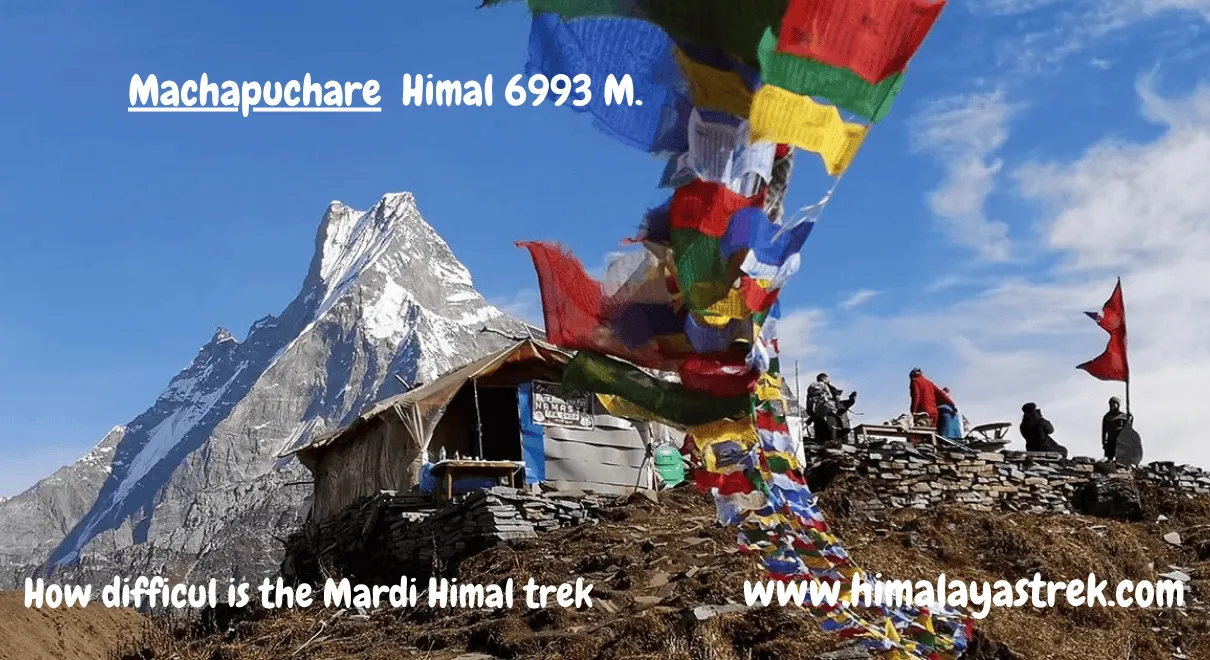
The trail provides a different experience from the Annapurna Circuit and Everest Base Camp trek because it remains less developed and less traveled by people. The path leads you through unspoiled natural spaces, which provide total tranquility. The view provides an up-close view of Machhapuchhre peak and Mardi Himal, Hiunchuli, and the complete Annapurna mountain range. On a clear day, the views create an experience that remains forever in your memory.
Quick Facts About the Trek
- Maximum elevation: 4,500 metres (Mardi Himal Base Camp)
- Total distance: Approximately 50 to 55 kilometres round trip
- Trek duration: 5 to 7 days
- Daily walking time: 5 to 7 hours
- Difficulty level: Moderate
- Starting point: Kande, near Pokhara
- Permits required: ACAP permit and TIMS card
How Difficult Is the Mardi Himal Trek — A Real Breakdown
How difficult the Mardi Himal trek is for some people is a really good question, depending on certain factors. Let's ponder over each.
Altitude
The trek faces its most difficult challenge through its high elevation requirements. The trail reaches a height of 4,500 meters, which marks the base camp. The body begins to experience effects from decreased air pressure after reaching an elevation of 3,000 meters. The condition causes you to experience headaches, increased fatigue, and loss of appetite. The condition known as acute mountain sickness appears as AMS. The condition can develop in any person who exercises regularly. The solution requires you to move at a slow pace while you consume large amounts of liquids and maintain a slow climbing speed.
Trail Steepness
The lower sections of the trek pass through forest and are gentle and shaded. The trail ascends to higher elevations through its steepening path. The trail from Low Camp to High Camp leads to base camp as a continuous steep ridge path, which comprises rocky terrain. The sections will require effort to complete, but you can succeed if you manage your movements effectively.
Daily Walking Time
Most days on the Mardi Himal trek, you will walk between five and seven hours. The trek distance that people normally travel in mountain areas becomes uncomfortable when combined with high altitude and steep terrain. A good night's sleep and a warm meal at the teahouse will restore you for the next day.
Weather
Mountain weather experiences rapid fluctuations, which define its character. The morning hours present clear and beautiful weather conditions. The afternoon hours bring clouds and mist while occasional rain showers occur. The higher camps experience extremely cold nights because temperatures can reach below zero. The correct clothing selection enables people to maintain comfort during changing weather conditions.
When Is the Best Time to Do the Mardi Himal Trek?
The selected season for trekking in Mardi Himal determines its difficulty level. The following explanation presents a basic overview of the situation.
Spring (March to May) — Best Season
The weather during this period maintains warm temperatures. The trail features rhododendron flowers, which bloom in red and pink colors. The skies provide clear visibility, which enables hikers to see the stunning mountain views. This is one of the two ideal windows for this trek.
Autumn (October to December) — Best Season
The monsoon season ended, and now the atmosphere remains pure with exceptional visibility. The views reach their peak quality during this period. The daytime hours feature pleasant weather with mild temperatures. The most active trekking period occurs during this time in Nepal.
Winter (January to February) — For Experienced Trekkers Only
The temperature drops to low levels while snow develops at altitudes exceeding 3000 meters. Experienced trekkers with appropriate equipment can complete this trail during winter, while beginners should not attempt it.
Monsoon (June to September) — Not Recommended
The monsoon season presents multiple challenges, which include heavy rain, leeches, slippery paths, and reduced visibility that make it unsafe for most trekkers. The Mardi Himal trek difficulty level increases significantly during this time period.
Day-by-Day Difficulty Guide
The trail schedule provides a basic summary that shows what to expect for each day.
Day 1: Pokhara to Kande to Deurali
The path reaches an elevation of 2100 meters. The walking duration for this trail ranges between 4 and 5 hours. The day requires easy walking through forest areas. The first part of the day works as an effective way to prepare for upcoming challenges.
Day 2: Deurali to Forest Camp to Low Camp
The path reaches an elevation of 2520 meters. The walking duration for this trail ranges between 5 and 6 hours. The path ascends at a steeper gradient through the dense forest area. The path requires moderate effort to navigate through it.
Day 3: Low Camp to High Camp
The path reaches an elevation of 3580 meters. The walking duration for this trail ranges between 5 and 6 hours. The first stage of altitude increase begins at this location. The trail contains steep sections, which also include exposed areas. The difficulty level lies between moderate and hard.
Day 4: High Camp to Mardi Himal Base Camp and Back
The base camp sits at an elevation of 4500 meters. The walking duration for this trail ranges between 6 and 8 hours. This day represents the most difficult day throughout the entire trek. The trail requires climbers to ascend a long, steep ridge while experiencing thin air conditions. The day challenges you, but it also offers the most amazing views as a reward.
Day 5: High Camp to Sidhing or Lwang
The path begins its long descent. The day will bring discomfort to your knees. The path requires moderate effort to navigate through. The descent becomes easier when you use trekking poles to assist you.
Day 6: Return to Pokhara
The path back to Pokhara requires a brief, easy walk or a short drive. The trek has reached its final point.
Common Challenges Trekkers Face
The actual difficulties that you face will determine which proper preparation methods to use. The following list presents the most frequent difficulties that trekkers encounter when they ask about the Mardi Himal trek difficulty.
Altitude Sickness
This is the number one challenge. The condition presents itself through four main symptoms, which include headache, nausea, dizziness, and deep fatigue. The moment you notice these symptoms getting worse, do not push forward. You should stay still while drinking water and descending if necessary. You should consult your doctor before your trip to determine whether Diamox medication will suit your needs.
Underestimating Fitness Requirements
The physical requirements for daily activities differ from the physical requirements needed to maintain trail fitness at high elevations. Trekkers who make this mistake fail to recognize the extreme energy requirements needed to climb steep trails in areas with low oxygen levels. Your trekking schedule needs to start six weeks before your departure date through the implementation of walking and cardio exercise training.
Not Drinking Enough Water
The body experiences accelerated fluid loss at high altitudes, which results in unreliable thirst detection. On the trail, you should consume three to four liters of water daily, regardless of your thirst level.
Wrong Gear
The temperature on this trek can swing dramatically between a warm afternoon and a freezing night. Trekkers who pack the wrong clothing, especially those who bring cotton instead of moisture-wicking layers, suffer unnecessarily. You need to purchase proper equipment before your departure to this location.
Carrying Too Much Weight
A backpack that exceeds 3,500 meters of altitude becomes a substantial weight that needs to be carried. Your ideal backpack weight should stay between seven and nine kilograms. Any items that exceed this weight limit should be handled by a porter. The decision to use a porter on your trek stands as the most intelligent choice you will make during your journey.
Can Beginners Do the Mardi Himal Trek?
People most frequently ask this question about how difficult the Mardi Himal trek actually is because they want to know the answer. The trek remains accessible to beginners who want to attempt it after they complete their necessary training.
Here is what a beginner needs to succeed:
- The fitness training programme should start six to eight weeks before the trek. The program needs four to five weekly sessions, which should include uphill walking exercises, stair climbing workouts, and cardio training.
- Your trekking season should start either in spring or in autumn.
- The hiring of a local guide requires you to choose a licensed professional. A competent guide provides more than navigation skills because he monitors altitude sickness symptoms, and he understands all trail conditions, and his presence enhances both safety and adventure value of your trek.
- The better choice for your itinerary is to select a six to seven-day period. You should take your time because your body needs an extra day for proper acclimatization, which will help you with the most difficult parts of the trail.
- You should purchase high-quality equipment, which includes both waterproof boots and a thermal sleeping bag.
- You need to maintain an adaptable mindset because some days people will experience more difficulties than other days. The pattern of experiencing difficulties on different days throughout the week exists as a normal situation.
- The Mardi Himal trek becomes an enjoyable experience for beginners who complete these steps according to their requirements.
Essential Gear for the Mardi Himal Trek
The Mardi Himal trek becomes less strenuous when you pack appropriate equipment for the journey. Here is what you need:
- Waterproof trekking boots that are already broken in before the trek
- Sleeping bag rated to minus ten degrees Celsius
- Two adjustable trekking poles
- Moisture-wicking base layer clothing (two sets)
- Fleece jacket for warmth
- Waterproof outer jacket
- Down jacket for cold evenings at camp
- Sun hat and warm beanie hat
- UV protective sunglasses
- Headlamp with spare batteries
- Water purification tablets or a filter bottle
- Basic first aid kit, including blister treatment
- High-factor sunscreen (the sun is stronger at altitude)
- Energy snacks that include nuts and chocolate, dried fruit, and energy bars
Top Tips to Make the Trek Easier
These are the tips that genuinely make a difference on the Mardi Himal route:
Begin your daily activities during the early morning hours. The mountain weather conditions become worse after midday. The 7 AM starting time provides you with both clear sky conditions and cooler temperatures, which allow you to take necessary rest stops during your journey.
Walk at your own pace. The first person to reach the destination does not receive any special recognition. The golden rule of high altitude trekking is simple: slow is fast. The slow and steady walking method helps people save their physical energy, which decreases their chances of experiencing altitude sickness, and it provides them with the ability to see their surrounding environment.
Teahouses serve healthy food. The best food for this trek is dal bhat, which contains rice, lentils, and vegetables as the traditional Nepali meal. The food provides high calories which become easy to process at high elevations and most teahouses permit customers to take unlimited food.
Use trekking poles on the descent. Most people think poles are for climbing. The equipment provides its highest benefits during downhill walks because it helps users decrease their knee stress.
The guide needs you to share your thoughts.Tell your guide how you feel every morning. You should tell your guide about any head pain, extreme sleepiness or decreased appetite that happens above sea level. Your guide can make important decisions based on this information.
People should drink water throughout the day. You need to set a reminder on your watch or phone if you require drinking water. The target for daily water intake on the trail is three to four litres, which should be consumed every day.
Permits and Costs
The Mardi Himal trek requires two permits, which trekkers can obtain from Pokhara. The following permits are required for the trek:
- Annapurna Conservation Area Permit (ACAP): approximately NPR 3,000, which is around USD 22
- TIMS Card (Trekkers' Information Management System): approximately NPR 2,000, which is around USD 15
You will need between USD 35 and USD 55 per day for your trail expenses, including accommodation and meals at teahouses. A licensed local guide costs approximately USD 25 to 35 per day. A porter, if you need one, costs around USD 18 to 25 per day. You should provide your guide and porter with a generous tip at the trek's conclusion because their expertise and dedication have enabled your travel experience.
A Moment from the Trail
The ridge between High Camp and Mardi Himal Base Camp contains a location that shows altitude pressure, while your legs experience exhaustion, and the trail continues to extend endlessly. Almost every trekker reaches this moment. The exact point exists that transforms reading about the Mardi Himal trek difficulty into a physical experience.
Your capacity to endure the situation depends on more than physical strength. The path to achievement begins with the choice to move forward. You need to continue your journey from this point.
Base camp stands as the location where you arrive. Machhapuchhre rises directly in front of you, so close and so magnificent that your tired mind goes completely quiet. The Annapurna range stretches across the horizon. The environment exists in total silence except for the sound of the wind and your breathing.
All your efforts from each challenging step have brought you to this point. Everything at this location holds absolute value.
Frequently Asked Questions
How difficult is the Mardi Himal trek compared to Poon Hill?
The Mardi Himal trek is more challenging than Poon Hill. The Poon Hill trek, which reaches 3,210 metres, takes three to four days to complete. The Mardi Himal trek reaches 4,500 metres and takes five to seven days with more sustained climbing. If you have comfortably completed Poon Hill, then you are ready to attempt Mardi Himal with proper preparation.
Is the Mardi Himal trek difficult for beginners?
The route presents significant challenges for beginners, yet they can succeed on it after six to eight weeks of training with proper equipment and guidance from a licensed local guide. The route through this area sees first-time trekkers complete their journey throughout every season.
What is the hardest part of the Mardi Himal trek?
The most difficult part of the trek occurs during Day 4 when trekkers ascend from High Camp to Mardi Himal Base Camp. The route requires hikers to traverse a steep ridge that remains exposed while they walk at heights between 3,580 and 4,500 metres. The route becomes possible after proper acclimatization, which should take place during the preceding days.
Do I need a guide for the Mardi Himal trek?
First-time visitors should use a guide because the law does not require one. A good guide manages your safety, monitors your health, and navigates confidently in mist or snow where the trail becomes unclear.
What is the best season for the Mardi Himal trek?
The two best trekking seasons occur during springtime between March and May, and during autumn, between October and December. The two seasons both provide steady weather conditions, which allow hikers to observe the mountains while they walk on easy-to-handle paths.
The conclusion of this section presents the final thoughts.
So, how difficult is the Mardi Himal trek? The Mardi Himal trekking route presents a moderate level of difficulty, which requires trekkers to complete challenging tasks at high altitudes to receive their rewards. The trek requires your dedication and your capacity to persevere through challenging times while maintaining your respect for the mountain. The mountain presents you with silent spaces and beautiful views, which lead to profound happiness because you accomplished a genuine achievement.
You must make complete preparations for your journey. You should proceed according to your individual speed. You should have full confidence in your guide's abilities. You should consume your dal bhat.
Your answer will be revealed to you once you reach Mardi Himal Base Camp and see Fishtail Peak dominating your view.

.png "NTB")
.png "Pata")