Best Hiking Boots for Everest Base Camp Trek
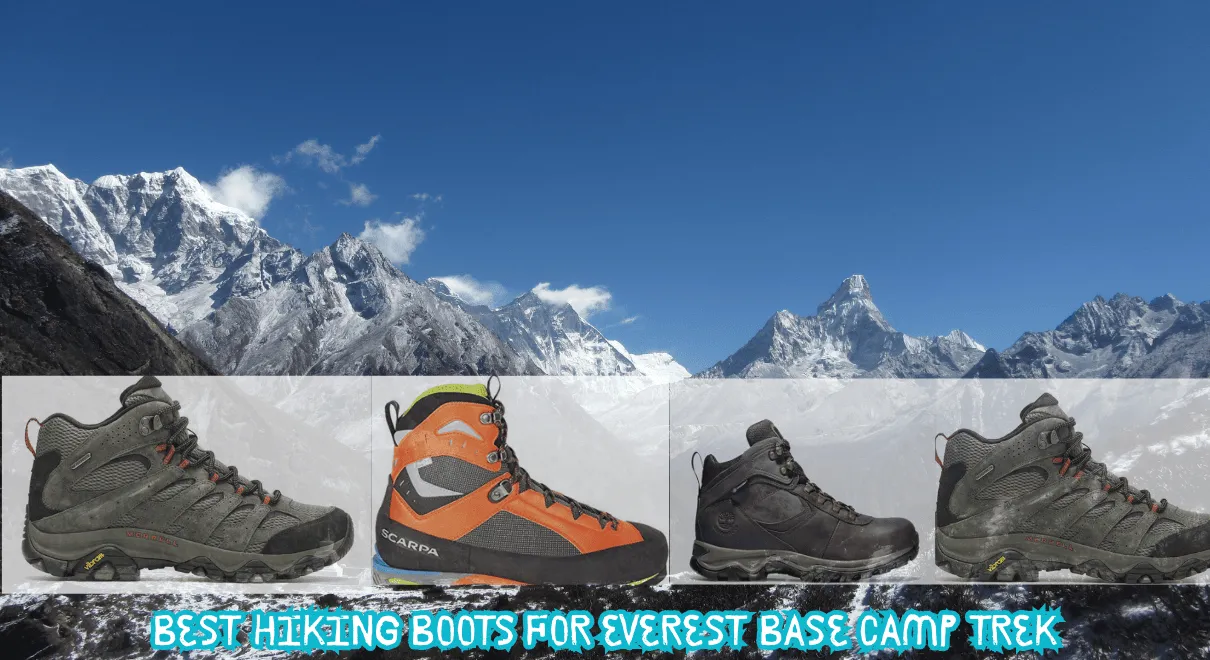
Best Hiking Boots for Everest Base Camp Trek. You must choose your hiking boots for the Everest Base Camp trek because this is your most critical decision before beginning your hike. The EBC trek requires trekkers to complete a 130-kilometer round trip, which leads them through one of the world's most extreme and challenging landscapes. The lower valley regions around Lukla provide you with humid conditions, while your feet experience every possible foot challenge in the icy, wind-swept paths that lead to Gorak Shep at 5,164 meters.
Every year, thousands of trekkers lace up their boots in Kathmandu and head for the Khumbu region. Unfortunately, most of these visitors arrive wearing incorrect shoes, which results in blisters, twisted ankles, and numb toes; in some cases, it leads to forced early descent from the mountain. The correct hiking boots for the Everest Base Camp trek enable you to maintain comfort while keeping you secure and enabling your progress. The incorrect boots will stop your journey before it even begins.
The guide provides you with complete information about boot selection because it shows you essential features and recommends suitable boot types for the trail while explaining common mistakes that beginners make and providing effective boot-breaking techniques for your Nepal trip. This guide provides valuable information for both first-time trekkers and experienced Himalayan explorers.
Why Proper Hiking Boots Matter for the EBC Trek
The Everest Base Camp trail is famous for its scenic views and its challenging hiking conditions. The following description shows what your feet must endure during a standard trekking day.
- Daily trekking distances require hikers to walk between 12 and 20 kilometers, which takes them 5 to 7 hours to complete, thus creating high foot and ankle stress.
- The route requires you to climb from Namche Bazaar, which has an elevation of 2,860 m, to Everest Base Camp, which sits at 5,364 m, while experiencing both upward and downward elevation changes throughout the day.
- The path consists of rocky mountain trails, which include slippery stone steps, suspension bridges, river crossings, moraines, and icy, snowy paths that exist near the peak.
- At higher altitudes, temperatures can reach below zero, especially during nighttime hours. When feet become cold and wet, it creates dangerous situations that lead to severe psychological distress.
- Your daypack at the teahouse while trekking with a porter system causes you to experience weight distribution, which results in foot and joint pressure.
The Everest Base Camp trek requires proper hiking boots because they function as essential safety equipment.
When to Do the Everest Base Camp Trek
The season you choose directly influences which hiking boots you should bring:
Spring (March-May): The most popular trekking window. Trails are clear, temperatures are moderate, and the mountains are stunning. Standard 3-season waterproof trekking boots are perfect.
Autumn (September-November): The second-best season with stable weather and excellent visibility. Again, 3-season boots are your best option.
Winter (December-February): The high mountain areas attract fewer visitors but experience extreme cold with snow and ice cover. Lightly insulated waterproof boots are recommended.
Monsoon (June-August): Not recommended for beginners. The trails become muddy, and leeches inhabit the area. You should choose waterproof boots that provide excellent traction if you decide to go.
Key Features to Look for in Hiking Boots for the EBC Trek
Different trekking boots show different performance capabilities. When searching for hiking boots that suit the Everest Base Camp trekking needs, you should focus on these features:
1. Waterproof and Breathable Membrane
A Gore-Tex lining or equivalent waterproof-breathable membrane is non-negotiable. The Khumbu Glacier trails experience wet conditions because of rain, snow, and ice. Your boots need to keep moisture out while still allowing your feet to breathe during long, sweaty ascents. Look for the Gore-Tex Extended Comfort label or similar certifications.
2. Strong Ankle Support
Mid-cut or high-cut boots provide essential lateral ankle support on uneven Himalayan terrain. Low-cut trail runners offer insufficient protection for a trek of this length and technical difficulty. A single rolled ankle on a rocky descent can put you out of action for days.
3. Durable Outsole with Deep Grip
Himalayan trekking boots use Vibram rubber soles as their highest quality standard. The shoes provide excellent grip when walking on wet rocks, through scree, and on icy trail sections. Boots that have shallow treads or worn-out treads should be avoided because they will cause you to slip on the Khumbu terrain.
4. Cushioning and Shock Absorption
The Kala Patthar to Pheriche descent causes extreme pressure on your knees and feet during long downhill sections. Proper midsole cushioning and EVA foam insoles help boots achieve better performance with less fatigue and joint protection. Consider aftermarket insoles for extra support if your boots do not have adequate cushioning.
5. Correct Fit and Toe Room
Always try boots on with the thick wool socks you plan to wear on the trek. Your toes should not press against the front of the boot on downhill slopes, which is the leading cause of black toenails and painful blisters. A thumb's width of space between your longest toe and the boot tip is ideal. Your heel should not lift when walking.
Types of Boots Suitable for the Everest Base Camp Trek
3-Season Trekking Boots (Most Recommended)
Most EBC trekkers choose these boots as their primary footwear selection. 3-season boots provide spring and autumn weather protection through their waterproof system and ankle support and traction features, which do not require the weight of mountaineering boots. The footwear provides sufficient comfort for extended walking periods yet maintains durability to withstand Khumbu hiking conditions. The brands Salomon, Scarpa, La Sportiva, Lowa, and Merrell create high-quality 3-season trekking boots.
Lightly Insulated Boots (Winter Trekking)
Trekking in winter months, December through February, requires boots that contain either PrimaLoft or Thinsulate insulation. The materials provide thermal protection while maintaining a light, comfortable weight. The insulated boots create a risk of overheating during the high-intensity activities that occur in the early, physically challenging parts of the trail. You need to select your equipment according to the time periods during which you will travel during your trip.
Lightweight Trail Boots (Experienced Trekkers Only)
Experienced trekkers who need to travel light in dry weather use lightweight hiking shoes or trail-running shoes as their footwear choice. The recommendation applies only to individuals who have already completed similar high-altitude treks and understand their own body's limits. First-time hikers should choose either a mid-cut boot or a high-cut boot because they provide better foot protection.
Best Hiking Boot Categories for Everest Base Camp
Here is the very basic working guideline that everyone should use in Everest gear selection to get the most out of their advancements in hiking gear relative to their individual capability:
|
Category |
Best For |
Key Feature |
|---|---|---|
|
Best Overall |
Most trekkers, spring & autumn |
Waterproof, great grip, ankle support |
|
Best Ankle Support |
Heavy packers, steep terrain |
High-cut design, stiff midsole |
|
Best Waterproof |
Snow & wet trail trekkers |
Gore-Tex lining, sealed seams |
|
Best Lightweight |
Fast, experienced trekkers |
Low weight, flexible sole |
|
Best Budget Option |
First-timers on a budget |
Reliable waterproofing, lower cost |
Boots and Footwear to Avoid for EBC
People need to understand both their appropriate clothing choices and their inappropriate clothing choices. These are the footwear mistakes that land trekkers in trouble every season:
- Trail running shoes: The Khumbu terrain requires stronger ankle support and greater waterproofing capabilities. The equipment functions properly for an outdoor forest trip but becomes hazardous at 5,000 meters.
- The single most common boot mistake beginners make requires them to wear new, unbroken-in boots. New boots cause blisters, period. Always break them in before you fly.
- Cotton socks with any boots: The moisture-absorbing properties of cotton lead to wetness, which increases the chances of blisters. Wool or synthetic socks only.
- Hikers need to use low-cut casual hiking shoes because the boots do not provide enough support for their feet during high-altitude treks that last multiple weeks.
Breaking In Your Boots Before the Trek
The most essential point of this guide exists in the section that explains that you must break in your boots before your trip to Nepal. A new boot requires time for your feet to become accustomed to its specific flex points and stiffness and its pressure distribution.
The following break-in procedure provides a basic plan for training purposes:
Weeks 1–2: Your boots should be worn during daily walks, which last between 30 and 60 minutes at all times with your trekking socks. This process makes the boot more flexible while it helps to find all areas that create discomfort.
Weeks 3–4: You should hike for a period of 2 to 4 hours on trails that have uneven surfaces. The best practice involves using hills and steps for training exercises.
Final week: The full-day practice hike requires you to carry a day pack. You should put moleskin on any areas that will create discomfort during your trip. The break-in process requires you to use the same socks that you will wear during your trek.
The best gift you can give yourself for this trek involves arriving in Lukla while wearing soft boots that fit your feet perfectly.
Recommended Socks and Foot Care Tips
The quality of your boots depends entirely on the quality of the socks that you wear inside them. The following methods will help you maintain foot health during your hiking activities.
- The use of Merino wool or synthetic trekking socks helps maintain proper body temperature while their wool material conducts water vapor away from the body and protects against bacterial growth. Bring 4 to 5 pairs of socks.
- The use of liner socks enables thin inner socks to decrease foot friction with outer socks, which results in a significant reduction of blister formation.
- The Superfeet and Sole brands offer aftermarket insoles as spare insoles, which provide extra arch support and cushioning benefits.
- Foot hygiene requires people to wash their feet at teahouses and then dry them throughout the entire day. Climbers need to examine their feet for blisters, hot spots, and frostbite symptoms when they ascend to greater altitudes.
- The blister kit needs to include moleskin, blister plasters, and a sterile needle. The treatment of hot spots should be done before they develop into complete blisters.
Can You Buy Hiking Boots in Kathmandu?
The brief response shows that the answer is yes, but people should exercise caution when visiting the Thamel district of Kathmandu, which has numerous shops that sell trekking equipment. The Thamel district of Kathmandu has numerous trekking equipment stores that sell various products that range from low-cost products of local manufacturers to imitation North Face products and actual international products that have high price tags. Kathmandu becomes essential when you need to replace lost items or your boots become damaged.
We recommend against purchasing your main hiking boots for the Everest Base Camp trek because of three specific reasons, which include inconsistent quality control and widespread counterfeit products, and the fact that you will be unable to use new boots until the start of your hike. Bring your own tested, broken-in boots from home. You should only purchase essential items when you face urgent needs in Kathmandu.
A Trekker's Story: Lessons Learned the Hard Way
Imagine yourself walking through a stunning rhododendron trail section that leads to Namche Bazaar after completing four days of the EBC trek. The views are breathtaking. A burning pain starts at your left heel, which your willpower cannot handle. You enter the next teahouse, remove your sock, and find a blister the size of a silver dollar that will cause you ten days of terrible discomfort.
Every single trekking season brings this problem to hundreds of trekkers. The main reason for the problem usually stems from trekkers who use untested boots during their hikes. The lesson is simple and free: wear your boots before you trek. Walk to the shops in them. Hike your local trails in them. Climb every set of stairs you can find. Your Everest Base Camp trek will thank you.
Real Problems Trekkers Face — and How to Solve Them
Problem: Blisters
Blisters emerge as the core issue. The solution requires liner socks, broken-in boots, and moleskin, which must be used at the first moment when friction starts to occur. The procedure should begin before a person develops a blister.
Problem: Numb or Cold Toes at Altitude
The problem occurs when toes become numb or cold at high altitudes. The solution requires you to check that your boots fit properly because tight boots will stop blood flow to your feet. The process requires your feet to be protected with a lightweight insole and chemical toe warmers during the extremely cold parts of your journey. The solution requires you to carry microspikes or Yaktrax because they will help you walk safely on icy trails. The microspikes and Yaktrax system connect to your boots to create essential ice traction, which becomes necessary during the winter and early spring periods at Gorak Shep.
Problem: Numb or Cold Toes at Altitude
The wet feet problem arises when rain or snow falls on people. The solution requires you to purchase boots that have an excellent Gore-Tex membrane. The procedure requires you to spray your boots with DWR (Durable Water Repellent) spray before you start your journey and again when you reach the midpoint of your trek.
Final Thoughts: Your Boots Are Your Foundation
The Everest Base Camp trek is an extraordinary journey that will test your physical and mental limits while providing you with permanent views, experiences, and memories that will endure throughout your life. Your journey needs each footstep because your footwork needs your footwear.
You should purchase the best hiking boots that your financial situation permits for the Everest Base Camp trek. You should select mid-cut or high-cut waterproof boots that provide effective ankle protection and feature a Vibram outsole or a similar alternative. You should wear them for three weeks before your flight. You should combine them with high-quality wool socks and an effective foot maintenance program.
Your boots will take you all the way to the base of the world's tallest mountain and return you to safety. The Himalayas are ready to welcome you. Prepare your equipment, begin walking, and experience joy through every step you take.
Recommended Hiking Boots for the Everest Base Camp Trek
1. Do I need waterproof boots for the Everest Base Camp Trek?
For the Everest Base Camp trek, waterproof boots serve as the most important requirement. The hiking path connects different weather conditions and climate regions. The weather conditions include snow above Tengboche and rain during lower valley periods, and frost during early morning time on stone steps and wet river crossing paths. The combination of Gore-Tex footwear and similar waterproof-breathable membrane technology will protect your feet from moisture while maintaining body temperature and preventing blisters in the toughest environments. Wet feet at high altitude create discomfort, which leads to increased frostbite risks and accelerated weariness. This feature must remain at its highest quality.
2. Are lightweight hiking shoes suitable for Everest Base Camp?
Lightweight hiking shoes or trail runners can work for highly experienced trekkers during dry spring or autumn conditions, but they are not recommended for beginners or first-time EBC trekkers. The trail includes steep rocky descents, uneven moraine sections, and occasional icy patches that demand proper ankle support and a durable outsole. Mid-cut or high-cut trekking boots provide significantly better protection. If you are unsure, always opt for a sturdier boot — the small weight savings from lightweight shoes are not worth the increased injury risk over a two-week, high-altitude trek.
3. Should I choose insulated boots for the EBC trek?
The standard 3-season waterproof boots provide adequate protection for spring trekking between March and May and for autumn trekking between September and November. Your body generates significant heat during long ascents, and over-insulated boots create sweaty discomfort for your feet inside warm trail areas. The lightly insulated boots, which use PrimaLoft or Thinsulate insulation, provide essential cold protection for winter trekking because they operate at altitudes above 4,000 metres. The primary requirement for insulation is to match seasonal weather conditions because people should experience comfortable temperatures.
4. How should hiking boots fit for the EBC trek?
The fit of trekking boots represents their most critical aspect. The best time to test boot fit happens during the afternoon because your feet will reach their largest size, which matches your trail walking conditions. A well-fitting trekking boot should:
- Feel snug but not tight across the width of the foot
- The toe box must provide enough space for a full thumb's width to prevent black toenails during descents
- The shoe should keep your heel in place while walking uphill without any heel movement
- The shoe should permit free toe movement until the toes reach the end of the shoe
- The shoe needs to fit your thick wool socks, which you plan to wear during the trek
You must test your boots together with the socks that you will use for trekking. Customers should never make online purchases without first testing the product.
5. How long should I break in my trekking boots?
You need to spend at least two to three weeks breaking in your new trekking boots before you begin your Everest Base Camp trek. Your hiking practice should start with short walks, which should then progress to full-day hikes on uneven terrain. You should use the same wool socks for your break-in period that you will wear on the trail. You should treat any pressure points or rubbing you experience during break-in by using moleskin, changing your lacing, and testing a new insole. The best preparation advice from experienced trekkers recommends that you arrive in Nepal with boots that have already softened and your feet in good condition.
6. Can I buy hiking boots in Kathmandu before the trek?
The Thamel district of Kathmandu contains multiple shops which sell trekking equipment that includes hiking boots. The products available for purchase show a wide range of quality, while counterfeit branded products dominate the market, and trekkers who buy boots in Kathmandu face immediate usage requirements. The shoes you buy in Kathmandu will lead to blister formation on your first day of trekking. We recommend that you purchase your boots from a trustworthy outdoor store in your home location and that you practice using the boots until you reach a complete comfort level. You should use Kathmandu stores only when your main boots experience problems.
7. What type of socks should I wear with trekking boots?
The Everest Base Camp trek requires proper socks just as it needs proper boots for its successful completion. Merino wool trekking socks provide optimal temperature control and moisture-wicking abilities, and natural odor protection. All three brands, Darn Tough, Smartwool, and Icebreaker, serve as excellent options to choose from. You should bring four to five pairs of socks and use a different pair each day. The best way to protect your feet from blisters is to use thin synthetic liner socks under your wool outer socks because this method creates two sock layers, which effectively decreases friction. Cotton socks should never be worn on the trail because they create various problems. Cotton retains moisture, increases friction, and almost guarantees blisters.
8. Are crampons required for Everest Base Camp?
Full crampons are unnecessary for the standard Everest Base Camp trek, which operates during the spring and autumn seasons. The trail does not require any skills for icy glacier navigation or vertical ice climbing. Winter and shoulder-season treks on the icy sections between Lobuche and Gorak Shep become safer with the use of microspikes and Yaktrax. These traction devices, which people use for trekking, can be worn over their regular boots to provide ice grip, but they weigh less than mountaineering crampons. Pack a pair if you are trekking in December, January, or February, or if forecasts suggest icy conditions.
Are you prepared to begin your journey to Everest Base Camp?
You need to prepare your hiking boots, then you should use them to practice for your upcoming trek across the Himalayas. The trail to Base Camp is ready for exploration because every step of the journey brings valuable rewards.

.png "NTB")
.png "Pata")