Is Wi-Fi Available During the Everest Base Camp Trek?
Is Wi-Fi Available During the Everest Base Camp Trek? - You are about to hike to the most isolated location on Earth, but your ability to share a summit selfie will depend on your answer to this question. The response to your question will provide you with an unexpected outcome.
The Everest Base Camp trek stands as one of the most famous trekking routes, which offers breathtaking sightseeing experiences throughout its course. The trekking path leads trekkers through the Khumbu region of northeastern Nepal, which includes historical Sherpa settlements and active glaciers, and provides views of Mount Everest, which stands as the tallest mountain in the world at 8848.86 meters. The journey helps people. It requires them to overcome physical challenges while developing their mental and spiritual abilities.
The current highly connected environment leads people to ask one major question about packing, which equals the importance of selecting proper jackets and altitude drugs: Is Wi-Fi available during the Everest Base Camp trek? Modern trekkers require connectivity because they need to check in with family members who stay home and attend to their remote work tasks, share their adventures on social media, and maintain access to emergency assistance through messaging.
The good news? The Everest Base Camp trek provides Wi-Fi access to its trekkers. The not-so-good news is that it comes with some important limitations. Our guide will provide complete information about EBC trek internet access, including available locations and pricing details, expected speed, and efficient connectivity methods for extreme remote mountain areas.
Is Wi-Fi available on the Everest Base Camp Trek?
The Everest Base Camp trek provides Wi-Fi access to trekkers, which differs from their home and city café Internet experiences. The classic EBC route passes through major trekking villages, which provide Wi-Fi access at teahouses and lodges for their guests and for paying non-guests who choose to use their facilities.
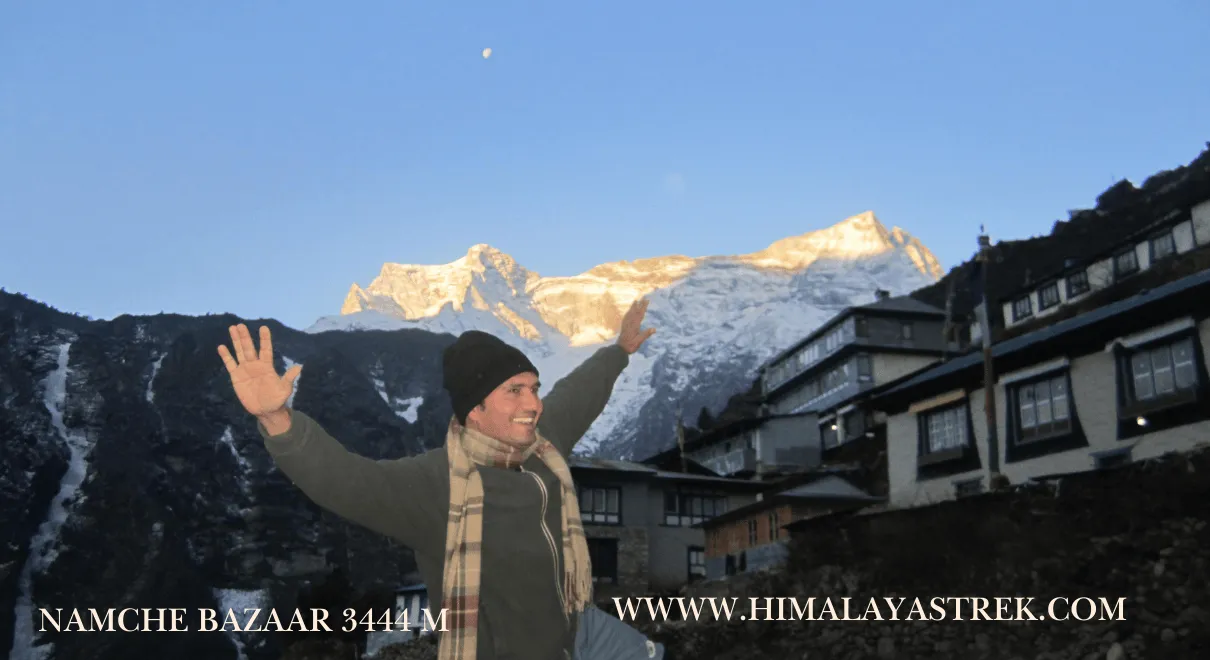
The system has uneven coverage throughout its operational area. The infrastructure decreases with each elevation gain, while the signal strength decreases, which leads to more frequent reliability problems. The distance from Namche Bazaar (3,440m) to Lobuche (4,940m) results in complete operational failure for the system that works properly in Namche Bazaar. People who travel deeper into the valley need to understand that they will have only limited Internet access while they stay in the Himalayas.
The ability to send a message from a height of nearly 5,000 meters above sea level demonstrates the region's isolation, which existed until recent decades.
Villages Where Wi-Fi Is Commonly Available
The trail along from Lukla for the ordinary Everest Base Camp trail appears data is accessible through Wi-Fi-connected places at major villages' tea houses and lodges.
| Village | Altitude | Wi-Fi Availability | Reliability |
|---|---|---|---|
| Lukla | 2,860m | ✅ Good | Moderate–Good |
| Phakding | 2,610m | ✅ Available | Moderate |
| Namche Bazaar | 3,440m | ✅ Best on the trail | Good |
| Tengboche | 3,867m | ✅ Available | Moderate |
| Dingboche | 4,360m | ✅ Available | Slow–Moderate |
| Lobuche | 4,940m | ⚠️ Limited | Slow |
| Gorak Shep | 5,164 m | ⚠️ Limited | Very Slow |
| Everest Base Camp | 5,364m | ❌ Rarely available | Unreliable |
The Khumbu region operates its online services through Namche Bazaar as its primary internet service provider. The town serves as the primary marketplace and rest area for trekkers who want to acclimatize to higher altitudes. Most trekkers spend at least one or two extra rest days here, making it the ideal place to catch up on emails, video calls, and social media before heading higher.
The teahouses within the same village do not provide equal internet connectivity because each establishment maintains different connection standards. Before buying a Wi-Fi card or paying for access, you should ask others about your location, check online reviews, and test multiple locations.
The Everest Link Wi-Fi System
Everest Link serves as the primary internet connection throughout the Everest region because it provides dedicated Wi-Fi service for the Khumbu trekking corridor. Everest Link operates as a prepaid network system that enables trekkers to purchase data cards that function throughout designated trail areas instead of accessing Wi-Fi through a lodge's private router.
Here is how it works:
- You need to buy an Everest Link prepaid internet card from either Namche Bazaar or a major village.
- The card provides you with a login username and password, which enables you to access the Everest Link network.
- The same card functions at different teahouses within the Everest Link network, so you don't have to purchase additional cards at every location.
- Cards provide users with time-based or data-based options, which include 100MB, 200MB, and hourly plans.
The Everest Link system provides trekkers with a new solution to maintain their internet connection during the EBC trek. The network extends throughout the entire trail, which enables travelers without local SIM cards to access the internet at locations where their mobile data signal does not exist.
Pro Tip: Everest Link card sales at Namche Bazaar provide customers with the best prices and easiest access to their product. The prices of cards will increase, and their supply will decrease after you reach Dingboche.
Cost of Wi-Fi on the Everest Base Camp Trek
The EBC trek budget requires trekkers to consider internet access expenses, which they usually forget to include. The Everest Base Camp trek Wi-Fi service requires payment at almost all teahouses because it operates differently from home broadband connections. The actual expense of constructing and operating space-based internet systems in extremely isolated and challenging locations is demonstrated by this particular situation.
| Location/Altitude Zone | Approx. Cost (USD) | Notes |
|---|---|---|
| Lower villages (Lukla, Phakding) | $2 – $4 per session | Usually hourly or per-device |
| Namche Bazaar | $3 – $5 | Best value; Everest Link cards available |
| Tengboche / Dingboche | $5 – $7 | Moderate; speeds slow |
| Lobuche / Gorak Shep | $7 – $15+ | Expensive; very slow connection |
You need to understand that the charges for limited bandwidth Internet service will appear to be excessive because the service provider needs to implement special operational procedures to deliver Internet service through the Himalayas. At higher altitudes, trekkers experience a natural decline in phone usage because they want to save money and because they find the scenery so beautiful that they must avoid using screens.
Internet Speed and Reliability on the Trek
If you want to remain connected during your EBC trip, you must manage your internet speed expectations. The EBC internet system uses satellite technology and VSAT (Very Small Aperture Terminal) systems, which results in lower internet speeds than fibre-based broadband systems.
The following list shows your actual performance capabilities:
- Messaging applications (WhatsApp, Messenger, and Viber) function properly because users can send text messages and voice notes with normal performance.
- Email communication typically remains easy to handle because plain-text emails require less processing time than emails with large attachments.
- Users can slow-load basic websites and articles online through light web browsing.
- Video calls become very unreliable after users reach Namche Bazaar because the service only permits short periods of operation, which exist at lower villages.
- Streaming services (YouTube, Netflix, Spotify) should not be used. Users in Namche will experience buffering, which requires them to spend time waiting.
- You should avoid uploading or downloading large files while using the trail.
Weather conditions have a major impact on the situation. Satellite signals become completely lost during cloud cover, storms, and heavy snowfall, which results in complete offline access for multiple hours or an entire day at higher camps.
Mobile Network and SIM Cards for EBC Trekkers
The Himalayas provide two methods for internet access, which include teahouse Wi-Fi and mobile data from Nepali SIM cards. The two main providers operating in the Everest region are:
Nepal Telecom (NTC): The government-owned carrier with the broadest coverage in remote areas. The service above Namche Bazaar provides higher reliability according to general assessment.
Ncell: The private carrier offers good service in urban areas, while its signal strength diminishes in lower trekking regions and breaks down in the areas above Dingboche.
Both SIM cards can be purchased in Kathmandu for a small fee with your passport. The data plans offer low prices since a 10GB data plan usually costs between NPR 500 and 800, which equals approximately $4 to $6 USD.
The Everest trek mobile network coverage follows this coverage pattern:
- The region between Lukla and Namche Bazaar provides 4G/LTE service through both NTC and Ncell.
- NTC provides decent 3G/4G service between Namche Bazaar and Tengboche, while Ncell service becomes unreliable.
- NTC maintains some coverage between Tengboche and Dingboche, while Ncell service becomes unavailable.
- The signal in the areas above Dingboche, which include Lobuche, Gorak Shep, and EBC, shows extremely weak or no existence. The trekkers report NTC signals during clear weather, but they do not depend on this service.
Pro Tip: Nepal Telecom (NTC) should become your first choice for mobile data because it provides better performance than Ncell at high altitudes. Buy your SIM card in Kathmandu's Thamel neighborhood before your flight to Lukla.
What Problems Do Trekkers Face With Connectivity?
The frequent internet problems that our team encounters during their work with trekkers to Everest Base Camp have become a major problem. The following list presents the most typical problems that exist, together with their respective solutions:
Problem 1: No Signal at Critical Moments
The first problem requires immediate response at times of critical need. Trekkers above Dingboche lose their first connection shutdown, which happens when they need to contact home because of altitude sickness. Solution: Carry a satellite communicator (like a Garmin inReach) for emergencies. The devices operate without any need for cellular or Wi-Fi network connections.
Problem 2: Paying for Wi-Fi That Barely Works
You pay USD 10 in Gorak Shep for Wi-Fi that cannot load your inbox. Solution: Ask the teahouse owner or other trekkers for honest feedback on the connection before paying. The connection quality improves when you switch to another teahouse.
Problem 3: Dead Devices
The third problem leads to complete power outages. The capacity to provide electricity at high-altitude teahouses does not extend to an unlimited supply. The majority of lodges charge fees between NPR 200 and 400 for each charging session. Solution: Bring a high-capacity power bank (20,000mAh or higher) and charge it fully at every opportunity in lower villages.
Problem 4: Relying on Google Maps Without Offline Data
Trekkers who depend on Google Maps face difficulties when they discover that the service needs internet access to function. Solution: Download offline maps of the Khumbu region via Google Maps or Maps.me before leaving Kathmandu.
Tips for Staying Connected on the EBC Trek
The process of preparing properly for hiking activities establishes the boundary between experiencing communication difficulties and achieving successful interactions. The following list presents our most effective techniques for controlling internet usage during the Everest Base Camp trek.
1. You should purchase Everest Link cards at Namche Bazaar because it offers the best value and easiest accessibility along the trail.
2. Video calls require more bandwidth than messaging apps, which provide better connection reliability in areas where video fails to function.
3. You must download all content from Lukla before your departure, which includes offline maps, Kindle books, podcasts, Netflix downloads, and important documents.
4. The ideal power bank capacity for you to carry should be 20000mAh or higher because high-altitude cold weather conditions increase battery drain rates.
5. You should establish specific times to check in with your family because you need to decide which times to contact them before your departure to help them stay calm during your first day without communication.
6.WhatsApp and Viber allow users to send voice messages, which consume less data than direct phone calls, and users can send and receive messages through these platforms even with limited internet access.
7. Emergencies can be handled with a Garmin inReach emergency device, which uses satellite technology to transmit GPS information and emergency requests from any location worldwide without requiring cellular or Wi-Fi services.
Do You Get Wi-Fi Directly at Everest Base Camp?
This is one of the most frequently asked questions we receive, and the answer is: not reliably. The Everest Base Camp site (5,364m) functions as a trekking destination that people can reach, but it does not provide any permanent accommodation facilities. Base Camp does not have any teahouses that trekkers can use for their journey.
Gorak Shep (5,164m) serves as the last place to stay overnight before EBC, which has several teahouses that provide Wi-Fi access, but the connection speed remains extremely slow while usage costs are high. Most trekkers visit Base Camp on a day hike from Gorak Shep, spend an hour or two taking photographs, and then return to Gorak Shep to overnight.
If Everest Base Camp Wi-Fi is a priority for you, your best strategy is:
- Connect in Gorak Shep the evening before or after your Base Camp day trip.
- Keep expectations low, expect text messaging quality at best.
- People who want to make video calls or home phone calls from EBC should use satellite communicators.
During expedition season, climbers who stay at Base Camp for weeks can access dedicated satellite internet, which expedition agencies provide for their teams. These private systems remain inaccessible to trekkers who are passing through the area.
Our Personal Experience: Staying Connected on the Trail
Our team discovered an essential lesson through our multiple treks on the EBC route because we discovered that optimal signal strength occurs at unexpected times. We experienced perfect video telephony from Tengboche during clear weather, yet we encountered complete communication blackouts in Namche Bazaar during a snowstorm.
Our trekkers receive this message from us every time they begin their journey, which states that they should treat their ability to connect with others as an extra feature rather than a fact. The Everest trek becomes magical through its scenic views, which force you to stop using your phone to experience them: the red light that appears at dawn over Ama Dablam, the powerful sound of the Khumbu Glacier, the silent elegance of 5,000 metre high prayer flags. Our trekkers discovered their most important life experiences through complete mindfulness because they stopped using their devices.
People with family commitments or health needs experience major relief through the ability to connect with others, even for short periods. Plan your usage properly while understanding your usage limitations, then allow the mountains to take care of everything else.
Conclusion
The Everest Base Camp trek provides Wi-Fi access, which allows trekkers to send messages and check emails while contacting their family members to confirm their safety during their journey. The Everest Link system provides reasonable coverage across the route, and Nepal Telecom SIM cards allow mobile data access until Dingboche.
The situation above that point leads to high costs and poor connectivity, which makes it difficult to use. People should plan their activities by purchasing Wi-Fi cards at Namche Bazaar while bringing a power bank and downloading necessary offline content before their Lukla departure, and they should consider using a satellite device for emergency communication purposes.
People should appreciate the special opportunity to access the limited internet. The Khumbu valley provides a rare opportunity in modern society to experience complete disconnection from all contactable people for an extended period of time.
Frequently Asked Questions (FAQs)
Q1. Is Wi-Fi free on the Everest Base Camp Trek?
Visitors to the Everest Base Camp trek route will find that Wi-Fi access, which they can use at no cost, occurs only on rare occasions. Every teahouse and lodge along the route treats internet access as a paid service, either charging per session per hour or through prepaid data cards like Everest Link. The expense for establishing connectivity at such extreme altitudes becomes essential because of their extreme remoteness and the substantial infrastructure development needed to achieve this goal. The lower villages have affordable prices, which begin at that point, but they increase sharply when customers move to higher elevations. People who plan to use free Wi-Fi services, which are typical in city cafés, should change their expectations before they arrive at their destination. People need to keep cash for internet expenses, which they must spend from their designated budget.
Q2. How much does the internet cost on the Everest Base Camp Trek?
The Internet expenses on the EBC trek increase with every ascent of the mountain. Visitors to lower villages, which include Lukla and Namche Bazaar, must pay between $2 and $5 for each Internet session or hourly Internet access. The connection costs increase to $7 to $15 or higher at the higher villages of Dingboche, Lobuche, and Gorak Shep. The higher price exists because it becomes more difficult to provide reliable Internet access in extremely high mountain locations. The Internet budget should follow the plan to connect with the Internet during the whole trek, which requires approximately $30 to $50. The purchase of an Everest Link prepaid card in Namche Bazaar provides better value for users who need to use the service frequently.
Q3. Can I use mobile data on the Everest Base Camp Trek?
The EBC trek has mobile data service, which works until specific altitude limits. The lower trail section shows reasonable connectivity because both Nepal Telecom and Ncell offer coverage between Lukla and Namche Bazaar. NTC provides better service at high altitudes because users can access the network until Dingboche under optimal conditions. The system becomes more unreliable because coverage starts to decrease after that location. Visitors at Lobuche and Gorak Shep should not expect reliable mobile data service. The best way to maintain contact along the lower trail is to buy a local SIM card before leaving Kathmandu.
Q4. Where is the best internet connection on the EBC trek?
The entire Everest Base Camp trail lacks any location that can match the internet access capabilities found in Namche Bazaar. This active trading center, which operates at an elevation of 3440 meters, contains the highest number of teahouses that provide Wi-Fi service and charge their customers the lowest prices while serving as the main distribution center for Everest Link prepaid data cards. Trekkers frequently use their acclimatization breaks in Namche to send emails and upload pictures while they connect with their relatives in distant places. Visitors to Lukla can access reasonable internet services during both their arrival and departure times. The internet connection in all areas beyond Namche decreases as users travel to higher altitudes through each successive village.
Q5. Is there Wi-Fi at Everest Base Camp itself?
There is no Wi-Fi available for trekkers at Everest Base Camp. The Everest Base Camp exists at a height of 5,364 meters, and it contains no teahouses or lodges or any permanent tourist facilities. The site serves as a seasonal base camp, which lacks any trekking facilities. The nearest place to access Wi-Fi is Gorak Shep at 5,164 meters, which sits roughly a 2–3 hour hike away from Base Camp. The commercial Everest expeditions operate private satellite internet systems at their camps, but these systems remain restricted to team members, and passing trekkers cannot access them. You need to plan your final communications from Gorak Shep before starting your EBC hike.
Q6. What is the Everest Link Wi-Fi system?
Everest Link operates as a prepaid Wi-Fi network that provides uninterrupted internet access to all trekkers who visit the Khumbu region to reach Everest Base Camp. Trekkers need to buy one data card from Namche Bazaar or the designated partner villages, which enables them to access all Everest Link teahouses through the provided login credentials. The solution provides trekkers with easier access to internet services, which becomes their primary connectivity method throughout their travel. The available cards offer multiple data limits that match various user requirements. The trail exhibits its strongest coverage in the lower and mid-altitude areas, which start to diminish once passengers reach Dingboche. Sonnet 4.6Extended.

.png "NTB")
.png "Pata")