Nepal Ghorepani
You have heard the name through your experience with it. You might have stopped your scrolling activity after you saw a Poon Hill sunrise photo that someone had shared. A friend of yours returned from Nepal Ghorepani, and talked about the place continuously. You want to understand everything about this situation because you want to know the complete truth before you start your hiking activities. This guide is written for you.
This guide provides essential information about Ghorepani, Nepal Ghorepani for trekkers who plan their first Himalayan trek and their subsequent adventures to this location. The guide includes details on the mountain views that trekkers will encounter during their journey, the difficult uphill paths that they must traverse, the frigid early morning temperatures that they will experience, the errors that they need to steer clear of, and the experiences that will satisfy them.
What Is Ghorepani? Understanding the Village and the Name
Ghorepani village exists at an elevation of 2860 meters, which corresponds to 9383 feet above sea level in Myagdi District of western Nepal, within the Annapurna Conservation Area. The name comes from the Nepali words ghode (horse) and pani (water), which makes Ghode Pani literally "horse water." This location served as a stopping point for ancient traders who used this rest area to let their horses and mule caravans drink water before they continued their journey through the mountain passes.
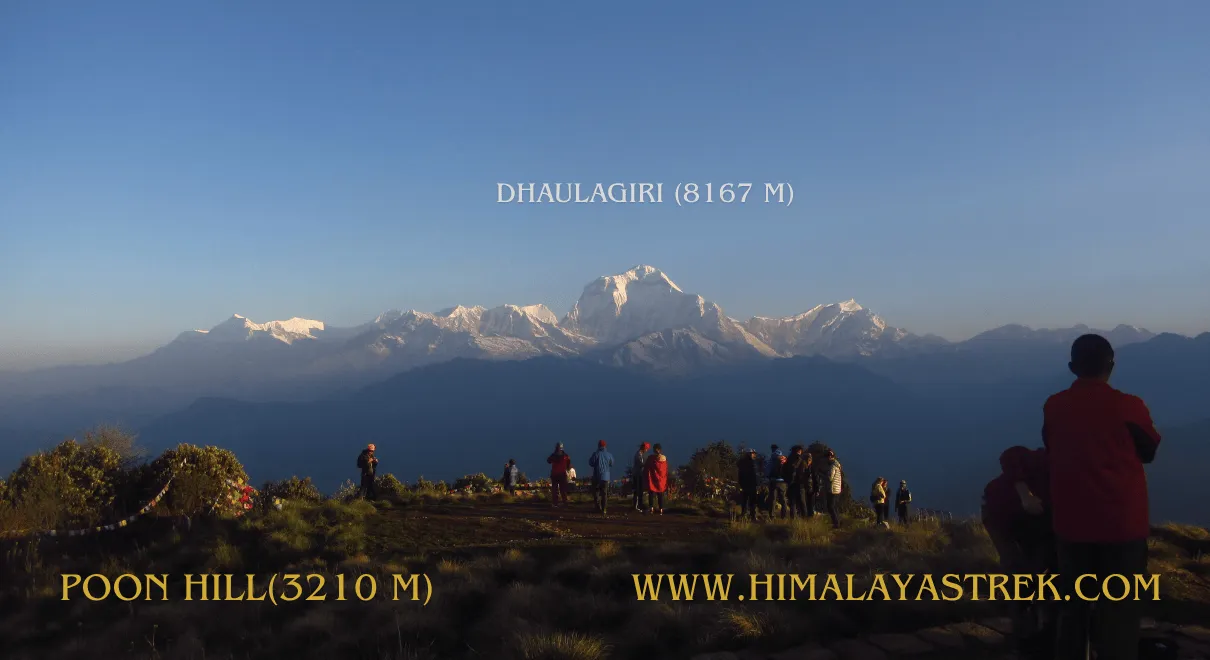
Nepal Ghorepani stands as one of the most popular trekking spots throughout the entire Annapurna region. The location serves as a traditional resting place for trekkers who want to reach Poon Hill at 3210 meters during the early morning hours because it offers the most stunning Himalayan views, which extend from Dhaulagiri to Annapurna South, Machapuchare to Hiunchuli, and Annapurna I.
Why Do Trekkers Choose Nepal Ghorepani?
When you question 100 trekkers about their reasons for selecting the Nepal Ghorepani route, they will provide 100 different answers that share some fundamental similarities.
The location provides easy access for visitors because they can reach it without needing to complete multiple weeks of rigorous training. The Ghorepani route in Nepal requires no more than four to five days, which will take you to view the world's most famous mountains.
The trail presents a difficult challenge because Day 2 requires climbers to complete its steep ascent, which leads to authentic rewards for their efforts. The achievement does not provide a certificate. The achievement does not provide a photo opportunity. The achievement brings authentic knowledge of having traveled through a landscape that has transformed people throughout multiple generations.
The visual beauty of the area extends beyond what photographs can show. The spring season brings forth beauty to the rhododendron forests. The cloud inversions create atmospheric effects that extend throughout the valley that lies beneath Ghorepani village. The Poon Hill location reaches complete silence, which lasts until 5 AM when daylight starts to appear. The things in this world require people to experience them directly.
How Is the Trekking? An Honest Look at the Trail
The Nepal Ghorepani is classified as moderate. The classification accurately describes the difficulty level of the trek because it needs neither promotional language nor lesser strength estimation. The assessment states that most active adults can complete the task, yet they will experience physical challenges because of its demands.
The trail follows stone-paved paths that lead through dense forest and traditional Magar and Gurung villages and steep ascending ridgelines. Daily walking time typically ranges from 4 to 6 hours, depending on your pace and rest stops.
A standard 4-day itinerary looks like this:
Day 1: Pokhara to Tikhedhunga (1,495 m) via Nayapul. The day begins with an enjoyable hike through agricultural areas that follow the natural land contours. The walking duration requires 3 to 4 hours to complete.
Day 2: Tikhedhunga to Ghorepani village (2,860 m). The day provides enough work to justify all future rest periods. The Ulleri ascent requires climbers to ascend more than 3,000 stone steps, which present continuous and unyielding challenges that create actual physical exhaustion. The section requires 5 to 6 hours to complete, which requires climbers to begin their journey at dawn. The section determines which hikers completed their training and which ones remained unprepared.
Day 3: The group starts their ascent to Poon Hill at dawn to view the sunrise before descending toward Tadapani. The Poon Hill climb from Ghorepani, Nepal, takes about 45 minutes in the dark. You will experience coldness and silence, which leads to one of your life's best experiences.
Day 4: The group travels from Tadapani to Ghandruk (1,940 m) before heading to Nayapul and returning to Pokhara. The last day presents an extended journey that delivers immense satisfaction while passing through picturesque Gurung villages.
When to Do This Trek: A Month-by-Month Guide
Your trekking experience in Nepal's Ghorepani depends on the correct timing of your visit.
The period between October and November represents the peak time for travel because the monsoon has ended and the skies maintain their blue color and perfect visibility, which allows for mountain views that reach their highest point. Expect company; this is peak season, and teahouses fill up. Book ahead.
The visual beauty of the period between March and April reaches its peak according to most observers. The rhododendron forests that line the trail above Ghorepani village explode into bloom, reds, pinks, and whites covering the hillsides. The mountains remain visible, although clouds tend to build up during the morning period.
The period between December and February works for experienced trekkers who can handle cold temperatures and snow at elevations exceeding 2,500 meters. The stunning views from Ghorepani, Nepal, become visible on clear days, but the weather conditions there can change to winter conditions without warning.
The period between June and September marks the monsoon season, when most trekkers avoid this time. Heavy rain makes the stone steps slippery, visibility is poor, leeches are enthusiastically present, and the mountain views you came for are hidden behind clouds most of the time.
A Personal Experience on the Trail to Ghorepani
At 9 PM, I sat on a wooden bench outside a teahouse in Ghorepani village while my dal bhat bowl went cold because I lacked the energy to eat, and I found happiness in my current state. My boots were wet. My thighs had staged a formal protest somewhere around the 2,000th stone step. I experienced total happiness without any doubts.
The Day 2 hike to Ghorepani Nepal requires exceptional physical effort, which creates a complete shift in understanding. The village welcomes you with mountains that people return to Nepal because of: their ridge and thin, cold, clean air.
I joined a stream of headlamps that moved silently toward Poon Hill at 4:30 AM the next morning. The people kept their voices down because they all focused on their shared purpose. The first pale light reached the Dhaulagiri summit, which appeared to be an enormous mountain that filled the viewer's whole perception. The sound made by people from Nepal Ghorepani created both relief and amazement, demonstrating how the system operated at its full capacity.
Real Challenges on the Nepal Ghorepani Trek — And How to Handle Them
The most common problem trekkers face on the Nepal Ghorepani: underestimating the Day 2 climb.
The average reader interprets the term "moderate trek" to mean they need to exert themselves with moderate effort throughout the entire trek. The second day of the trek exceeds the limits of a moderate trek because it maintains its steepness and unbroken intensity throughout the whole day. Trekkers who lack proper training face exhaustion during the early afternoon when they reach Ghorepani village because their bodies cannot continue to Poon Hill the next morning.
The correct solution requires you to develop your stair and incline-climbing abilities during the 4 to 6 weeks before your trek. All three training methods, stair climbing, uphill walking, and loaded pack training, will contribute to your training success. The Day 2 trek should begin at 7 AM because climbing during cooler morning hours makes the hiking process simpler.
Other real problems trekkers face:
In Ghorepani Nepal, people can experience altitude symptoms. The symptoms include headaches, mild nausea, and sleep disturbances, which become more severe when people ascend without drinking enough water. Your ascent day requires you to consume three liters of water while completely abstaining from alcohol.
Unpredictable weather conditions create situations that prevent people from seeing their intended views. Poon Hill in the clouds offers visitors a valuable experience, although it differs from the clear weather view. If you want to see the Poon Hill sunrise, then you should include an extra day in your travel schedule.
The trail at 4:30 AM remains safe for navigation because it appears clearly through regular use, yet you must carry a dependable headlamp with extra batteries. The phone torch should not be used for Poon Hill.
What Beginners Get Wrong on Nepal Ghorepani
The maximum weight you should carry in your daypack should not exceed 7 to 9 kilograms. Teahouses provide blankets and basic toiletries, so you genuinely don't need as much as you think.
New boots create blisters through their first use. The first wearing of your trekking boots should occur for a duration of 4 to 6 weeks before your trek, with actual use on uneven surfaces.
The area beyond Nayapul does not provide access to automated teller machines. Bring enough Nepali Rupees for 4–5 days of meals, accommodation, and incidentals. You need to allocate a daily budget between NPR 2,000 and NPR 3,000.
The ACAP (Annapurna Conservation Area Permit) and the TIMS card (Trekkers' Information Management System) serve as the two required documents for you to obtain. Both documents can be obtained at the Nepal Tourism Board office located in Pokhara. The absence of these documents will result in your permanent denial of entry at all trial checkpoints.
The body needs time to adjust to higher altitudes. Travelers should not arrive in Pokhara and begin their treks without a waiting period of one day. The body needs at least one day of rest in Pokhara before ascending toward Ghorepani Nepal.
What Are Trekkers Most Afraid Of Before They Start?
These fears come up in every pre-trek conversation:
"Am I fit enough?" Your walking ability to perform 10 to 12 kilometers on flat surfaces without problems serves as your initial assessment point. Your preparatory work for Nepal Ghorepani requires 4 to 6 weeks of stair and hill training.
"Will I get altitude sickness?" The elevation of Ghorepani village shows extremely low occurrence rates for Serious Acute Mountain Sickness. The situation allows for Mild symptoms to develop. The prevention requires people to ascend at a slow pace while they drink water and avoid alcohol consumption.
"Is it safe to trek alone?" Yes. The Ghorepani Nepal trail functions as a safe route because it receives high foot traffic and provides clear path markings and teahouses for travelers. Solo trekkers — including solo women — do this route regularly. The guide service creates additional security while also providing cultural insights, yet independent trekkers can navigate the trail without risk.
"What if the weather ruins the views?" The possibility exists that it will happen. The mountains exist as an unpredictable element. Experienced trekkers build flexibility into their itinerary. The cloud cover prevents you from seeing Poon Hill on Day 3, but you should wait because your extra day will make it possible to see. The view on a clear morning is worth it.
Research-Based Tips for Trekking Nepal Ghorepani More Effectively
Research-Based Tips for Trekking Nepal Ghorepani More Effectively
- Permits (get these in Pokhara before you leave):
- ACAP Permit: NPR 3,000 (~$22 USD) per person
- TIMS Card: NPR 2,000 (~$15 USD) per person
- Available at the Nepal Tourism Board, Lakeside, Pokhara
Essential gear for Ghorepani Nepal:
- Layered clothing: moisture-wicking base, warm mid-layer, waterproof shell
- Ankle-support trekking boots (broken in before arrival)
- Trekking poles — especially valuable for the descent
- Headlamp with fresh batteries (non-negotiable for Poon Hill)
- Sunscreen SPF 50+ and lip balm — UV intensity increases sharply with altitude
- Reusable water bottle and purification tablets
- Light down jacket for evenings in Ghorepani village
Food and accommodation on the trail:
Teahouses line the entire route from Nayapul to Ghorepani Nepal, and beyond. The guesthouses range from basic shared-room accommodations to lodges that provide unexpected comfort through their attached bathrooms and solar-heated showers. The peak season requires travelers to make reservations.
The trekker's main food choice consists of dal bhat, which includes lentil soup with rice, vegetables, and pickles. The dish provides both heat and sustenance while delivering essential nutrients and allowing customers to refill their portions at no extra cost. The complete meal price ranges from NPR 400 to 700 according to your location along the trail.
Realistic cost breakdown (self-guided trek, per person):
- Permits: ~$37 USD total
- Accommodation: NPR 300–600/night
- Meals: NPR 800–1,500/day
- Transport (Pokhara–Nayapul return): NPR 600–800
- Total budget: $200–320 USD for 4 days
What You Will See: The Highlights of Nepal Ghorepani
The main attraction of Poon Hill is its sunrise view, but the entire Nepal Ghorepani poon proves to be a worthwhile experience.
The rhododendron forest above Ulleri shows its peak beauty during the months of March and April. The complete view of Nepal's national flower at its peak bloom extends across multiple hills while white mountain summits remain visible above the landscape.
Ghorepani village itself is a warm, lived-in place. The village teahouse system shows true local hospitality because local families operate guesthouses, which they established in order to accommodate backpackers who have been coming to their area throughout multiple generations. The dining rooms become crowded with trekkers from different parts of the world who engage in spontaneous conversations that happen between various table groups.
The Gurung and Magar villages between Ghandruk and the trailhead offer a window into Nepali mountain culture that a week in Kathmandu can't provide. There exist authentic pathways which include stone-paved streets and terraced agricultural areas, Buddhist prayer wheels, and residents who demonstrate natural friendliness without showing any need to impress others.
Trekker Reviews: What People Say After Nepal Ghorepani
The text states that I have been trained with data, which includes information up to October 2023. The author felt nervous because he had no previous experience with high-altitude hiking. The online guides I read presented the task as easily achievable, yet I remained fearful. The second day of the trek proved extremely difficult and impossible to complete until I finally arrived at Ghorepani, Nepal. The Poon Hill sunrise the next morning made the entire trip worth it. I cried. I'm not embarrassed about that." — Solo trekker, 34, from the UK
"We did this with our 14-year-old daughter. She started to complain on the trek from Nayapul to Ulleri, but she became silent when she saw the mountains. She asked if we could come back next year. That's the best review I can give." — Family trekker from Australia
The teahouse evenings create an experience that nobody informs visitors about. Sitting with strangers who are all equally tired and equally grateful, eating dal bhat by lamplight, with those peaks somewhere outside in the dark — Ghorepani village gets under your skin." — Trekker from Germany
FAQ: Nepal Ghorepani
Do I need a guide?
The trail offers complete navigational independence because its paths are clearly marked. The path requires a local guide for optimal navigation. The local guides provide essential cultural knowledge, regional historical narratives, and their field experience, enabling hikers to gain a comprehensive understanding of the area. The extra cost is well worth every step.
How hard is the trek compared to Annapurna Base Camp?
The Ghorepani Poon Hill trek offers easier trekking than the Annapurna Base Camp trek because it requires less time, reaches lower elevations, and demands less physical effort. The trek serves as the perfect entry point for people who want to experience Himalayan trekking. The experience leaves you wanting more because ABC serves as the next challenge, which brings satisfying results.
What does Ghode Pani mean?
The name Ghorepani, which means horse water in Nepali, originated from the area's past as a stop on ancient Himalayan trade routes, which served as a rest area for horses. The spelling "Ghode Pani" is an informal romanization, while "Ghorepani" remains the standardized and officially recognized English version of the name.
Can I get Wi-Fi in Ghorepani village?
The teahouses in Ghorepani provide paid Wi-Fi service, but users should not rely on it to access essential functions. Users experience connection problems because the service provides slow and unstable connections, which make it difficult to use. The disconnection should be accepted because users need to deal with weak signal reception. The location provides a special chance for people to experience digital detoxing while they visit one of the most beautiful places on Earth.
Is the Poon Hill sunrise guaranteed?
Nature establishes its own timing, which exists outside of human control. The period from October to November and the time from March to April experience their clearest and most beautiful mornings, but cloud cover can appear unexpectedly at any moment. The trek provides its own rewards because it exists as a worthwhile experience, which people can enjoy regardless of their ability to see the summit. Weather conditions that are not predictable should not prevent you from making your journey.
What to Do Next
Your current knowledge about Nepal Ghorepani lets you make educated choices about the destination. If you want to proceed further with your plan:
Your fitness training should start immediately because stair training for 4 weeks will create a significant impact during your second day in Ghorepani Nepal.
You should research the best travel season according to your travel dates while checking the rhododendron bloom schedule for your spring visit.
You can extend your stay in the Annapurna region by visiting Ghorepani Nepal and doing the Annapurna Base Camp trek, the Khopra Ridge route, or the Mardi Himal trail.
The 3-day Poon Hill Sunrise Trek is becoming more popular throughout the entire Ghorepani region. The short but beautiful route from Pokhara leads directly to Ghorepani village, where travelers can experience the famous sunrise that illuminates the Himalayan mountains. The Poon Hill trek offers the perfect experience for travelers who have limited vacation time yet want to explore the beauty of Poon Hill.
The mountains will wait for you. The mountains will wait for you. The mountains will wait for you. The mountains will wait for you. Your current state of readiness determines your ability to approach them.

.png "NTB")
.png "Pata")